


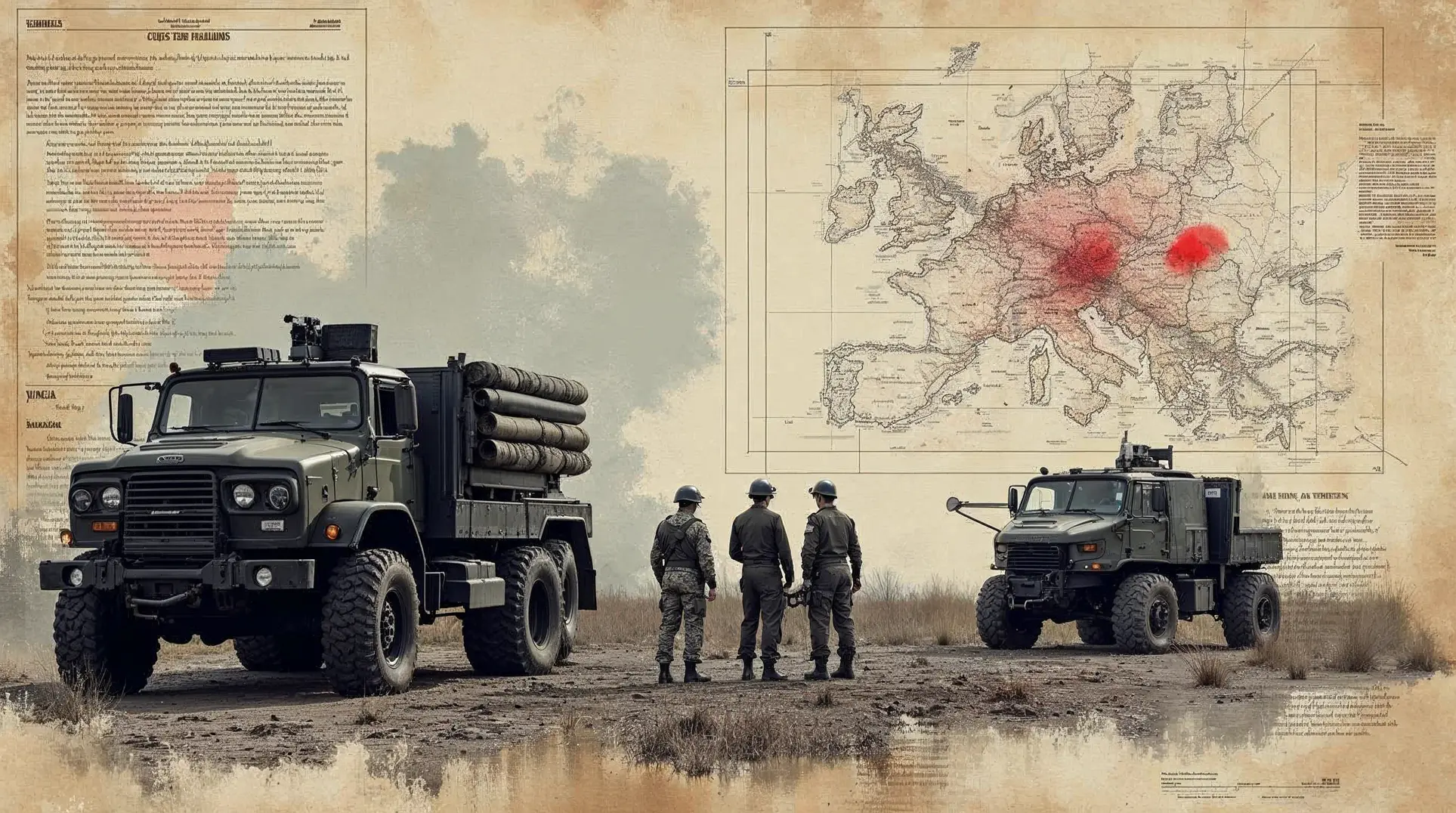
Germany's defence ministry confirmed on Tuesday that soldiers of its Air and Missile Defence Task Force concluded their mission in Poland as planned and that its Patriot systems were relocated back to Germany. The announcement closes a chapter that began in early 2025, when Berlin deployed two Patriot batteries and roughly 200 Bundeswehr personnel to secure the Rzeszów–Jasionka area after U.S. assets withdrew. Responsibility for air defence of the hub transferred to the Netherlands on 10 December under NATO command and control, marking the first time Dutch forces have taken command of Patriot-based protection for the alliance's principal logistics node supporting Ukraine.
The handover is a textbook example of NATO's integrated air and missile defence (IAMD) architecture in action—burden-sharing among allies to sustain presence without overburdening any single contributor. But the rotation arrives at a moment when the threat environment around Rzeszów has intensified. Early September 2025 saw unmanned aerial vehicles penetrate Polish airspace, prompting heightened readiness, episodic airport closures and fighter scrambles, and Warsaw's deployment of up to 10,000 troops to guard critical infrastructure under Operation 'Horizon'. The Dutch contingent inherits not only a logistics-protection mission but a proving ground for layered air defence against a hybrid threat mix.
From U.S. to Germany to the Netherlands: continuity by design
Based on observable deployments and public statements, the timeline underscores institutional continuity rather than capability gaps. U.S. Patriot batteries initially secured Jasionka after Russia's full-scale invasion of Ukraine in 2022, when the airport emerged as the primary transit point for Western military and humanitarian aid flowing east. Germany assumed the mission in early 2025 and extended its deployment repeatedly through year-end. On 10 December 2025, the Netherlands fielded approximately 300 troops with two Patriot systems, NASAMS medium-range air defence, and counter-drone equipment. Six days later, Berlin confirmed the German Patriots had been relocated home.
The Dutch mission is slated to run until 1 June 2026, giving NATO a six-month window to signal follow-on rotation planning or a shift in the force mix. Open reporting cited in defence circles indicates the Dutch package is tailored to the evolving threat: Patriot for high-altitude defence, NASAMS for medium-range coverage, and dedicated counter-UAS capabilities to address low-altitude incursions. This layered approach reflects lessons from the September drone events and aligns with NATO's broader counter-drone deployments on the eastern flank.
Members are reading: Why the Dutch deployment tests NATO's ability to sustain air defence at a logistics chokepoint the alliance cannot afford to lose.
What to watch through mid-2026
The Dutch mission timeline runs through 1 June 2026, and NATO has not yet signaled a successor rotation. Whether the alliance announces follow-on planning in the coming months will offer insight into the durability of burden-sharing at high-value nodes. Polish national coverage decisions are another indicator to watch: Warsaw may choose to expand national air-defence layers around Rzeszów to complement the Dutch mission, reducing reliance on allied rotations. Operation 'Horizon' already demonstrated Poland's willingness to commit substantial national resources to infrastructure protection; extending that logic to air defence would mark a shift toward self-reliance at critical nodes.
Drone and UAS activity trends in southeastern Poland remain the most immediate variable. If incursions continue or escalate, the Dutch counter-UAS package will face an operational test. Additional NATO deployments of counter-drone systems to logistics hubs would signal that the alliance views the low-altitude threat as persistent rather than episodic, with implications for future force packages and rotation planning across the eastern flank.
The handover at Rzeszów is a scheduled rotation, not a retreat. But it is also a test of whether NATO can sustain the institutionalized air defence that the alliance's logistics resilience depends on—without gaps, without degradation, and under pressure from adversaries willing to exploit every seam in coverage.
Subscribe to our free newsletter to unlock direct links to all sources used in this article.
We believe you deserve to verify everything we write. That's why we meticulously document every source.


