


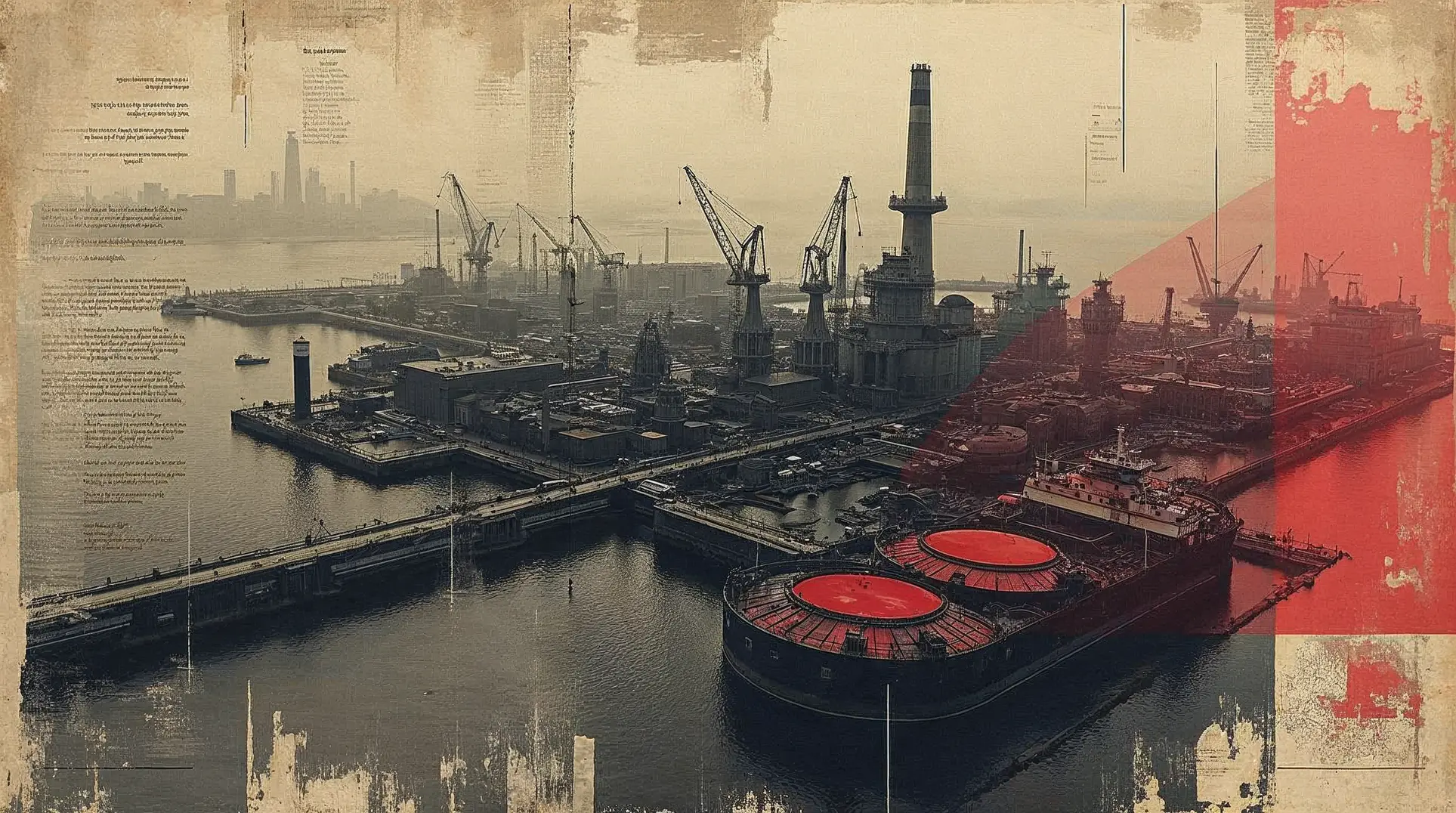
Ukrainian drones struck Russia's Taman port facility in Volna village, Krasnodar region, damaging oil storage infrastructure at one of Moscow's key Black Sea commodity terminals. Krasnodar governor Veniamin Kondratyev confirmed via Telegram that the attack damaged an oil storage tank, warehouse, and port terminals, wounding two workers and igniting fires at petroleum storage facilities. Ukrainian sources claimed direct hits on multiple tanks and pipelines, with preliminary damage assessments reaching $50 million. The strike represents the first major attack on Russian energy export infrastructure since the expiration of a U.S.-brokered moratorium on such operations.
The Taman strike is significant not for its tactical damage but for what it signals about Ukraine's strategic posture. By targeting a facility that handled approximately 4.16 million metric tons of oil products in the previous year, Kyiv has demonstrated both capability and intent to resume economic warfare against the revenue streams funding Russia's military operations. This is not opportunistic targeting—it is a calculated return to a strategy of economic attrition designed to constrain Moscow's war-making capacity by striking at the source of state budget revenues.
Symmetrical escalation in the infrastructure war
The Taman operation must be understood within the broader pattern of reciprocal infrastructure strikes that have characterized the conflict's air war dimension. Russia has systematically targeted Ukrainian energy facilities throughout the winter, most notably in the massive February 11-12 strikes that caused widespread blackouts across Kyiv, Odesa, and Dnipro. These attacks have degraded Ukraine's electrical generation capacity and civilian heating infrastructure, creating humanitarian pressure on the Zelenskyy government.
Ukraine's response has been constrained by diplomatic considerations—specifically, American pressure to avoid strikes that might complicate negotiations or trigger uncontrolled escalation. The moratorium on Russian energy targets was part of this restraint calculus. The Taman strike marks the end of that self-imposed limitation. By demonstrating willingness to impose reciprocal costs on Russian strategic assets, Ukraine has re-established the terms of a symmetrical exchange: attacks on Ukrainian infrastructure will be answered by strikes on Russian export capacity.
The choice of target is instructive. Taman is not merely an oil terminal—it is a dual-use commodity hub handling grain, coal, and other exports in addition to petroleum products. This makes it a critical node in Russia's export logistics network, particularly for commodities destined for markets in Turkey, the Mediterranean, and beyond. The port's location in the Krasnodar region, across the Kerch Strait from occupied Crimea, places it within range of Ukraine's expanding drone capabilities while remaining far enough from the front lines to have previously enjoyed relative security from attack. The successful strike demonstrates that Ukraine's long-range strike capacity continues to develop, reaching deeper into Russian territory to hit economically valuable targets. This development parallels other Ukrainian operations inside Russia, including the assassination of a GRU general in Moscow, which illustrated Kyiv's capacity for covert action far beyond the conflict zone.
Members are reading: Analysis of why economic warfare targeting Russian export revenues offers Ukraine greater leverage than diplomatic concessions.
Strategic realities override diplomatic optics
The Taman strike illustrates a principle often obscured by diplomatic rhetoric: in conflicts between states with fundamentally incompatible objectives, negotiations serve primarily as arenas for demonstrating relative strength rather than forums for genuine compromise. Ukraine's decision to resume strikes on Russian energy infrastructure, despite the diplomatic costs, reflects recognition that its security depends on degrading Russia's capacity to sustain military operations. The port's role in generating export revenue makes it a legitimate military target under the logic of economic warfare, regardless of how such strikes are characterized in international forums.
The coming weeks will reveal whether this represents a new phase of intensified economic targeting or a limited resumption of pressure designed to shape negotiating dynamics. Either way, the Taman strike confirms that Ukraine retains both the capability and the strategic intent to reach high-value Russian economic assets. The fires burning at Volna port are a clearer statement of Ukrainian strategy than any communique from Geneva. In the realist calculus, this is what deterrence looks like: not the promise of restraint, but the credible threat of continued costs.
Subscribe to our free newsletter to unlock direct links to all sources used in this article.
We believe you deserve to verify everything we write. That's why we meticulously document every source.


