


Lieutenant General Vladimir Alekseyev, deputy head of Russia's Main Intelligence Directorate (GRU), was shot multiple times in an ambush-style attack in central Moscow on February 6, 2026, investigators confirmed. The 58-year-old officer sustained serious injuries and was transported to hospital in critical condition. The attack on one of Russia's most senior military intelligence officials represents the latest in a series of targeted strikes against high-ranking military figures, bringing the conflict's covert dimension directly into the heart of the Russian capital.
Alekseyev is no peripheral figure. As second-in-command of the GRU, he has been central to Russia's intelligence operations throughout the war in Ukraine. His profile extends well beyond current military operations: sanctioned by the United States and European Union for his role in the 2018 Salisbury nerve agent attack and 2016 election interference operations, he embodies Russia's decade-long campaign of shadow warfare against Western targets. That such a figure could be targeted in Moscow itself marks a significant escalation in the vulnerability of Russia's military establishment.
A pattern of penetration
The shooting of Alekseyev follows a disturbing pattern for Moscow's security apparatus. In December 2025, Lieutenant General Fanil Sarvarov was killed in a car bomb attack. Weeks earlier, in December 2024, Lieutenant General Igor Kirillov, chief of Russia's Radiation, Chemical and Biological Defence Forces, died in an explosion outside his apartment building. Ukrainian intelligence has claimed responsibility for several such operations, establishing a demonstrated capability to reach high-value targets deep within Russian territory.
The frequency and precision of these attacks expose a critical weakness in Russia's domestic security posture. The Federal Security Service (FSB), responsible for counterintelligence and internal security, appears unable to protect even the most senior military officials. Public reaction reflects this erosion of confidence. One Moscow resident, identified only as Ludmila, questioned why such prominent figures lack adequate protection. The question is pointed: if the state cannot secure its own military elite in the capital, what does this suggest about the broader integrity of its security architecture?
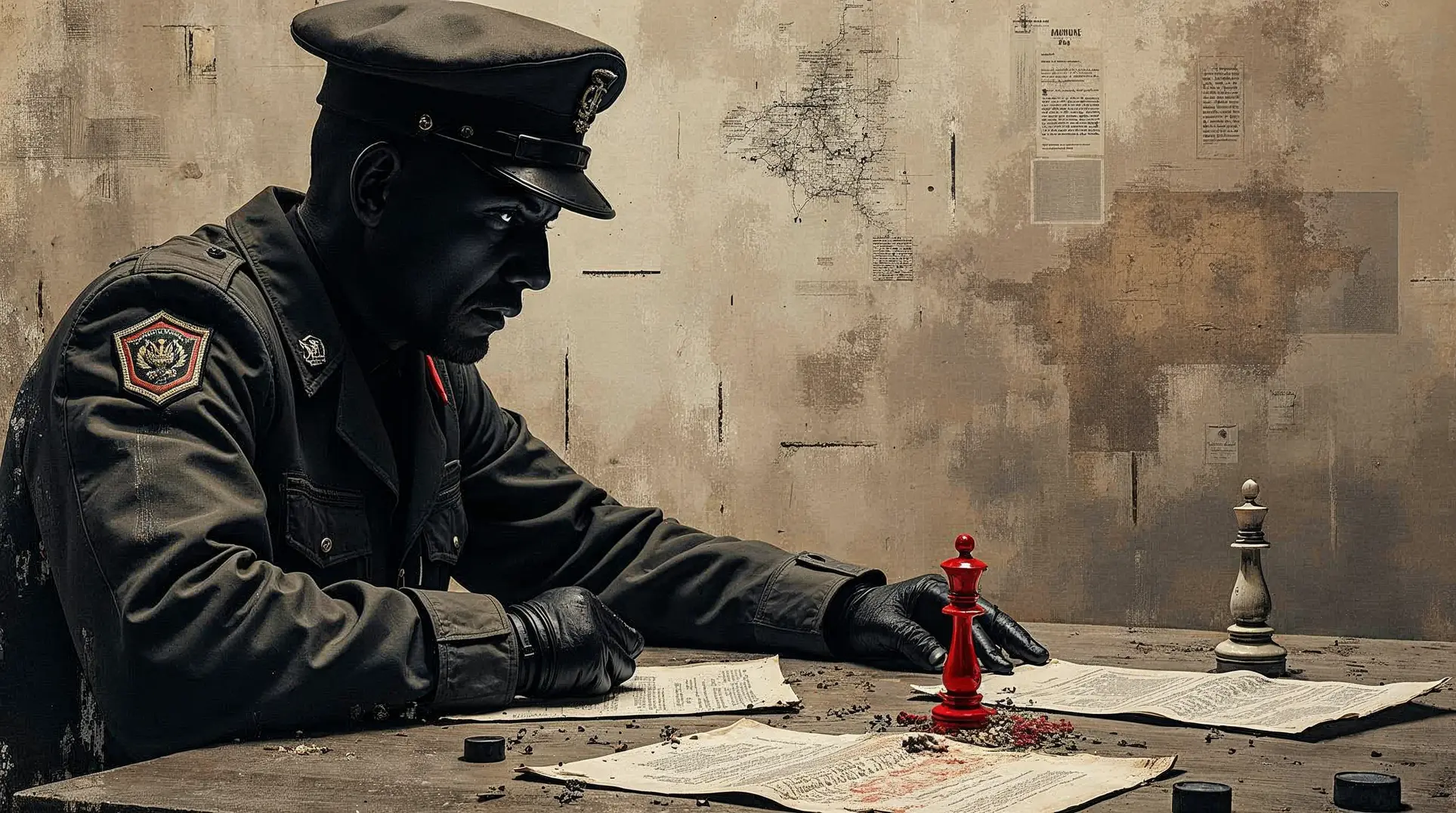
Members are reading: How Ukraine's reversal of Russian hybrid warfare tactics exposes fundamental weaknesses in Moscow's security architecture and creates new strategic dilemmas for the Kremlin.
Implications for regime stability
The succession of attacks against senior military figures signals a new phase in the conflict, one where the distinction between foreign war and domestic security has collapsed. For a regime that depends on projecting strength and control, the repeated targeting of high-ranking officers in Moscow undermines core narratives. The Kremlin has consistently framed the war as a distant "special military operation," insulated from Russian daily life. Ambushes in central Moscow shatter that insulation.
The geopolitical context compounds the challenge. As arms control frameworks continue to erode, Russia faces pressure on multiple fronts: military strain in Ukraine, economic stress from sanctions, and now demonstrable vulnerability within its own borders. The attack on Alekseyev suggests that covert operations will intensify, creating an environment where Russia's military and intelligence elite operate under constant threat. This internal insecurity may constrain Moscow's decision-making, but it also risks prompting more aggressive responses as the Kremlin seeks to reassert control. The war has reached Moscow. How the Russian state responds will shape the conflict's next chapter.
Subscribe to our free newsletter to unlock direct links to all sources used in this article.
We believe you deserve to verify everything we write. That's why we meticulously document every source.


