


Turkey will emphasize Black Sea security as a "strategic priority" when Foreign Minister Hakan Fidan addresses the Coalition of the Willing summit in Paris on Tuesday, according to a Turkish Foreign Ministry source. The declaration, delivered before more than 30 nations led by France and Britain, marks Ankara's most formal bid yet to position itself as the principal security guarantor in a maritime theater where NATO, Ukraine, and Russia's interests converge.
Fidan's intervention comes as Turkey navigates an increasingly complex balancing act. As a NATO member, Ankara has supplied military equipment to Ukraine and enforced the Montreux Convention to restrict Russian warship access to the Black Sea. Yet it has simultaneously preserved diplomatic and economic channels with Moscow, hosting negotiations and prisoner exchanges that underscore its self-styled role as the conflict's indispensable mediator. The Paris statement represents an effort to translate that credibility into institutional influence over the region's post-war security architecture.
Strategic timing at a Western-led forum
Turkey's choice of venue is deliberate. President Emmanuel Macron's Coalition of the Willing brings together the core group of Ukraine's most committed Western backers, including the United Kingdom, Poland, and the Baltic states. By addressing this forum rather than a NATO ministerial or a littoral-only gathering, Ankara signals its intention to shape Western policy rather than merely react to it.
The summit offers Fidan a platform to articulate Turkey's vision directly to decision-makers in London, Paris, and Warsaw—capitals that will ultimately determine the scale and nature of security commitments in the Black Sea basin after the war concludes. Ankara's message is clear: any sustainable maritime order must account for Turkish interests and rely on Turkish geography, given its control of the Bosphorus and Dardanelles straits under the 1936 Montreux Convention.
Turkey has already demonstrated its willingness to assert these interests. Recent strikes within its exclusive economic zone prompted Ankara to draw a Black Sea red line, signaling that violations of its maritime sovereignty will not be tolerated regardless of the perpetrator. Fidan's Paris declaration builds on that assertiveness, elevating it from tactical response to strategic doctrine.
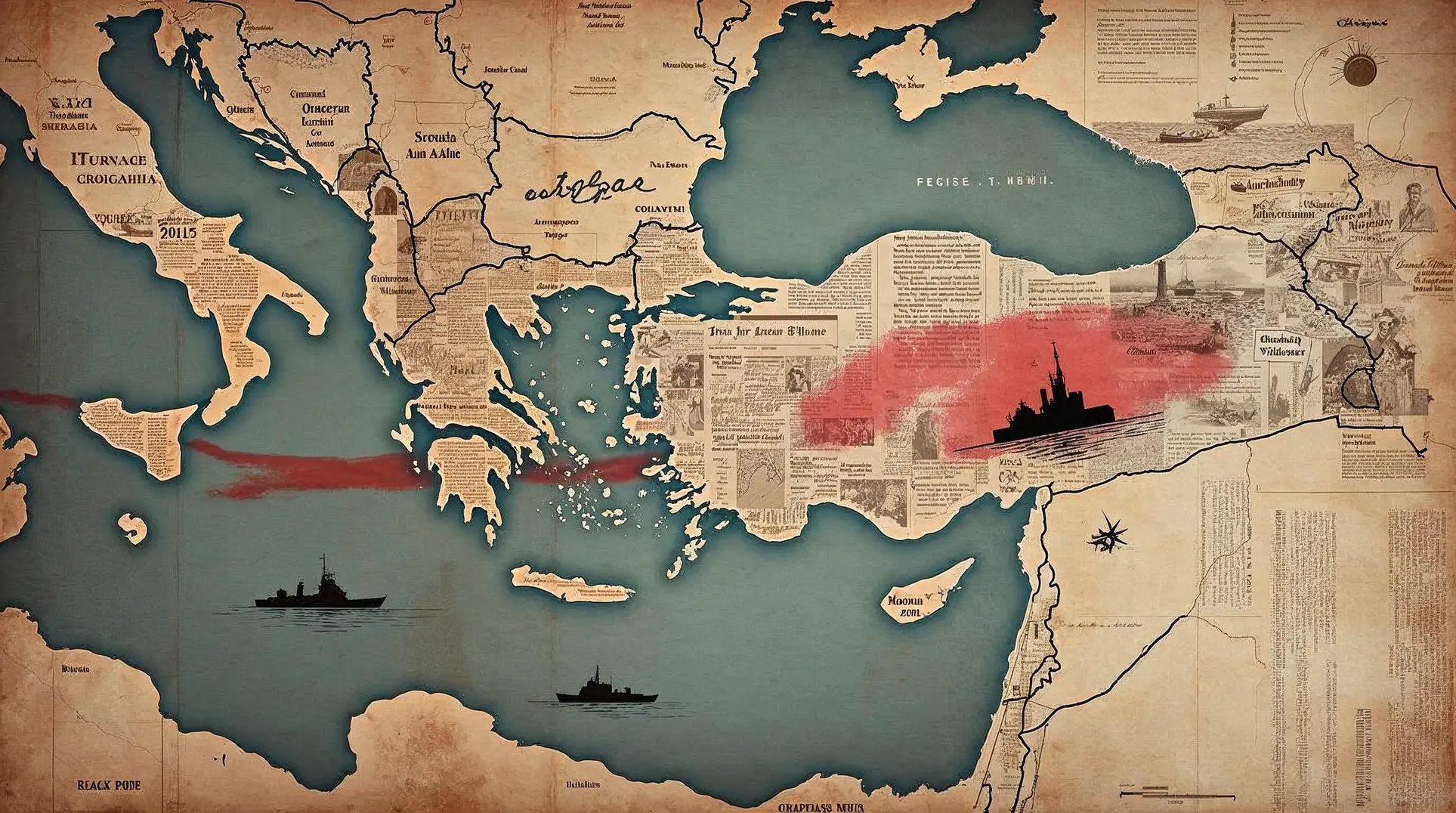
Members are reading: How Turkey is leveraging its mediator credibility to preempt Western dominance in the Black Sea's post-war security architecture.
Multi-vectored diplomacy in parallel
The timing of Fidan's Paris appearance coincides with President Recep Tayyip Erdogan's scheduled call with US President Donald Trump, discussions expected to cover both Ukraine and Gaza. This parallel engagement underscores Turkey's refusal to align exclusively with any single bloc. While Fidan addresses European coalition partners, Erdogan engages Washington, demonstrating Ankara's determination to maintain leverage across multiple diplomatic channels.
This multi-vectored approach has become the hallmark of Turkish foreign policy under Erdogan. Ankara has pitched its Black Sea security role following strikes near its coast, framing itself as both NATO ally and regional stabilizer. The strategy allows Turkey to extract concessions from competing blocs by positioning itself as indispensable to each, though it also invites suspicion about Ankara's ultimate loyalties.
Shaping the post-war maritime order
Turkey's Paris declaration represents more than rhetorical posturing. It is an early move in the diplomatic contest that will define Black Sea security once active hostilities conclude. Ankara is signaling that it will not accept a security architecture imposed by non-littoral NATO powers or one that relegates Turkey to a supporting role.
The stakes are substantial. Control over Black Sea security affects NATO's eastern flank, Ukraine's post-war sovereignty, Russia's naval access to the Mediterranean, and the energy routes that transit the region. Turkey's geographic position and institutional tools—particularly the Montreux Convention—give it leverage that few other actors possess. Fidan's statement in Paris aims to convert that leverage into a formal leadership role, ensuring that when the post-war order takes shape, Turkey is the architect rather than a stakeholder among many.
Subscribe to our free newsletter to unlock direct links to all sources used in this article.
We believe you deserve to verify everything we write. That's why we meticulously document every source.


