


Turkey's foreign minister met NATO's secretary general in Brussels on Wednesday to discuss Black Sea safety, hours after another commercial vessel was attacked off the Turkish coast—the latest in a string of strikes on Russia-linked tankers that has pushed shipping insurance rates higher and forced Ankara to warn it will not allow any actor to threaten regional maritime security. The meeting between Hakan Fidan and Mark Rutte, held on the margins of a NATO foreign ministers' gathering, comes as Turkey signals readiness to lead post-war maritime security arrangements in coordination with alliance partners, a positioning that reflects both immediate alarm over escalation near its exclusive economic zone and longer-term ambition to anchor Black Sea governance in a littoral-state framework.
The spate of attacks has crystallized the dilemma Ankara faces: how to contain spillover from a war it has carefully balanced—maintaining ties with Moscow, supporting Kyiv with drones and diplomatic cover, and keeping the Bosphorus closed to belligerent warships under the Montreux Convention—while safeguarding its own coasts and the freedom of navigation on which Turkish and regional commerce depends. The answer taking shape is a two-level strategy: immediate condemnation and coordination with NATO on risk management, paired with a bid to secure convening authority for whatever multilateral maritime architecture emerges once the guns fall silent.
Strikes in Turkey's economic zone
On December 2, the commercial vessel Midvolga-2, a Russian-flagged tanker carrying sunflower oil and en route from Russia to Georgia, was attacked approximately 80 miles off the Turkish coast; the crew was unharmed, according to Turkey's maritime authority. In preceding days, two Gambian-flagged tankers under Western sanctions—Virat and Kairos—suffered explosions near Turkish waters. Turkish authorities attributed at least one strike to unmanned maritime vehicles and posted images of fire aboard Kairos. Ukraine-linked security sources claimed responsibility for attacks on Russia's "shadow fleet," vessels that carry sanctioned crude and evade insurance requirements, using Sea Baby drones.
Reuters reported that the incidents drove up Black Sea shipping insurance premiums and prompted Turkish shipper Beşiktaş Shipping to halt Russia-related operations over security concerns. President Vladimir Putin responded by threatening to intensify strikes on Ukrainian infrastructure and to target tankers belonging to countries aiding Ukraine, adding that Russia could sever Ukraine's access to the sea entirely. The escalating maritime pressure campaign—Ukraine striking Russian logistics nodes at sea, Russia threatening to widen targeting in turn—raises risks not only for combatants but for neutral coastal states, insurers, and the aging, poorly maintained vessels that ply congested corridors.
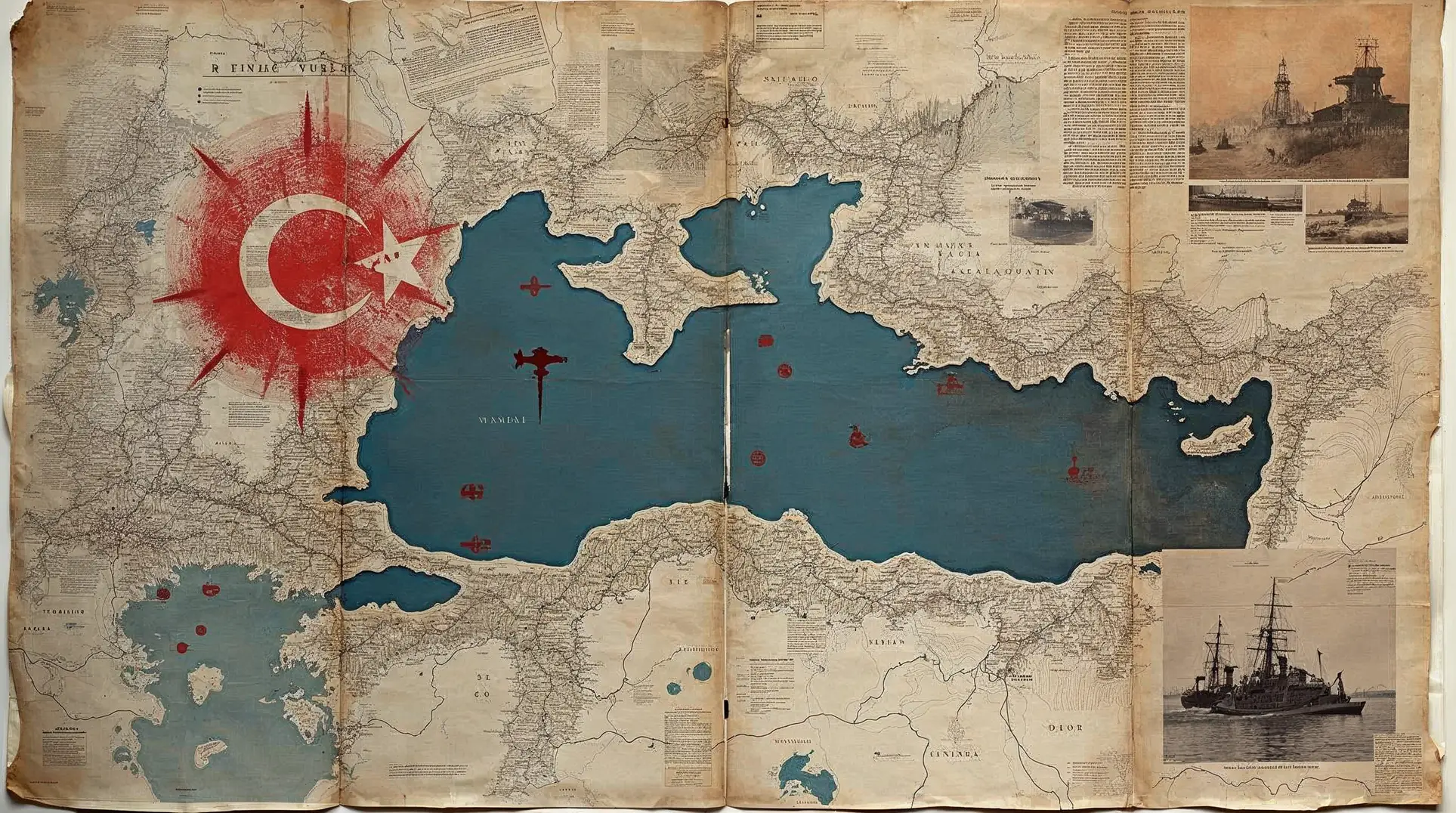
Members are reading: Why Turkey's maritime security offer is a bid to preserve Montreux and lock in littoral control, not invite NATO in.
Looking toward the Ankara summit
Preparations are underway for NATO's July 2026 summit in Ankara, a calendar marker that gives Turkey and allies roughly eighteen months to codify cooperation on immediate Black Sea risks and sketch the contours of longer-term architecture. In the near term, that means intelligence-sharing on drone and mine threats, coordinated maritime patrol schedules among Romania, Bulgaria, and Turkey, and quiet diplomacy to ensure Ukrainian strikes and Russian counter-threats do not draw NATO members into direct confrontation or trigger Article 5 consultations over incidents in economic zones.
Turkey's message is clear: it will lead, but only on terms that respect its geographic centrality, preserve the Montreux framework, and avoid transforming the Black Sea into a theater of overt great-power naval competition. Whether that vision survives contact with the war's chaotic maritime endgame—aging tankers, autonomous weapons, and legal gray zones—will determine whether the 2026 summit cements a durable littoral compact or merely papers over deepening fractures in alliance cohesion and regional security.
Subscribe to our free newsletter to unlock direct links to all sources used in this article.
We believe you deserve to verify everything we write. That's why we meticulously document every source.


