


The appearance of nuclear-capable Oreshnik hypersonic ballistic missiles at a former Belarusian airbase marks the first Russian deployment of such systems beyond its borders since the Cold War's end. Satellite imagery analyzed by researchers Jeffrey Lewis and Decker Eveleth reveals modifications at Krichev airbase in eastern Belarus consistent with preparations for these weapons, a development Moscow frames as a "response to the West's aggressive actions." The deployment arrives at a moment of strategic significance: weeks before the New START treaty's February 2026 expiration, as Russia refines its nuclear super-weapons and NATO accelerates its own military preparations across Eastern Europe.
Understanding this move requires setting aside reflexive condemnation to examine the strategic calculation from Moscow's perspective. This deployment serves multiple functions simultaneously—a visible demonstration of nuclear resolve, a counter to expanding US missile deployments in Europe, and a psychological weapon designed to fracture Western cohesion on Ukraine. Whether it delivers genuine military advantage remains debatable, but its political potency is undeniable.
The political signal outweighs tactical gain
Jeffrey Lewis, director of the East Asia Nonproliferation Program, argues bluntly that "there is no military reason to put the system in Belarus, only political ones." From this perspective, the Krichev deployment functions primarily as theater—a carefully staged demonstration that Russia's nuclear arsenal remains central to its strategic posture. The timing underscores this interpretation: positioning these weapons now, as New START collapses and arms control frameworks disintegrate, sends an unmistakable message that Moscow considers nuclear deterrence its most reliable guarantee against NATO encroachment.
The psychological dimension cannot be understated. By placing nuclear-capable systems in Belarus, Russia transforms its relationship with Minsk from partnership into visible military integration, deepening Alexander Lukashenko's dependence while demonstrating to European capitals the proximity of Russian strategic weapons. Each European government must now factor Krichev into its security calculations, knowing that hypersonic missiles capable of reaching their territory are positioned hundreds of kilometers closer than before. This proximity breeds anxiety, which breeds political pressure to reconsider support for Ukraine—precisely Moscow's objective.
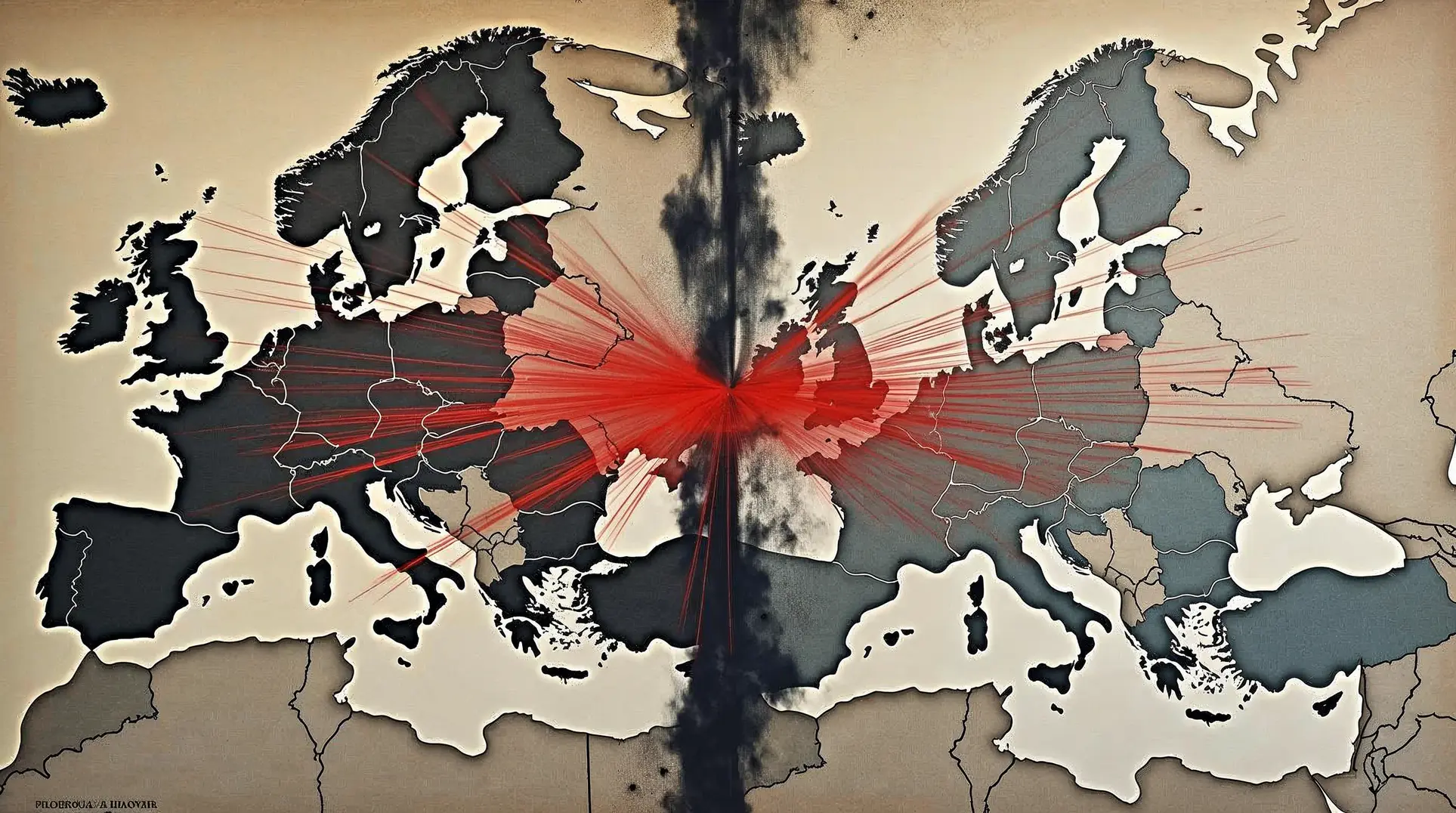
Members are reading: Analysis of how this deployment reshapes European strategic geometry and signals the end of post-Cold War arms control.
Strategic messaging meets uncertain outcomes
Whether the Krichev deployment ultimately succeeds in its objectives depends less on the missiles' technical specifications than on Western political cohesion. If European governments maintain support for Ukraine despite the heightened nuclear signaling, Moscow's gambit will have failed at significant diplomatic cost. If anxiety over proximity breeds policy recalculations, Russia will have achieved strategic effect without firing a shot.
The deployment's true significance lies in what it reveals about the deteriorating strategic environment. As arms control frameworks collapse and great power competition intensifies, both sides are reverting to Cold War-era logic: forward deployments, nuclear signaling, and strategic opacity. The Oreshnik missiles at Krichev represent not an aberration but a preview of the competition ahead—one where proximity, speed, and psychological impact matter as much as warhead counts. Moscow has made its calculation. How NATO responds will determine whether this deployment marks a successful signal or an overreach.
Subscribe to our free newsletter to unlock direct links to all sources used in this article.
We believe you deserve to verify everything we write. That's why we meticulously document every source.


