


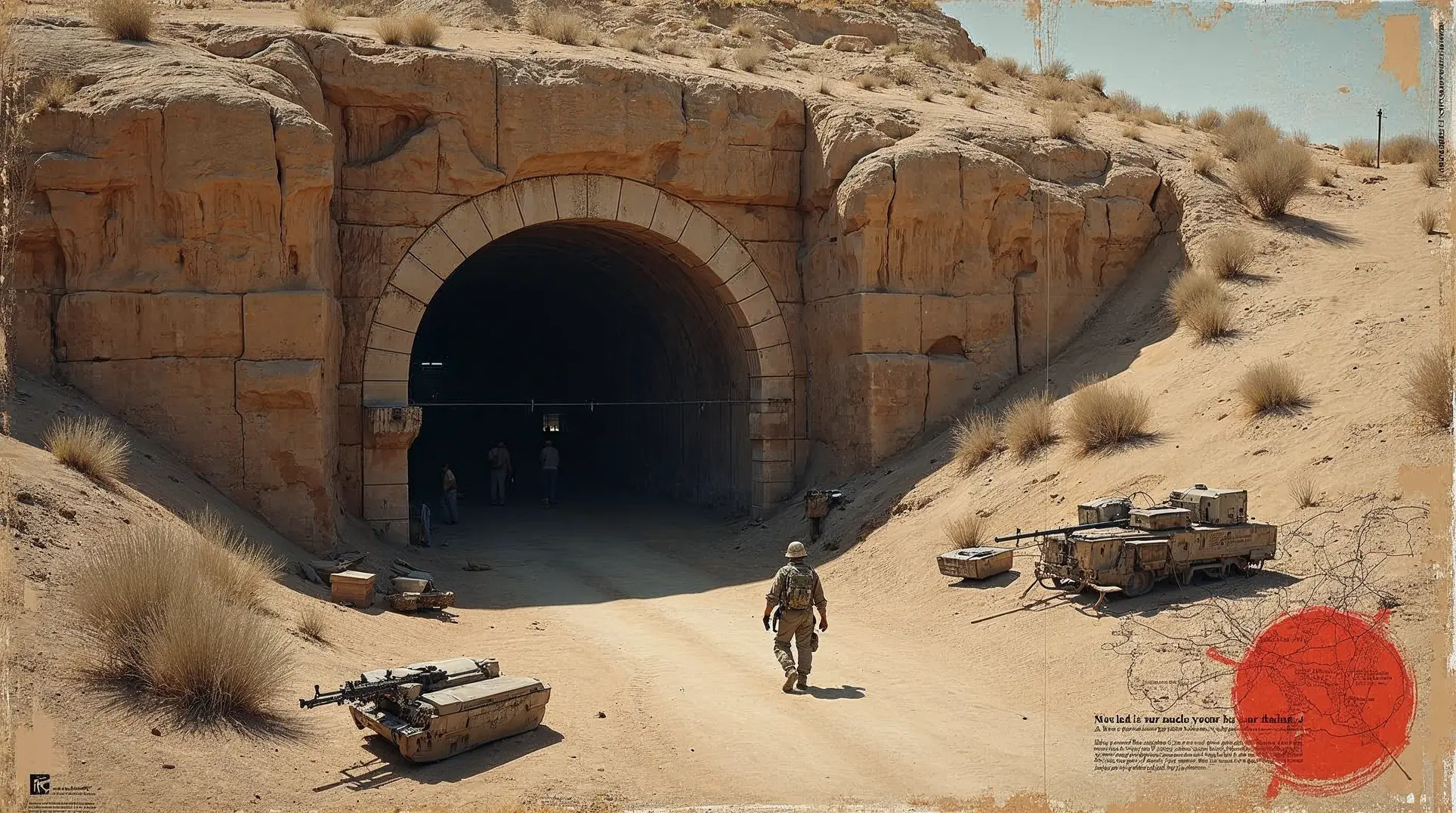
The British and French air forces conducted a joint bombing operation on Saturday evening targeting a suspected underground weapons storage complex north of Palmyra, Syria, previously used by the Islamic State. RAF Typhoon FGR4 fighters, supported by a Voyager tanker, dropped Paveway IV precision-guided munitions on access tunnels to the facility, with French aircraft participating in the coordinated strike. The UK Ministry of Defence reported initial assessments indicate the operation succeeded without civilian casualties.
The timing and character of the operation reveal more than routine counter-terrorism. Six years after ISIS lost its territorial caliphate, this strike represents a deliberate assertion of European security interests in the Middle East—and a tangible demonstration of the revitalized UK-France defense axis. Defence Secretary John Healey's recent Mansion House speech promised a "reboot of the Lancaster House Treaty" with France; this was that promise made kinetic.
Strategic housekeeping in a contested theater
The target selection itself carries strategic weight. Underground weapons caches represent dormant capability—infrastructure that insurgent groups can reactivate when conditions permit. By eliminating this facility now, London and Paris are performing what intelligence circles call "strategic housekeeping": denying future capability before it becomes an active threat. The choice of a remote, ISIS-affiliated target minimizes escalation risk with state actors like Russia and Iran, both of whom maintain significant presence in Syria, while still demonstrating resolve.
The strike occurs against a broader backdrop of Western concern about power vacuums. With American attention consumed by great power competition with China and ongoing support for Ukraine, secondary theaters like Syria risk becoming ungoverned spaces. European capitals understand that instability in the Levant generates direct consequences for Mediterranean security and migration flows. This operation signals that major European powers retain both the intelligence architecture to identify threats and the operational capacity to address them—capabilities that require continuous exercise to maintain credibility.
Members are reading: Why this small strike reveals the emerging blueprint for European strategic autonomy and future Middle East engagement.
Burden-sharing through selective engagement
The operation reflects a calculated approach to burden-sharing in an era of constrained resources. Neither Britain nor France can sustain large-scale interventions like the 2011 Libya campaign, particularly while prioritizing defense spending on deterring Russia in Eastern Europe. But targeted strikes require minimal footprint while maintaining strategic presence. By demonstrating capability to conduct precision operations based on indigenous intelligence, the two powers signal to Washington that they can manage certain regional threats independently—strengthening their position in negotiations over NATO burden-sharing and defense industrial cooperation.
The strike also serves a domestic political function. Both governments face publics weary of Middle Eastern entanglements yet concerned about terrorism. A successful precision operation against a weapons cache used by ISIS—with no casualties, no ground troops, and clear strategic rationale—offers a defensible use of force that maintains counter-terrorism credibility without risking the quagmire of regime change or nation-building.
This targeted approach to Syria reflects the realpolitik reality that European powers cannot resolve the conflict but must manage its second-order effects. Russia and Iran have secured their core interests; Assad remains in power; the territorial ISIS caliphate is defunct. What remains is strategic housekeeping: denying capability to residual extremist networks, maintaining intelligence presence, and demonstrating to regional actors that European interests still carry weight backed by kinetic capability. The weapons cache north of Palmyra represented one such opportunity—modest in scale but clear in purpose.
Subscribe to our free newsletter to unlock direct links to all sources used in this article.
We believe you deserve to verify everything we write. That's why we meticulously document every source.


