


- Trump sanctions Rosneft and Lukoil, targeting 3.1 million bpd—Russia's economic lifeline and half its crude exports
- India and China's compliance will determine success; both nations now risk U.S. financial exclusion for continued purchases
- Putin's evasion playbook includes steep discounts, shadow fleets, and shell companies—but all tactics erode revenues and sustainability
The chessboard shifted on October 22, 2025. For the first time since returning to the White House, President Donald Trump deployed the economic weapon he had long threatened but consistently withheld: sweeping sanctions against Russia's two largest oil companies, Rosneft and Lukoil. Treasury Secretary Scott Bessent's statement was unambiguous—"Now is the time to stop the killing"—but the subtext was more revealing. This wasn't about morality. This was about power, leverage, and a president whose patience with Vladimir Putin had finally run dry.
The sanctions represent more than a policy shift; they mark a fundamental recalibration of American strategy toward Russia's war in Ukraine. For nearly ten months, Trump had pursued what his administration characterized as "neutral mediation," eschewing the full-throated support for Kyiv that defined the Biden years. He imposed tariffs on India for buying Russian oil, threatened Europe for its energy dependence, and dangled the prospect of summits with Putin. Yet Moscow's response was consistent: tactical delays, rhetorical engagement, and zero substantive movement toward a ceasefire. The canceled Budapest summit—scrapped just days before the sanctions announcement—was the final straw. Putin had miscalculated, and Trump, ever transactional, responded in the only language the Kremlin truly understands: economic pain.
But will it work? The answer depends less on Washington's resolve than on the decisions made in two capitals that have quietly become the linchpins of Russia's wartime economy: Beijing and New Delhi. This is where the sanctions will either succeed or fail—and where the true contours of the emerging global order will be revealed.
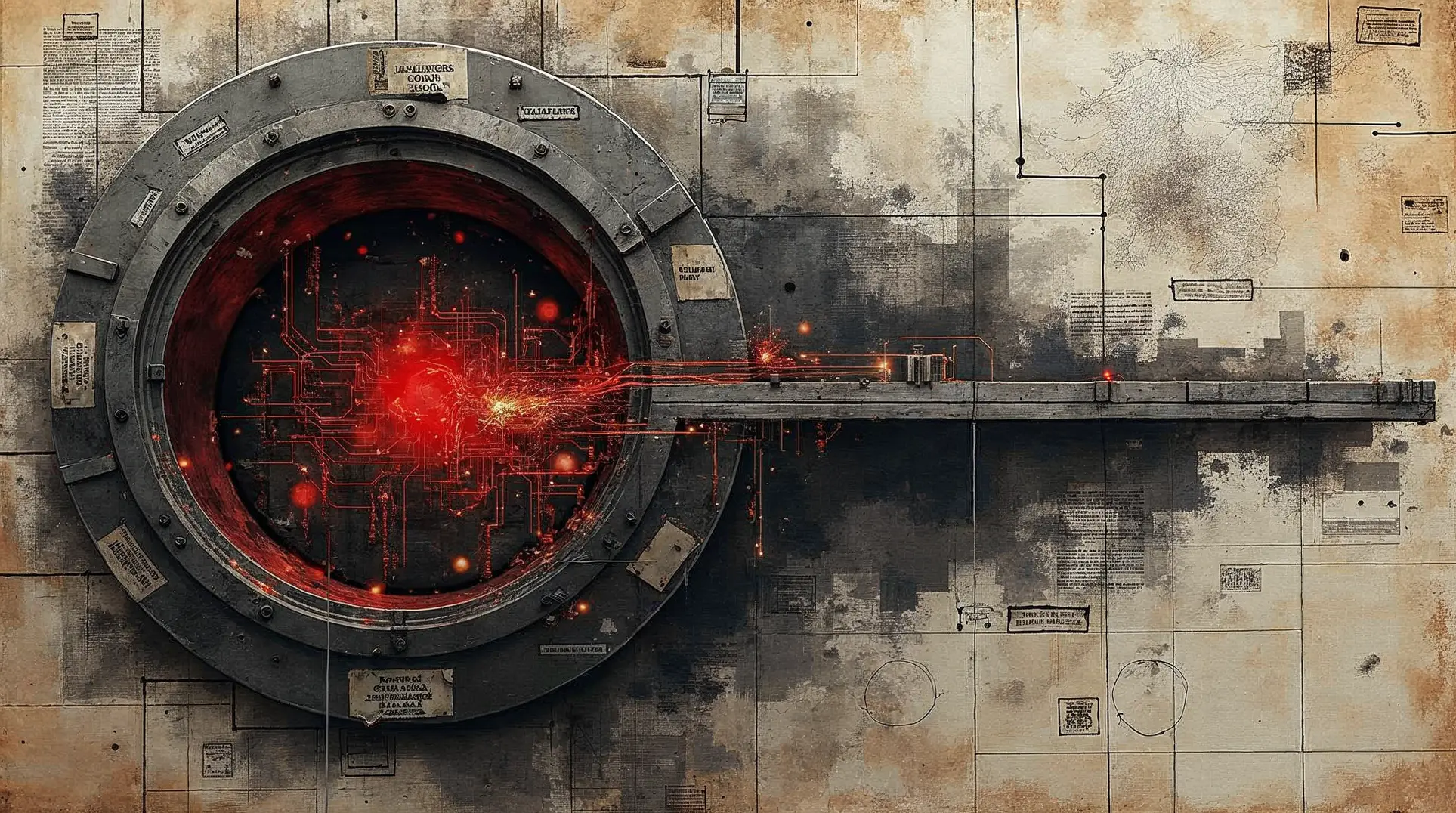
Discover why Trump's oil blockade could drain 40% of Putin's war chest—but only if he's willing to punish America's closest Asian partners. Will he pull the trigger?
India and China: The swing states of the sanctions regime
The effectiveness of any sanctions regime ultimately depends on the behavior of non-aligned states, and in this case, two countries matter above all others: India and China. Together, they account for the vast majority of Russian oil exports that previously flowed to Europe. Since the invasion of Ukraine, India has transformed from a marginal buyer of Russian crude (approximately 3% of imports in 2021) to the world's second-largest purchaser of Russian oil after China, with Russian barrels comprising approximately 36-38% of its total crude imports by early 2025. China, already Russia's largest customer via pipeline and seaborne routes, accounts for roughly 47% of Russian crude exports, cementing its position as the single largest buyer of Moscow's oil.
For both countries, the calculus has been straightforward: Russian oil, sold at $10-15 per barrel below Brent benchmarks, represents an economic windfall too attractive to ignore. Indian refiners, particularly private giant Reliance Industries, have built lucrative business models around processing cheap Russian crude and exporting refined products to global markets—including, ironically, back to Europe. Chinese state-owned enterprises, operating with implicit government backing, have similarly capitalized on Moscow's desperation for buyers.
The October 22 sanctions directly threaten this arrangement. Within days of the announcement, Reliance reportedly moved to halt or sharply reduce imports from Rosneft, with whom it holds a term contract for approximately 500,000 barrels per day. Indian state refiners, including Indian Oil Corporation and Bharat Petroleum, scrambled to ensure no direct supply from the newly sanctioned entities. The immediate response suggests that the threat of exclusion from the U.S. financial system is being taken seriously—at least for now.
China's reaction has been more opaque but equally telling. Multiple trade sources reported that Chinese state oil majors suspended purchases of seaborne Russian crude from Rosneft and Lukoil shortly after the sanctions took effect. Shandong Port Group, a major entry point for Russian oil, announced it would ban U.S.-sanctioned vessels from its facilities. Yet Beijing's official response was predictable: opposition to "unilateral sanctions" and a defense of "normal energy cooperation." The question is whether this rhetorical defiance translates into concrete action to circumvent the restrictions.
The geopolitical stakes extend far beyond oil markets. For India, the sanctions present a delicate balancing act. New Delhi has cultivated strategic partnerships with both Washington and Moscow, leveraging its non-aligned status to maximize diplomatic and economic flexibility. Yet India's defense relationship with Russia—decades of arms purchases, technology transfers, and joint exercises—cannot easily be replaced. At the same time, India's growing strategic convergence with the United States, driven by shared concerns about China, makes alienating Washington increasingly costly. The oil sanctions force a choice that India has long sought to avoid.
China faces a different dilemma. Beijing's support for Russia, while falling short of direct military assistance, has been critical to Moscow's ability to sustain its war effort. Chinese purchases of Russian oil, gas, and other commodities have provided Putin with the economic lifeline necessary to weather Western sanctions. Yet China's economy, already struggling with sluggish growth and deflationary pressures, cannot afford a rupture with the United States—its largest export market and a key source of technology and investment. If Trump follows through on threats to impose secondary sanctions on Chinese financial institutions or energy companies, Beijing will face an uncomfortable choice: abandon Russia or risk a broader economic confrontation with Washington.
Early indications suggest both countries are hedging. Indian refiners are exploring alternative suppliers—Middle Eastern producers, African exporters, even U.S. shale—while quietly seeking assurances that existing contracts can be wound down without penalty. Chinese buyers are likely pursuing similar strategies, potentially shifting to non-sanctioned Russian producers or exploiting loopholes in the sanctions architecture. The critical variable is enforcement. If the Trump administration demonstrates a willingness to impose secondary sanctions on major Indian or Chinese entities, compliance will likely follow. If Washington issues quiet waivers or turns a blind eye to creative workarounds, the sanctions will erode into irrelevance.
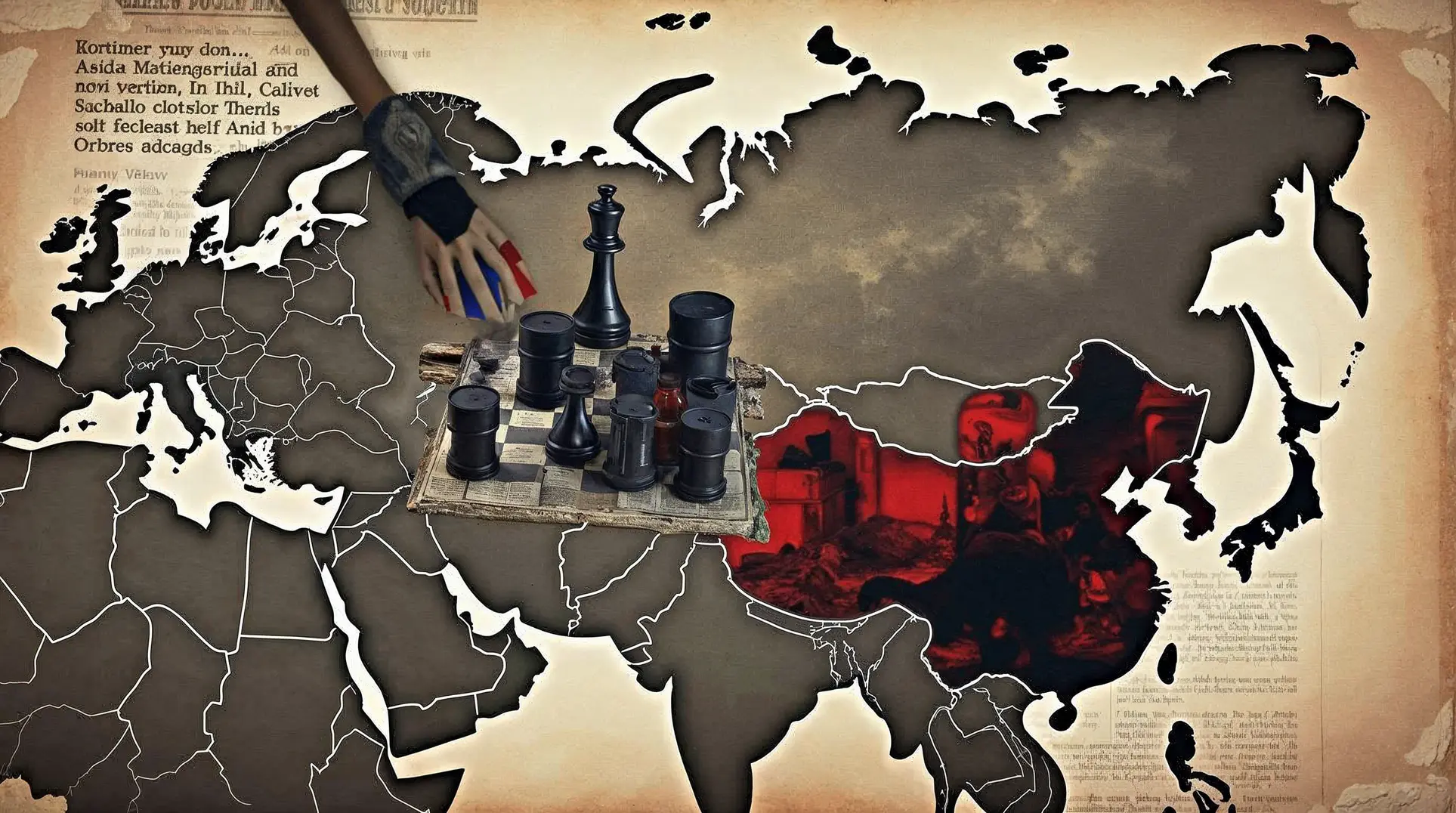
Inside Putin's secret arsenal: shadow fleets, shell companies, and billion-dollar discounts. The Kremlin's survival playbook revealed—and why it might not save him.
Europe's dilemma: Coordination or competition?
While the United States has taken the lead, Europe's role in the sanctions regime remains critical—and deeply complicated. The European Union announced its 19th sanctions package on October 23, including a ban on Russian liquefied natural gas imports by January 2027 and restrictions on Russian oil tankers. The United Kingdom, moving in tandem with Washington, sanctioned Rosneft and Lukoil a week before the U.S. action, signaling rare transatlantic coordination under a Trump administration often skeptical of multilateralism.
Yet beneath this surface unity lie significant fractures. Hungary and Slovakia continue to import Russian pipeline oil under exemptions negotiated in previous sanctions rounds, generating hundreds of millions of euros in revenue for Moscow. Bulgaria's Lukoil-owned refinery has operated under a similar carveout, allowing Russian crude to flow into the EU despite the embargo. These derogations, justified on the grounds of energy security and economic dependency, undermine the broader sanctions architecture and create arbitrage opportunities for Russian exporters.
More fundamentally, Europe faces a structural dilemma. The continent has dramatically reduced its reliance on Russian energy since 2022—Russian gas now accounts for just 13% of EU imports, down from nearly 40% before the invasion—but complete decoupling remains elusive. Some member states, particularly in Central and Eastern Europe, lack the infrastructure to fully replace Russian supply. Others, including Germany, have made significant investments in LNG terminals and alternative pipelines but remain vulnerable to price shocks and supply disruptions.
The U.S. sanctions on Rosneft and Lukoil, while welcomed by Brussels, also create competitive pressures. If Russian oil is effectively removed from global markets, European refiners will compete with Asian buyers for Middle Eastern, African, and American crude—driving up prices and potentially Reigniting inflation. Trump's stated goal of bringing U.S. gasoline prices to $2 per gallon may prove difficult to reconcile with a sanctions regime that tightens global supply. The risk is that domestic political pressure—either in the United States or Europe—leads to a weakening of enforcement or the issuance of broad waivers, hollowing out the sanctions from within.
The path forward requires sustained transatlantic coordination, a commodity often in short supply. If the United States, EU, and UK can maintain a unified front—closing loopholes, enforcing secondary sanctions, and resisting pressure from domestic constituencies—the impact on Russia will be severe. If they fracture, Putin will exploit the divisions, and the sanctions will join the long list of Western measures that looked formidable on paper but crumbled in practice.
The strategic endgame: Coercion, negotiation, or escalation?
Sanctions are not an end in themselves; they are a tool of statecraft designed to alter an adversary's behavior. The stated objective of the October 22 measures is clear: compel Russia to agree to an immediate ceasefire in Ukraine. Treasury Secretary Bessent's language—"Now is the time to stop the killing"—frames the sanctions as a humanitarian imperative, but the underlying logic is coercive. By targeting Russia's economic lifeline, Washington aims to raise the cost of continued war to a level Putin can no longer sustain.
Yet the historical record of sanctions-induced policy change is mixed at best. Economic pressure can degrade a state's capabilities, complicate its strategic choices, and impose domestic political costs on leadership. But autocratic regimes, insulated from public accountability and willing to endure significant hardship, often prove remarkably resilient. Russia has weathered more than three years of unprecedented Western sanctions, and while its economy has suffered—growth has stagnated, inflation has soared, and the ruble has weakened—the war continues. Putin has framed the conflict as existential, a narrative that resonates with significant segments of the Russian population and provides political cover for economic sacrifice.
The sanctions may, however, alter the terms of negotiation. If Russian oil revenues decline by 30-40%, as some analysts project, Moscow will face difficult fiscal choices. Defense spending, already consuming a massive share of the budget, cannot be easily cut without undermining the war effort. Social spending, pensions, and subsidies that maintain domestic stability will come under pressure. The Kremlin may conclude that a negotiated settlement—even one that falls short of its maximalist objectives—is preferable to prolonged economic attrition.
This is Trump's gambit: use economic leverage to create the conditions for a deal. The canceled Budapest summit, far from representing a failure, may have been a calculated move to signal seriousness. Putin, accustomed to Western leaders who threaten but rarely follow through, may have misjudged Trump's willingness to act. The sanctions are a message: the cost of intransigence is rising, and the window for negotiation is narrowing.
Yet the risk of escalation cannot be ignored. Cornered adversaries do not always capitulate; sometimes they lash out. Russia retains significant tools of asymmetric retaliation—cyberattacks on Western infrastructure, energy supply disruptions, support for hostile actors in the Middle East and Africa, even nuclear saber-rattling. If Putin concludes that the sanctions represent an existential threat to his regime, he may choose escalation over accommodation. The challenge for Western policymakers is to calibrate pressure carefully: enough to change Moscow's calculus, but not so much that it triggers a desperate, dangerous response.
The coming months will reveal whether Trump's strategy succeeds. If Russian oil revenues collapse, if Beijing and New Delhi comply with the sanctions, and if Putin faces mounting domestic pressure, a ceasefire may become conceivable. If, however, Russia finds workarounds, if enforcement falters, and if the economic pain proves manageable, the war will grind on—and the sanctions will be remembered as yet another example of Western overreach and underperformance.
Conclusion: Power, leverage, and the limits of economic warfare
The October 22 sanctions on Rosneft and Lukoil represent the most significant escalation of economic pressure on Russia since the invasion of Ukraine. They signal a fundamental shift in U.S. strategy—from attempting to limit Russian revenues while preserving market stability, to actively seeking to cripple Moscow's primary source of war funding. The measures are bold, comprehensive, and, if enforced rigorously, potentially devastating to the Kremlin's fiscal position.
Yet sanctions, however well-designed, are not a panacea. They are instruments of coercion, and their success depends on three variables: the willingness of third parties to comply, the ability of the target to adapt, and the resolve of the sanctioning power to sustain pressure over time. On all three counts, the outcome remains uncertain.
India and China hold the key. If major Asian buyers abandon Russian oil—or face secondary sanctions for continuing to purchase it—Moscow's revenues will crater. If they find workarounds, the sanctions will erode. The Kremlin, for its part, has proven adept at sanctions evasion, and will deploy every tool at its disposal to mitigate the impact. And Trump, ever transactional and sensitive to domestic political pressures, may waver if oil prices spike or if key allies balk at enforcement.
The deeper question is whether economic warfare, even at this scale, can compel a strategic retreat by a nuclear-armed autocrat who has staked his legacy on the subjugation of Ukraine. Putin has endured sanctions, battlefield losses, and international isolation. He has transformed Russia into a war economy, mobilized hundreds of thousands of conscripts, and accepted casualty rates that would topple most governments. The assumption that financial pressure alone will force him to the negotiating table may prove optimistic.
What the sanctions can do, however, is narrow Putin's options. They can degrade Russia's ability to sustain a long war, force painful tradeoffs between military spending and domestic stability, and create fissures within the elite. They can signal to Beijing and New Delhi that the cost of supporting Moscow is rising. And they can demonstrate, to allies and adversaries alike, that the United States retains the will and the capability to wield economic power in defense of strategic interests.
In the end, the sanctions are a test—of American resolve, of allied unity, of Russian resilience, and of the emerging global order. If they succeed, they may hasten the end of Europe's bloodiest conflict since World War II. If they fail, they will underscore the limits of economic coercion in an increasingly multipolar world. Either way, the decisions made in Washington, Brussels, Beijing, and New Delhi over the coming months will reverberate far beyond the battlefields of Ukraine. This is not merely about oil, or sanctions, or even the war. It is about power—who has it, who wields it, and who will shape the international system for the generation to come.
Subscribe to our free newsletter to unlock direct links to all sources used in this article.
We believe you deserve to verify everything we write. That's why we meticulously document every source.


