



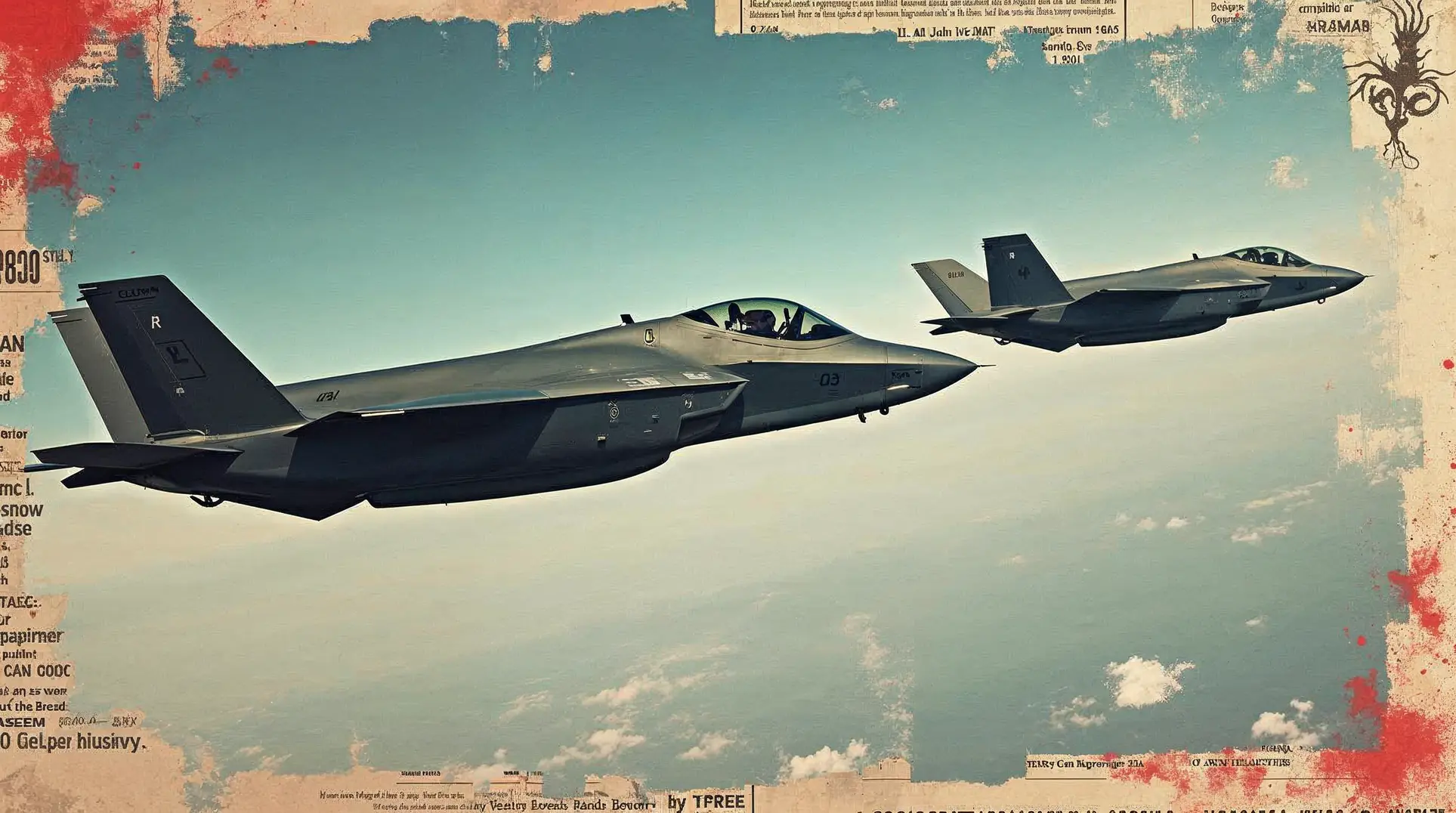
President Donald Trump's announcement that he intends to approve the sale of F-35 fighter jets to Saudi Arabia marks a decisive shift in how Washington balances commercial interests against strategic constraints in the Middle East. The timing—one day before hosting Crown Prince Mohammed bin Salman at the White House on November 18, 2025—signals that the administration views this transaction not merely as an arms deal, but as the cornerstone of a recalibrated U.S.-Saudi partnership that prioritizes economic leverage and alliance maintenance over traditional policy guardrails.
The sale of up to 48 of America's most advanced stealth fighters to Riyadh forces a reckoning with long-standing U.S. commitments, particularly the legal requirement to preserve Israel's Qualitative Military Edge (QME) in the region. It also exposes a fundamental contradiction in the administration's China strategy: the Pentagon cleared a key internal hurdle for the sale precisely to keep Saudi Arabia anchored in the U.S. security orbit, yet concerns persist within the administration itself that Riyadh's deepening ties with Beijing—joint naval exercises, China as its top trade partner—create unacceptable risks of sensitive F-35 technology reaching Chinese intelligence services.
The Dealmaker's Return
Trump's decision to rehabilitate Crown Prince Mohammed bin Salman represents the triumph of realpolitik over human rights considerations. This is MBS's first visit to Washington since 2018, before U.S. intelligence assessed that he likely ordered the murder of journalist Jamal Khashoggi. The pomp surrounding this visit—full diplomatic honors, substantive discussions on artificial intelligence investment and civil nuclear cooperation—demonstrates that the administration has definitively moved past that episode in favor of what it views as compelling strategic imperatives.
The F-35 sale fits squarely within Trump's transactional approach to foreign policy, echoing his broader dealmaking style in the Middle East, where personal relationships with regional leaders take precedence over institutional concerns. In 2017, Trump signed a defense cooperation framework with Saudi Arabia that the White House claimed would amount to $110 billion in defense equipment and services. Subsequent analysis has revealed substantial gaps between announced figures and actual deliveries: notifications of foreign military sales between 2017 and 2025 have totaled $34.6 billion, with completed foreign military sale transactions amounting to approximately $30 billion, and authorized direct commercial sales between FY2017 and FY2024 reaching $12.9 billion. The current F-35 agreement should be viewed through this lens: a headline-generating commitment that serves immediate political purposes while its implementation remains uncertain.
The Abraham Accords Calculation
The administration appears to be using the F-35 sale as leverage to bring Saudi Arabia into the Abraham Accords, expanding the normalization agreements between Israel and Arab states that Trump considers a signature foreign policy achievement. This strategy contains a critical vulnerability: Saudi Arabia has publicly maintained that normalization with Israel requires a credible path to Palestinian statehood—a position fundamentally at odds with the current Israeli government's stance. The recent Gaza ceasefire negotiations have highlighted these tensions, as Saudi Arabia positioned its participation in post-conflict reconstruction around the Palestinian issue.
The question is whether Trump is giving away a crucial incentive before securing the diplomatic prize. If the F-35 sale proceeds without Saudi normalization with Israel, the administration will have fundamentally altered the regional military balance without achieving its stated objective. Congressional critics will likely focus on this sequencing, arguing that the administration should have extracted normalization commitments before approving the transfer of America's most advanced fighter aircraft.
Members are reading: How the administration plans to resolve the legal requirement for Israel's military edge while selling F-35s to Saudi Arabia—and why the technology security risks may be worse than acknowledged.
Saudi Arabia's Strategic Hedging
The F-35 purchase must be understood within the broader context of Saudi Arabia's evolving security strategy, which increasingly involves hedging between major powers rather than exclusive reliance on Washington. The kingdom recently concluded a Strategic Mutual Defense Agreement with Pakistan, a move that diversifies its security partnerships beyond traditional dependence on the United States. This pattern reflects Riyadh's assessment that American commitments in the region are no longer as reliable as they once were, particularly after Washington's limited response to the 2019 attacks on Saudi oil facilities.
Crown Prince Mohammed bin Salman is pursuing technological and economic partnerships with China, including substantial investments in Saudi infrastructure and joint ventures in emerging technologies. The White House meeting's agenda items—potential Saudi investment in U.S. artificial intelligence infrastructure and cooperation in civil nuclear energy—reveal an administration scrambling to offer competitive alternatives that keep Riyadh oriented toward Washington. The F-35 sale is the security component of this broader competition for Saudi strategic alignment.
Conclusion
President Trump's decision to approve the F-35 sale represents a calculated bet that the commercial value of the deal, the imperative of maintaining the Saudi alliance, and the goal of preventing Riyadh's further drift toward Beijing outweigh the risks of challenging Israel's military edge and potential technology compromise. The White House meeting with Crown Prince Mohammed bin Salman will test whether this transaction can deliver the broader diplomatic dividends—particularly Abraham Accords expansion—that would justify such a significant policy departure.
Congressional scrutiny will be intense, focusing on the mechanics of preserving Israel's qualitative advantage and the adequacy of technology security measures. The answers to these questions will determine not just whether this particular sale proceeds, but whether it establishes a new framework for U.S. arms transfers in a Middle East where traditional policy constraints are increasingly viewed as obstacles to strategic competition with China. The Trump administration has made its priorities clear: commercial opportunity and alliance maintenance trump longstanding guardrails, and the consequences of that choice will reshape the regional order for years to come.
Subscribe to our free newsletter to unlock direct links to all sources used in this article.
We believe you deserve to verify everything we write. That's why we meticulously document every source.


