


- Trump forced unprecedented ceasefire by directly pressuring both Netanyahu and Hamas, naming himself accountable for enforcement
- Hamas refuses disarmament while Israel rejects Palestinian statehood—fundamental contradictions threatening deal's survival beyond initial phase
- Gaza's $70 billion reconstruction hinges on resolving 18-year Fatah-Hamas split and constitutional crisis in Palestinian governance
After two years of devastating conflict, a U.S.-brokered ceasefire offers hope—but can it survive the weight of unresolved questions about disarmament, governance, and lasting justice for both Israelis and Palestinians?
The ceasefire that took effect in Gaza on October 10, 2025, brought a pause to the deadliest conflict the Palestinian territory has witnessed since 1948. As Israeli forces partially withdrew to pre-designated lines and Hamas prepared to release the remaining 20 living hostages, Palestinians who had been displaced multiple times over two years began the long walk back to their destroyed homes in northern Gaza. The agreement, announced by President Donald Trump on October 8, represents the first phase of an ambitious 20-point plan designed not merely to halt the violence, but to fundamentally reshape the future of Gaza and the broader Israeli-Palestinian conflict.
Yet even as celebrations erupted in Tel Aviv's Hostage Square and in the rubble-strewn streets of Khan Younis, the fragility of this moment was unmistakable. The ceasefire came after more than 67,000 Palestinians and over 1,300 Israelis had been killed since Hamas's October 7, 2023 attack that ignited the war. Israel's military campaign had devastated 70 percent of Gaza's cropland, destroyed critical water and medical infrastructure, and left nearly 2 million people displaced. The humanitarian toll—confirmed famine in Gaza City, the collapse of essential services, and widespread trauma—created conditions that demanded immediate relief. But the deeper questions that have fueled decades of conflict remain unresolved, and the path from this tentative pause to a sustainable peace is fraught with obstacles that have derailed previous attempts.
Can this ceasefire hold where others have failed? And more fundamentally, can it evolve into something more than a temporary respite—a genuine foundation for the security, dignity, and self-determination that both Israelis and Palestinians deserve?
The agreement that brought guns silent in Gaza emerged from months of intense, often frustrated diplomacy that nearly collapsed multiple times before reaching fruition. The Trump administration's role proved decisive, but the path to agreement was anything but straightforward.
President Trump's Middle East Envoy Steve Witkoff made several trips to the region in the months following Trump's January 2025 inauguration, including a visit to Gaza itself to witness the humanitarian catastrophe firsthand. The administration's diplomacy intensified dramatically after Israeli strikes on Doha in September targeted senior Hamas leaders who were reportedly reviewing a Trump administration ceasefire proposal through Qatari mediation. The attack enraged Qatar, prompting Doha to suspend its crucial mediating role and threatening to derail the entire process.
Trump's response to this Israeli overreach became a turning point. Angered by the strikes, the president reportedly leveraged Netanyahu's miscalculation to compel the Israeli prime minister to agree to a deal. In a somewhat public humiliation, Trump forced Netanyahu to apologize to Qatar for the strikes—a remarkable moment that signaled the administration's willingness to pressure its closest Middle Eastern ally when strategic interests demanded it.
The final push combined public threats against Hamas, behind-the-scenes pressure on Netanyahu, and incentives to Qatar to resume mediation. Trump's son-in-law Jared Kushner—who maintains strong ties to both Israel and Gulf states—joined negotiations in the days prior to the October 8 breakthrough, adding a critical voice with close personal ties to the president. The administration also leveraged its relationships with Arab partners to forge a unified position supporting Trump's plan, with eight foreign ministers from Arab and Muslim-majority states issuing a joint statement welcoming the proposal. This coordinated pressure from regional states added significant weight to Hamas's decision to sign on.
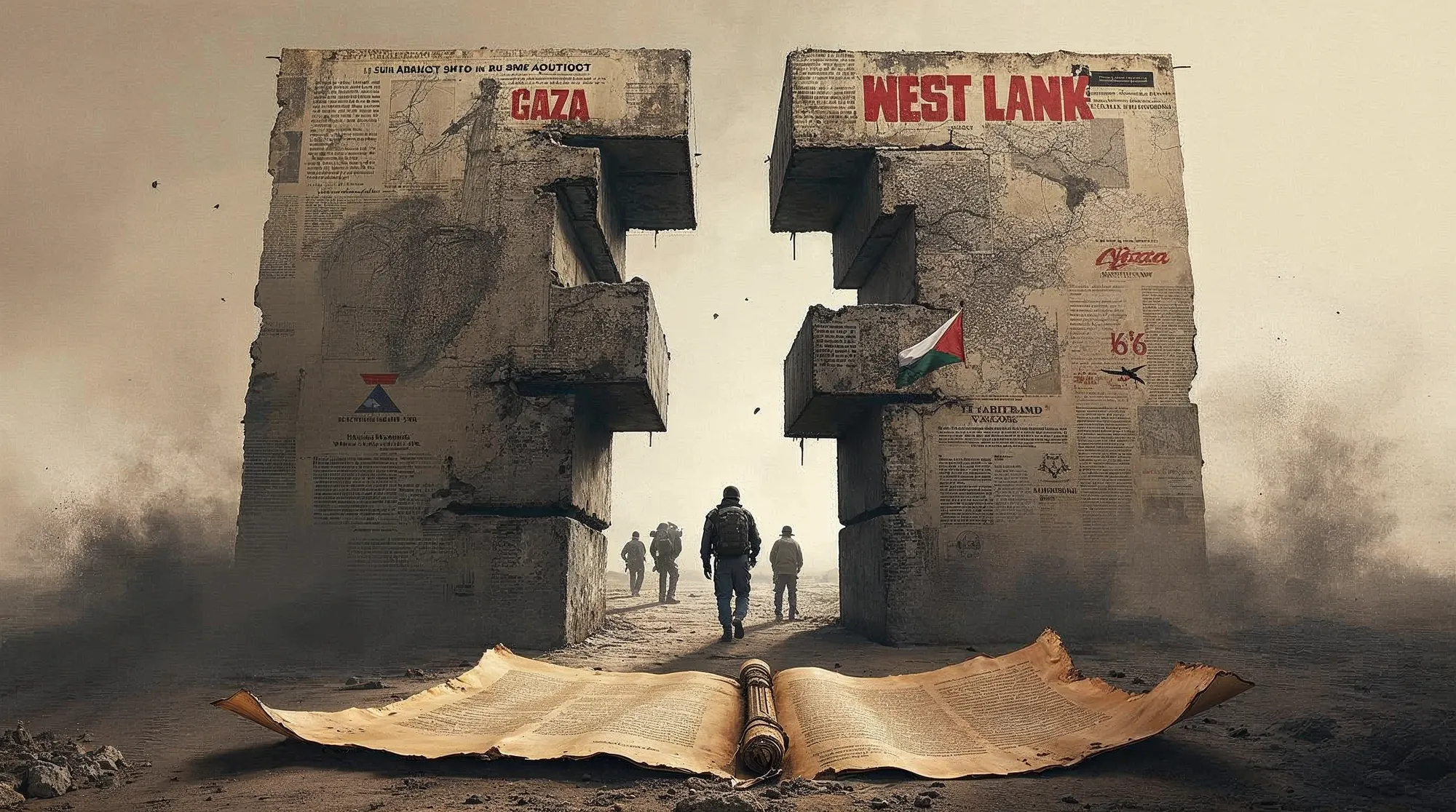
EXPOSED: How Trump secretly bypassed Israel to negotiate directly with Hamas—and why Netanyahu's humiliating apology to Qatar changed everything. Discover the shocking internal calculations that finally forced both sides to accept a deal no one believed was possible.
What the ceasefire delivers—and what it doesn't
The first phase of the agreement, which took effect at noon local time on October 10, includes several concrete provisions that represent significant achievements after two years of failed negotiations. Israeli forces began withdrawing to updated deployment lines, leaving them in control of approximately 53 percent of Gaza according to an Israeli government spokesperson. This partial withdrawal created the conditions for a 72-hour countdown during which Hamas must release all 48 remaining Israeli hostages—20 believed to be alive and 28 confirmed deceased.
In exchange, Israel committed to releasing approximately 2,000 Palestinian prisoners, including 250 serving life sentences and 1,700 individuals detained in Gaza since October 7, 2023, many held without charges under Israeli administrative detention laws. The agreement also promised a surge of humanitarian aid, with Israeli security officials telling CNN that 600 trucks carrying food, medical supplies, and materials for repairing vital infrastructure would be permitted to enter Gaza daily—a dramatic increase from the severely restricted flow that had contributed to famine conditions in Gaza City.
The humanitarian provisions include the reopening of the Rafah crossing between Gaza and Egypt, scheduled for October 14 under European Union supervision, allowing Palestinians to exit Gaza for the first time in months. The agreement also calls for the restoration of electricity and water services, the delivery of fuel to operate essential systems, and the provision of cooking gas—all of which had been cut off during Israel's "complete siege" imposed in October 2023.
Yet these tangible achievements represent only the beginning of what Trump's 20-point plan envisions. The most contentious issues—the ones that have derailed previous ceasefires and could easily collapse this one—remain unresolved and subject to further negotiation.
The question of Hamas disarmament looms largest. Trump's plan calls for the "demilitarization of Gaza under the supervision of independent monitors" and the destruction of "all military, terror and offensive infrastructure, including tunnels and weapons production facilities." But the agreement provides no clear timelines, benchmarks, or mechanisms for accomplishing this extraordinarily complex task. Senior Israeli defense officials estimate that Hamas's tunnel network in Gaza runs 350 to 400 miles long, stretching up to 200 feet underground. How these tunnels would be destroyed without causing massive civilian casualties or trapping hostages remains unclear.
Hamas has publicly rejected unilateral disarmament, viewing it as an internal Palestinian matter to be addressed through political reconciliation rather than external imposition. In early October 2025, Hamas agreed to "hand over the administration of the Gaza Strip to a Palestinian body of independent technocrats" but notably did not agree to disarm or forgo influence in Gaza. This fundamental disagreement over whether Hamas must cease to exist as a military force or can transform into a purely political entity represents perhaps the deepest divide in the negotiations.
The governance puzzle: Who will run Gaza?
Trump's plan envisions a complex transitional governance structure that would unfold in stages, but the details remain largely aspirational with significant gaps in implementation. The proposal calls for an internationally supervised "technocratic, apolitical Palestinian committee" composed of qualified Palestinians and international experts to assume immediate administrative control of Gaza. This committee would operate under the oversight of a new international entity called the "Board of Peace," which Trump announced he would chair personally.
The Palestinian Authority—which has governed parts of the West Bank since the 1990s Oslo Accords but lost control of Gaza when Hamas seized power in 2007—features prominently in the long-term vision. According to the plan, once the PA implements required reforms, it would eventually assume control of Gaza, reuniting the Palestinian territories under a single governing structure. The plan states that "while Gaza re-development advances and when the PA reform program is faithfully carried out, the conditions may finally be in place for a credible pathway to Palestinian self-determination and statehood."
Palestinian Authority President Mahmoud Abbas has expressed support for this vision, telling an Israeli television network in a rare interview that "we have launched reforms" in response to Trump's requirements. The PA has begun revising its payment system for prisoners' families and implementing changes in various sectors, though the depth and sustainability of these reforms remain subject to debate. Abbas emphasized that "the Palestinian Authority expects a significant role in post-war Gaza" and has been developing reconstruction plans since taking office 18 months ago. With Egypt's support, the PA has scheduled a reconstruction conference to take place one month after the ceasefire.
REVEALED: Why the Palestinian Authority is terrified of Gaza elections—and the constitutional crisis that could destroy any hope of unified governance. Members get exclusive access to the internal political calculations and legal obstacles that previous unity governments never solved.
The humanitarian emergency that persists
Even as the ceasefire brought relief from daily bombardment, the humanitarian situation in Gaza remains catastrophic. Two years of war have devastated the territory's infrastructure to a degree that will require years and tens of billions of dollars to repair. According to UN estimates, reconstruction costs could exceed $70 billion—a staggering figure that dwarfs the international community's typical humanitarian responses.
The scale of destruction is difficult to comprehend. Israel's military campaign destroyed or severely damaged over 60 percent of buildings in Gaza. The territory's water infrastructure suffered particularly severe damage: Israeli forces destroyed 70 percent of all sewage pumps and 100 percent of wastewater treatment plants. Water production dropped by 84 percent, reducing availability to less than five liters per person per day—equivalent to less than a single toilet flush and far below the minimum humanitarian standard.
The agricultural sector, which provided 45 percent of Gaza's food before the war and 100 percent of its vegetables, has been decimated. Israel's military operations destroyed 70 percent of Gaza's cropland, along with farms, orchards, and greenhouses that had sustained the population. Before the war, Gaza relied on approximately 500 truckloads per day of aid and commercial goods. During the conflict, only a fraction of this amount was permitted to enter, contributing directly to the famine conditions confirmed by the Integrated Food Security Phase Classification in August 2025.
The famine declaration—the first time this classification had been applied to Gaza—confirmed that starvation was occurring in Gaza City and neighboring areas, affecting more than half a million people experiencing catastrophic conditions characterized by starvation, destitution, and death. Another 1.07 million people—54 percent of the population—faced emergency levels of hunger. These conditions persisted even after the ceasefire took effect, as the surge of aid promised in the agreement materialized slowly.
UN officials reported on October 14 that while some aid had begun flowing, the anticipated surge had not yet occurred. A spokesperson for the UN Office for the Coordination of Humanitarian Affairs told CNN that expanded aid flow had not been allowed into Gaza in the first days of the ceasefire. UNRWA, the UN agency for Palestinian refugees, similarly reported no increase in aid deliveries. Only 137 trucks of food aid had entered Gaza since the ceasefire began—far short of the 600 daily trucks promised and a fraction of the 500 trucks that entered daily before the war.
The health sector faces near-total collapse. By the time the ceasefire took effect, only 14 hospitals remained even partially functional in Gaza, down from 35 before the war. The World Health Organization reported that 63 percent of hospitals had been damaged or destroyed, severely affecting the health system's ability to deliver life-saving services. Doctors Without Borders suspended operations in Gaza City in September, citing dangers posed by Israeli military operations that had encircled its clinics.
The psychological toll may prove even more difficult to address than physical reconstruction. Nearly every person in Gaza has been displaced at least once, with many displaced multiple times under continued shelling and aerial bombardments. Children have grown up knowing only war, displacement, and trauma. Yousra Abu Sharekh, a coordinator for INARA, a humanitarian organization, described the exhaustion felt by Palestinians: "It is an ending of the bleeding but it is not the start for Palestinians who lost their beloved ones."
Regional implications and the path forward
The ceasefire in Gaza exists within a broader regional context that has been fundamentally reshaped by two years of conflict. Israel's military campaign extended beyond Gaza to strike targets in Lebanon, Syria, Iraq, Iran, and Yemen—demonstrating a willingness to use force across the region that has altered the strategic landscape.
Israel decimated Hezbollah's leadership in Lebanon, contributed to the ouster of Bashar al-Assad in Syria, and conducted unprecedented strikes against Iran that left it severely weakened. These military victories established Israel as a regional hegemon capable of striking capitals across the Middle East. Yet as analysts at the Center for Strategic and International Studies noted, "Israel has not consolidated these military victories into sustainable strategic gains, as they have not been accompanied by diplomatic agreements."
The Israeli government now faces a choice between two fundamentally different paths. It could capitalize on the momentum created by the Gaza ceasefire to consolidate its military wins through diplomatic agreements—an approach that would align with the vision favored by Gulf states and facilitate regional de-escalation and integration. This path could include expanded normalization agreements with Arab states, potentially including Saudi Arabia, which has made clear that normalization depends on meaningful progress toward Palestinian statehood.
Alternatively, Israel could continue to prioritize a military-led strategy, maintaining its military presence in Lebanon and Syria and continuing to conduct strikes on adversaries. This approach might enhance Israel's military supremacy in the short term but would likely entrench regional destabilization and deepen Israel's international isolation. The choice between these paths will be shaped significantly by whether President Trump continues to exert leverage on Netanyahu, as he did in forcing the ceasefire agreement.
For Arab states, the ceasefire presents both opportunities and challenges. Egypt, Saudi Arabia, and the United Arab Emirates have increasingly embraced strategies that prioritize diplomacy and nonviolent foreign policies over military involvement in protracted conflicts. Egypt has scheduled a reconstruction conference for Gaza to take place one month after the ceasefire and is working with Qatar to facilitate ongoing negotiations. Saudi Arabia has emphasized its rejection of normalization with Israel before the establishment of an independent Palestinian state, aligning with Palestinian and Arab consensus.
Yet these same Arab states face pressure to contribute forces to the International Stabilization Force envisioned in Trump's plan—a commitment that carries significant risks without clear political buy-in from all Palestinian factions. The Damascus Declaration coalition of the 1990s, which brought together Gulf states to address regional security challenges, offers a potential model for coordinated Arab action, but recreating such coordination in today's more fragmented regional landscape will require sustained diplomatic effort.
Iran's role remains a critical variable. Tehran's alliance system in the region—the so-called "Axis of Resistance" comprising Hezbollah, Hamas, and various Shiite militias—has been severely weakened by Israeli military action and the Gaza ceasefire. An advisor to Iran's Supreme Leader suggested the ceasefire would only lead to conflict elsewhere in the region, while Iranian officials have expressed concern about being excluded from regional diplomatic processes. How Iran responds—whether by attempting to rebuild its alliance network or seeking diplomatic engagement—will significantly influence regional stability.
The two-state solution's uncertain resurrection
Perhaps the most remarkable aspect of Trump's plan is its embrace of a pathway to Palestinian statehood—a dramatic reversal from his first administration's approach and from recent Israeli policy. The plan explicitly calls on Israel to disavow any intent to annex Gaza, guarantees Gazans a right to return, and provides for Gaza to ultimately be governed alongside the West Bank by a reformed Palestinian Authority. Combined with U.S. assurances that it will oppose West Bank annexation, these provisions openly aim toward "a credible pathway to Palestinian self-determination and statehood."
This represents a significant shift in U.S. policy. The first Trump administration took several steps that appeared to undermine the two-state solution, including moving the U.S. embassy to Jerusalem and recognizing Israeli sovereignty over the Golan Heights. Netanyahu recently declared that "there will be no Palestinian state" just days after a visit by Secretary of State Marco Rubio. Israeli Finance Minister Bezalel Smotrich approved the controversial "E1" settlement plan in August 2025, explicitly stating it was intended to "permanently bury the idea of a Palestinian state."
Yet Trump's plan resurrects the two-state solution as a pillar of U.S. policy, albeit with significant caveats and conditions. The pathway to statehood depends on PA reforms being "faithfully carried out" and Gaza reconstruction advancing—conditions that create substantial room for disagreement about whether prerequisites have been met. The plan also requires Hamas to disarm and disband, with no role in Gaza's future governance—a demand that Hamas has not accepted and that may prove impossible to enforce without Palestinian political reconciliation.
International momentum toward Palestinian statehood has accelerated in recent months. In September 2025, ten countries—including Australia, Belgium, Canada, France, Luxembourg, Portugal, and the United Kingdom—announced formal recognition of the State of Palestine. A total of 157 countries now recognize Palestinian statehood, though the United States and Israel are not among them. The UN General Assembly endorsed the New York Declaration in September by a vote of 142 in favor, setting out a roadmap envisioning conditions that would eventually lead to Palestinian statehood and normalization between Israel and Arab states.
Netanyahu characterized these recognitions as a "reward" for the October 7, 2023 Hamas attack and rejected the premise of the two-state solution, claiming that allowing an independent Palestinian state would constitute "national suicide" for Israel. Some Israeli officials threatened to annex the West Bank in response—a move that the Israeli parliament called for in a non-binding resolution in July 2025.
This fundamental disagreement about the viability and desirability of a two-state solution represents perhaps the deepest obstacle to transforming the current ceasefire into lasting peace. Without Israeli acceptance of Palestinian statehood, the international community's ability to leverage reconstruction funding and diplomatic recognition to advance a political settlement will be severely limited. Gulf states have made clear they will not fund Gaza reconstruction—estimated at over $50 billion—without progress toward a comprehensive political solution that includes Palestinian self-determination.
Conclusion: Hope tempered by history
The ceasefire that brought quiet to Gaza on October 10, 2025, represents a genuine achievement after two years of devastating conflict. The return of Israeli hostages to their families, the release of Palestinian prisoners, and the pause in daily violence offer relief that should not be minimized. President Trump's willingness to pressure both sides, name himself as accountable for implementation, and leverage U.S. relationships to forge regional consensus succeeded where previous efforts failed.
Yet history counsels caution about declaring victory prematurely. The previous ceasefire, which began in January 2025, collapsed after just two months when Israel resumed military operations—a reminder that agreements on paper do not always survive contact with political reality. The fundamental issues that have fueled this conflict for decades—questions of sovereignty, security, justice, and dignity—remain unresolved. Hamas has not agreed to disarm, Israel has not committed to Palestinian statehood, and the governance structures envisioned for Gaza exist largely as aspirations rather than concrete plans.
The next six to twelve months will prove critical. If the second phase of negotiations can produce agreement on Israeli withdrawal, Hamas disarmament, and transitional governance, the ceasefire could evolve into something more durable. If reconstruction proceeds, humanitarian conditions improve, and Palestinians see tangible progress toward self-determination, the political space for compromise may expand. If regional states maintain pressure on both Israel and Hamas to adhere to commitments, and if the United States remains engaged in enforcement rather than simply mediation, the agreement's chances of survival increase substantially.
But if any of these conditions fail—if Israel resumes military operations, if Hamas retains its arsenal, if reconstruction stalls, if the PA proves unable or unwilling to govern effectively—the ceasefire could collapse as previous ones have, leaving Gaza and its people to endure yet another cycle of violence and suffering.
The ultimate test will be whether this moment can transcend the pattern of temporary pauses that have characterized the Israeli-Palestinian conflict for decades. Can the international community sustain attention and pressure long enough to address root causes rather than merely manage symptoms? Can Israelis and Palestinians find leaders willing to make the difficult compromises that peace demands? Can the architecture of occupation that has defined Palestinian life for 58 years finally give way to structures that recognize both peoples' legitimate aspirations for security and self-determination?
These questions will be answered not in the euphoria of hostages returning home or in the relief of families reunited, but in the grinding work of reconstruction, reconciliation, and political negotiation that must follow. The ceasefire has created an opening—fragile, contested, but real. Whether that opening leads to lasting peace or another tragic chapter in this conflict's long history depends on choices that Israelis, Palestinians, and the international community will make in the months ahead.


