


U.S. Secretary of State Marco Rubio is expected to miss next week's NATO foreign ministers' meeting in Brussels, two U.S. officials said, a highly unusual absence for Washington's top diplomat at a critical alliance gathering. Deputy Secretary of State Christopher Landau will attend the December 3 session, which comes as American and European officials scramble to reconcile gaps in President Donald Trump's proposed framework to end Russia's war in Ukraine.
The timing compounds a deeper disruption: on November 28, Andriy Yermak—President Volodymyr Zelenskyy's chief of staff and Kyiv's lead negotiator with Washington and European capitals—resigned following an anti-corruption raid on his home. The dual absence removes the two principal interlocutors from a negotiation that is already strained by divergent red lines and Moscow's warning that substantial changes to the U.S. draft plan would trigger a "fundamentally different" Russian response.
A personnel gap at a sensitive stage
Rubio's planned no-show is not without precedent—secretaries of state periodically delegate ministerial sessions—but it is uncommon when alliance cohesion is under stress. A State Department spokesperson declined to confirm his absence but noted that the NATO alliance had been "completely revitalized" during the Trump administration and that Rubio has met European officials recently in Geneva and "talks to NATO allies regularly." The spokesperson emphasized it is "impractical" for the secretary to attend every meeting.
Still, European diplomats had hoped for direct U.S. engagement in Brussels. The reported 28-point framework—described in detail elsewhere—would, as drafted, permit EU membership for Ukraine while barring NATO accession, prohibit alliance deployments on Ukrainian soil, require non-nuclear status, and cap Kyiv's armed forces at roughly 600,000. A "NATO-style" security assurance has been discussed but without publicly specified binding, treaty-grade enforcement mechanisms. Russian Foreign Minister Sergei Lavrov has said Moscow was favorably inclined to an earlier iteration of the plan but cautioned that alterations would fundamentally reset the calculus.
European capitals, meanwhile, are racing to revise the draft to avoid pre-recognizing Russian territorial control, to raise force ceilings, and to attach conditionality to frozen Russian assets. That effort requires close U.S.-EU coordination—precisely the kind of face-to-face negotiation a ministerial affords.
Kyiv's negotiating apparatus disrupted
Yermak's exit injects operational uncertainty at an equally delicate moment. As Zelenskyy's closest aide and the architect of Kyiv's Geneva-track diplomacy, Yermak centralized contact with the White House, the State Department, and European counterparts. His resignation came hours after anti-corruption agents searched his residence as part of an Energoatom-linked investigation reportedly involving roughly $100 million in alleged kickbacks—an inquiry media outlets have dubbed Operation "Midas." Yermak has not been charged, and Kyiv has not named a permanent successor.
For donor governments that condition assistance on rule-of-law benchmarks, how Ukraine prosecutes high-level corruption cases and manages leadership continuity will be closely watched. For the peace talks themselves, Yermak's departure creates a vacuum: no single official currently holds his institutional knowledge or personal rapport with U.S. and European negotiators. That gap complicates efforts to align Kyiv's positions with the evolving U.S.-EU compromise—and to present a unified front to Moscow.
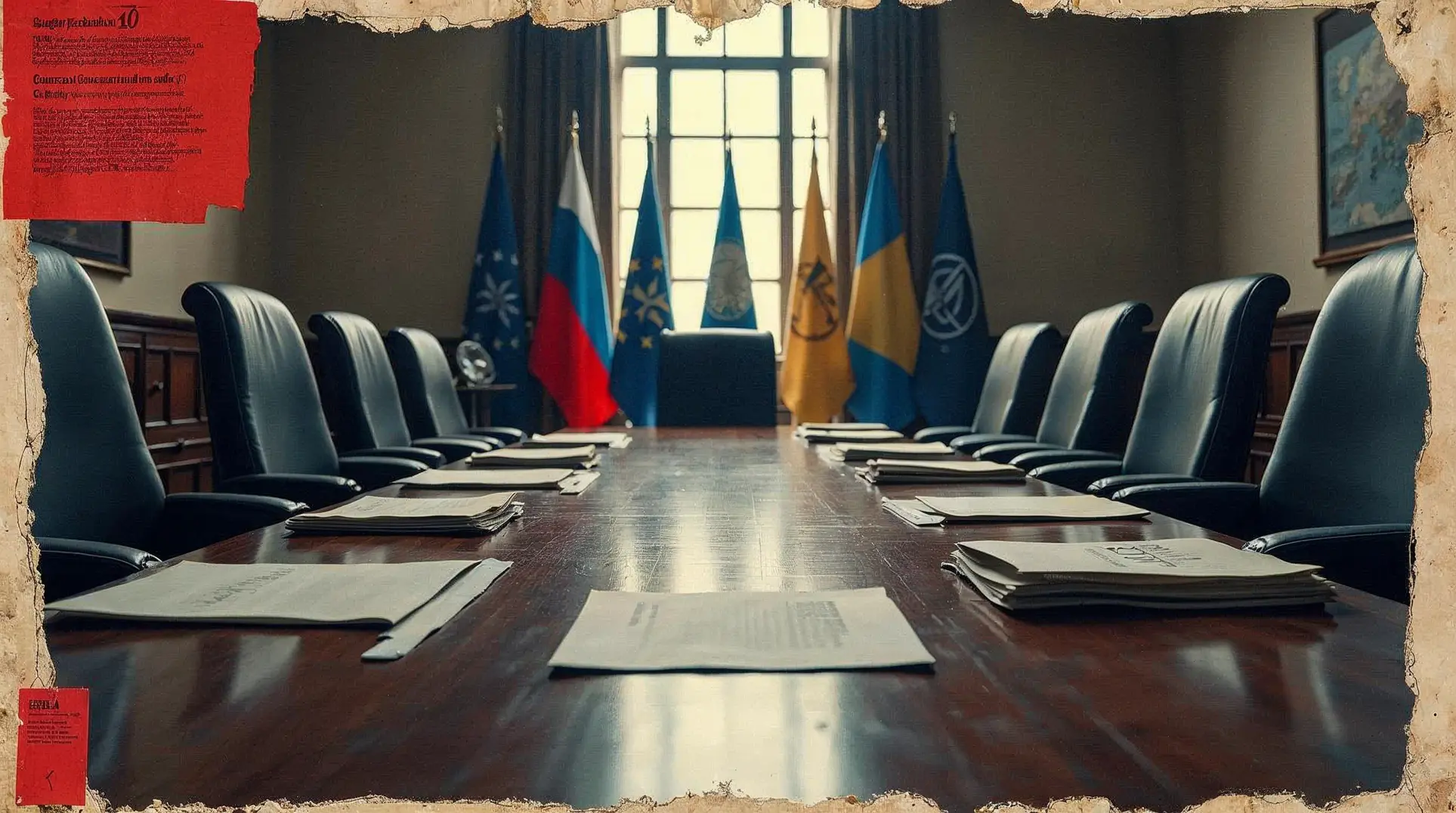
Members are reading: Why a "NATO-style" assurance without treaty mechanisms risks becoming declaratory theater—and how Europe is trying to build guardrails into the draft.
What to watch
The December 3 ministerial will test whether U.S.-European alignment can advance without Rubio's direct participation and whether Kyiv can sustain negotiating continuity amid leadership churn. Landau's presence signals that Washington remains engaged, but the optics of a secretary-level absence—combined with Yermak's exit—may embolden voices in European capitals who doubt Trump administration commitment to a structured, alliance-centered process.
Equally important is who Zelenskyy appoints to replace Yermak and whether that official can quickly rebuild trust and operational rhythm with U.S. and EU counterparts. The timeline is tight: if the reported framework is to be reconciled with European revisions and presented to Kyiv and Moscow for substantive negotiation, the window for quiet diplomacy is narrowing. Lavrov's warning that plan changes could reset Russian positions adds urgency—any delay or perceived disunity may be exploited.
Subscribe to our free newsletter to unlock direct links to all sources used in this article.
We believe you deserve to verify everything we write. That's why we meticulously document every source.


