


Senior officials from the United States, Ukraine, Germany, France, the United Kingdom, and the European Union convened in Geneva on Sunday to negotiate urgent changes to a U.S.-drafted 28-point peace plan that carries a November 27 deadline. The framework, which European leaders have publicly described as requiring "additional work," has triggered alarm across allied capitals for provisions that would cap Ukraine's armed forces, constitutionally bar NATO membership, and codify Russian territorial gains. With just four days to reshape the text, the meeting represents a high-stakes effort to insert enforceable security guarantees and sovereignty protections before Washington expects Kyiv's answer.
The Geneva session brings together U.S. Secretary of State Marco Rubio, special envoy Steve Witkoff, and Army Secretary Daniel Driscoll alongside a Ukrainian delegation led by Andriy Yermak and national security advisers from Europe's major powers. President Trump has called the plan his opening bid, telling reporters it is "not [his] final offer," a formulation that offers negotiating space but also underscores the document's origins as a largely unilateral U.S. initiative. For European allies accustomed to NATO's consensus-based decision-making and the principle of "nothing about Ukraine without Ukraine," the compressed timeline and the plan's reported concessions to Moscow pose institutional and normative challenges that cannot be resolved by rhetoric alone.
What the U.S. framework demands of Ukraine
According to reporting on the draft, the plan would require Ukraine to accept Russian control over Crimea, Luhansk, and Donetsk, freeze the contact line in Kherson and Zaporizhzhia, and withdraw from contested areas of Donetsk to establish a demilitarized buffer. Kyiv would be obliged to renounce NATO membership in its constitution, forswear the deployment of alliance forces on Ukrainian soil, and cap its armed forces at 600,000 personnel while accepting restrictions on certain weapons systems. In exchange, Washington has outlined "reliable security guarantees" described as possessing a NATO-style element—an implicit promise that an attack on Ukraine could trigger a transatlantic response—though the mechanisms for activation remain publicly unspecified.
The framework also envisions Russia's gradual reintegration into global institutions: phased sanctions relief, re-entry to the G8, and bilateral economic projects with the United States. Reconstruction would draw on frozen Russian assets, and a Peace Council chaired by President Trump would monitor implementation alongside broad amnesties and elections within 100 days. President Putin has welcomed the plan as a basis for talks while warning that further Ukrainian refusal would invite additional Russian territorial seizures—a sequence that places Kyiv between accepting terms it views as capitulation or risking isolation from its most powerful backer.
 Elena Kowalski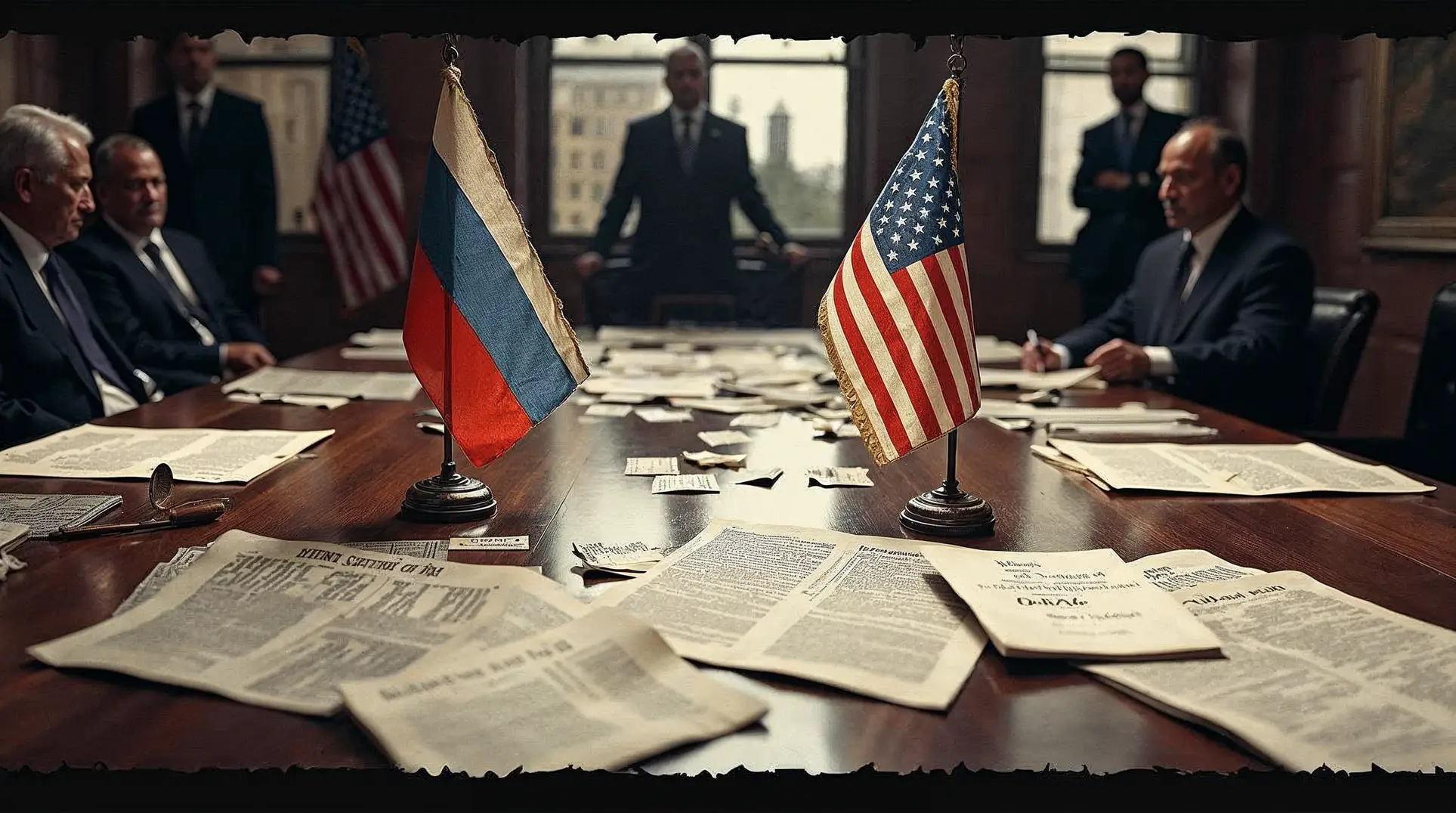
Why European officials are pushing back
European reactions have been uniform in their caution and pointed in their objections. Officials from the EU, France, Germany, and the United Kingdom have emphasized that the document is a draft requiring substantial revision, with European Commission President Ursula von der Leyen reiterating the formula "nothing about Ukraine without Ukraine." The core European concerns center on three institutional and strategic vulnerabilities embedded in the current text.
First, capping Ukraine's armed forces at 600,000 while leaving enforcement of any ceasefire to an untested Peace Council would, in the European assessment, leave Kyiv unable to deter renewed aggression once Russian forces have regrouped. Second, constitutionally barring NATO membership removes Ukraine's sovereign right to choose its security alignment—a principle enshrined in the alliance's 2008 Bucharest declaration and reaffirmed in successive summits. Third, freezing territorial lines or granting de facto recognition to Russian-occupied regions contradicts the foundational European norm that borders cannot be changed by force, a standard with direct implications for stability from the Baltics to the Black Sea. As one EU statement put it, any agreement must ensure that borders are not altered by coercion, a red line the draft text appears to blur.
Members are reading: Why the plan's enforcement mechanisms fail NATO's consensus test and risk repeating the Minsk cycle.
What to watch before Thursday
President Zelenskyy has framed Ukraine's dilemma as a choice between "loss of dignity or risk of losing a key partner," promising to present alternatives while vowing not to "betray" Ukrainian interests. The Geneva talks offer a narrow window to reshape the text before the November 27 deadline, and European officials are prioritizing several specific changes: removal or significant relaxation of the 600,000 troop cap; protection of Ukraine's right to pursue future security arrangements; explicit rejection of border changes achieved by force; and the construction of multilateral, legally binding guarantees with defined activation criteria. Italy has sent an official to Geneva, reflecting concern that the framework's precedent could affect broader European security norms.
The risk if the plan proceeds largely unchanged is straightforward: Ukraine would emerge from a pause militarily constrained, territorially diminished, and dependent on guarantees that lack the institutional weight to deter a rested and rearmed adversary. The risk if talks collapse is equally stark: continued attrition through a winter marked by Russian infrastructure strikes, a potential rupture in U.S.–Ukraine relations, and a deepening transatlantic fracture that exposes the limits of Europe's independent support capacity. The Geneva session is an attempt to navigate between these outcomes, but the four-day timeline and the distance between opening positions suggest that Thursday's deadline may mark the beginning of a more protracted negotiation rather than its conclusion.
 - Chen Wei-Lin
Subscribe to our free newsletter to unlock direct links to all sources used in this article.
We believe you deserve to verify everything we write. That's why we meticulously document every source.


