


The Kremlin on Sunday dismissed NATO Secretary General Mark Rutte's warning that Russia could be ready to use military force against the alliance within five years, calling his remarks "irresponsible" and evidence that he misunderstands the devastation of World War Two. Spokesman Dmitry Peskov reiterated that Moscow has no intention of attacking NATO, framing Western alarm as dangerous hysteria. The exchange sharpens a core debate in European security: whether NATO's accelerating deterrence posture reflects prudent risk management or risks becoming a self-fulfilling prophecy driven by worst-case assumptions.
Rutte's Dec. 11 speech in Berlin was explicit and data-driven. He argued that observable Russian production, hybrid operations, and economic mobilization point to a capability window opening before 2030, requiring NATO to adopt a "wartime mindset" now to prevent conflict later. The Kremlin's swift rejection underscores the chasm between Brussels' deterrence calculus and Moscow's narrative that NATO expansion—not Russian military activity—drives European instability. For policymakers across the continent, the challenge is threading the needle: building credible readiness without inflaming the very threat they seek to deter.
Russia's military-industrial surge and hybrid pressure
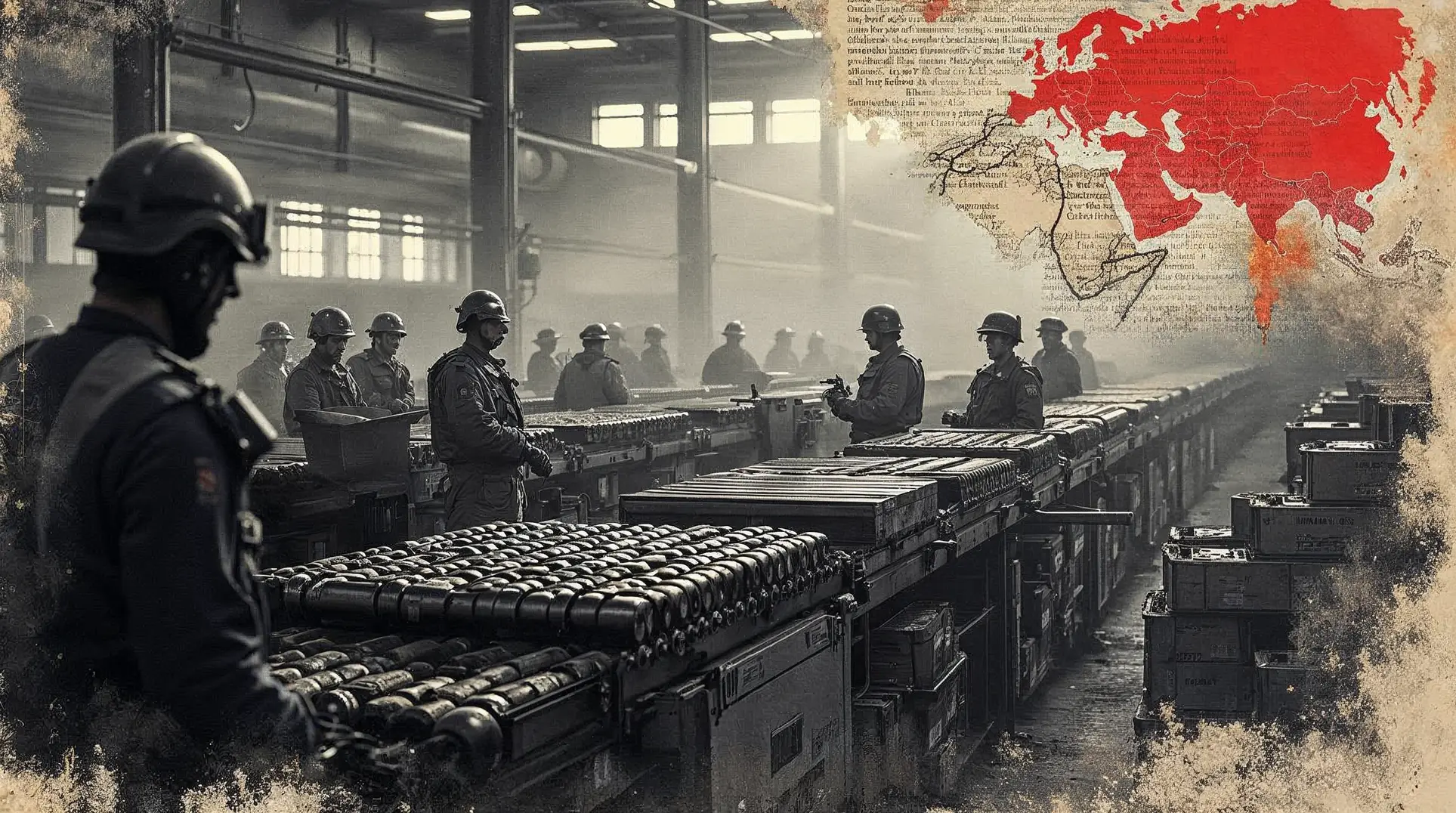
Rutte anchored his warning in concrete metrics. He told the Berlin audience that Russia launched over 46,000 drones and missiles at Ukraine in 2025 alone, producing approximately 2,900 attack drones per month plus decoys, and manufacturing some 2,000 land-attack cruise and ballistic missiles this year—near peak wartime output. He cited 1.1 million Russian casualties since 2022 and roughly 1,200 daily casualties (killed or wounded) in 2025, yet noted that Moscow continues to sustain offensive operations. Russia's defense budget—around $200 billion in purchasing-power terms—consumes nearly 40 percent of state expenditure, with an estimated 70 percent of machine tools directed to military production. Inflation remains high; petrol rationing has been introduced in some regions. This is, by any measure, an economy on a war footing.
Beyond conventional capacity, Rutte catalogued a pattern of hybrid aggression directed at NATO members: sabotage plots including parcels with explosives, airspace violations by drones over Poland and Romania, manned fighter incursions over Estonia, and systematic maritime mapping by Russian spy vessels along undersea infrastructure routes. NATO has responded with new surveillance operations—Eastern Sentry on land and Baltic Sentry at sea—and deployed AI-powered counter-drone systems on the eastern flank. The Secretary General framed these moves as calm and proportionate, but insisted they signal readiness for escalation if Moscow miscalculates. He also highlighted China as Russia's industrial lifeline, supplying an estimated 80 percent of critical electronics in Russian military drones and systems.
Members are reading: How NATO's five-year readiness clock collides with a ten-year spending timeline, and why the capabilities-intentions debate shapes Europe's real vulnerability.
The 2026 test: aligning timelines and governance
Rutte's speech also spotlighted NATO support to Ukraine as a practical test of alliance industrial capacity. The PURL program—launched in summer 2025—has supplied roughly 75 percent of Patriot missiles and 90 percent of other air-defense ammunition to Kyiv, financed by allies but sourced from U.S. production. He argued that "Ukraine's security is our security," linking battlefield outcomes to deterrence credibility on NATO's borders. Meanwhile, Reuters and other outlets report that in parallel Berlin peace talks, Ukrainian officials have indicated willingness to forgo NATO membership in exchange for robust Western security guarantees—a signal that diplomatic tracks remain open even as military readiness accelerates.
The coming year will reveal whether NATO and EU institutions can close the gap between rhetoric and resources. Key markers include: faster legal and intelligence frameworks for attributing hybrid attacks; alignment of national defense budgets with the declared five-year timeline rather than the 2035 pledge; and concrete industrial contracts that translate political commitments into ammunition stocks, air-defense batteries, and logistics networks. Rutte's warning is designed to spur action, but without institutional follow-through, it risks becoming another entry in the long catalog of European threat assessments that mobilize summits but not soldiers—or shells.
Subscribe to our free newsletter to unlock direct links to all sources used in this article.
We believe you deserve to verify everything we write. That's why we meticulously document every source.


