


Prime Minister Benjamin Netanyahu had directed officials on April 9 to initiate direct negotiations with Lebanon, with stated objectives of disarming Hezbollah and normalizing relations. The directive followed repeated Lebanese requests for direct talks and came amid broader U.S.-brokered regional diplomacy. Yet the fundamental divergence between Israeli demands for Hezbollah's disarmament and Lebanese government appeals for an immediate ceasefire to facilitate talks creates a diplomatic environment where progress appears constrained by structural power imbalances rather than technical negotiating points.
Latest situation update
On April 14, Israeli and Lebanese officials held direct talks in Washington, D.C., mediated by Secretary of State Marco Rubio. According to State Department sources, the discussions focused on frameworks for disarming Hezbollah and establishing normalized Israeli-Lebanese relations, though no agreement was reached. Lebanese officials maintained that a temporary ceasefire is essential before substantive negotiations can proceed, while Israeli representatives consistently ruled out any pause that does not include Hezbollah's disarmament as a precondition.
Cross-border attacks have continued despite diplomatic momentum. On April 15, Hezbollah launched fresh rocket barrages on northern Israel, lightly wounding one person, while Israeli strikes hit southern Lebanon throughout the day. The Lebanese Ministry of Health reported that the death toll from Israeli aggression since March 2 has risen to 2,124, with 6,921 wounded. Over 10,000 structures have been heavily damaged or destroyed in southern Lebanon. The humanitarian crisis deepens even as diplomatic channels theoretically open.
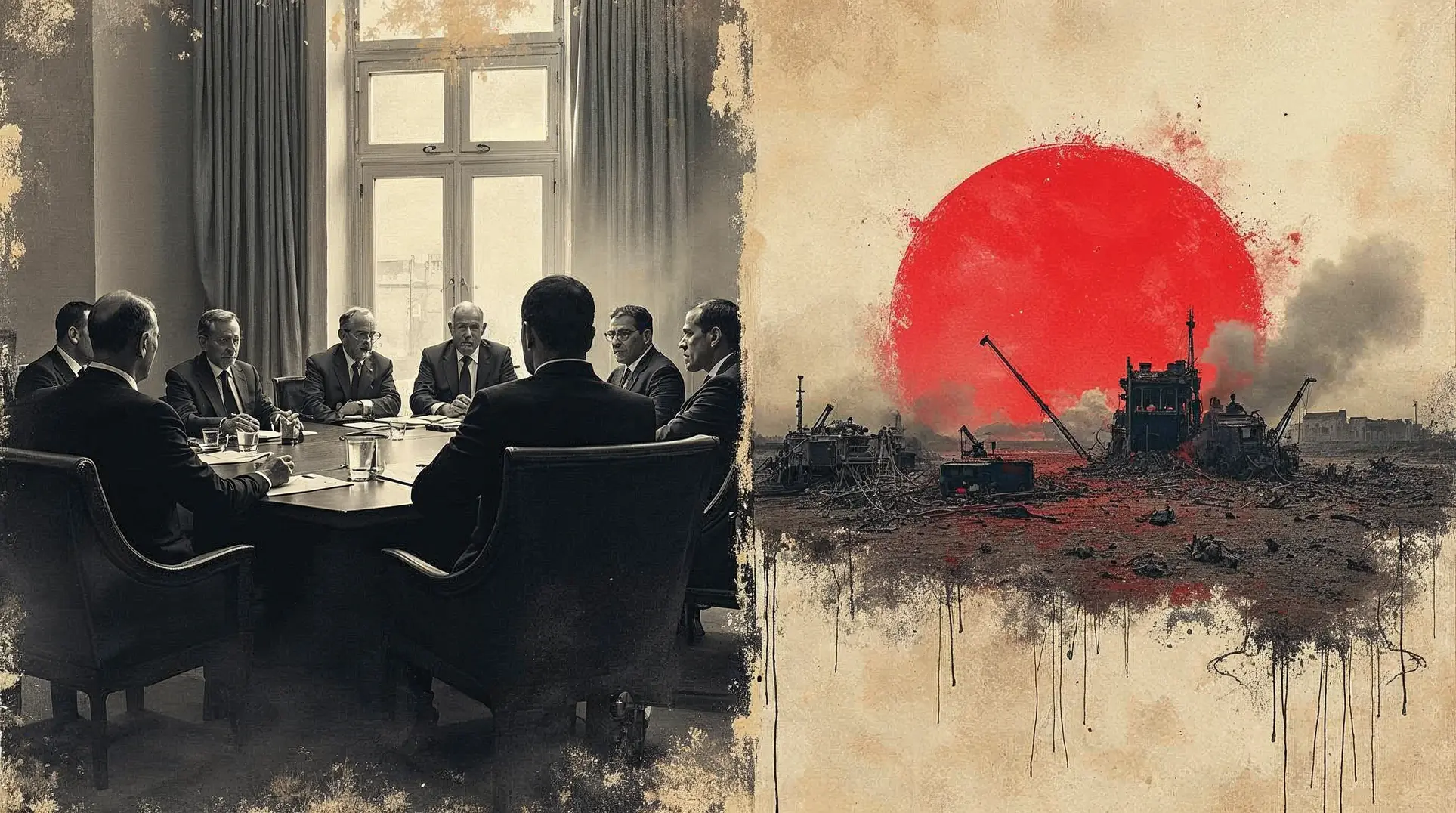
Members are reading: How the Lebanese government's structural weakness undermines any ceasefire prospects and what Netanyahu's approach signals about Israel's regional strategy.
Lebanese government caught between Israeli demands and Hezbollah autonomy
The Lebanese government's position illustrates the core tension undermining diplomatic progress. Beirut has called for international intervention to halt Israeli strikes and supports a temporary ceasefire to create space for negotiations. However, Lebanese officials acknowledge they cannot compel Hezbollah to accept disarmament—the central Israeli demand—given the organization's political entrenchment and military autonomy. Hezbollah officials have stated explicitly that the group answers to its constituency and Iran, not Lebanese state institutions.
This structural reality places Lebanon in an impossible bind: unable to deliver what Israel demands, yet bearing the humanitarian consequences of continued conflict. The death toll since Hezbollah entered the war in March has exceeded 2,100, with critical infrastructure destroyed and hundreds of thousands displaced. The Lebanese government seeks relief while lacking negotiating power, caught between Israeli military operations and Hezbollah's refusal to subordinate its strategic calculus to state authority. Ongoing diplomatic engagement will determine whether Israel is prepared to accept outcomes that fall short of comprehensive Hezbollah disarmament, or whether military pressure will continue regardless of diplomatic engagement.
Subscribe to our free newsletter to unlock direct links to all sources used in this article.
We believe you deserve to verify everything we write. That's why we meticulously document every source.


