


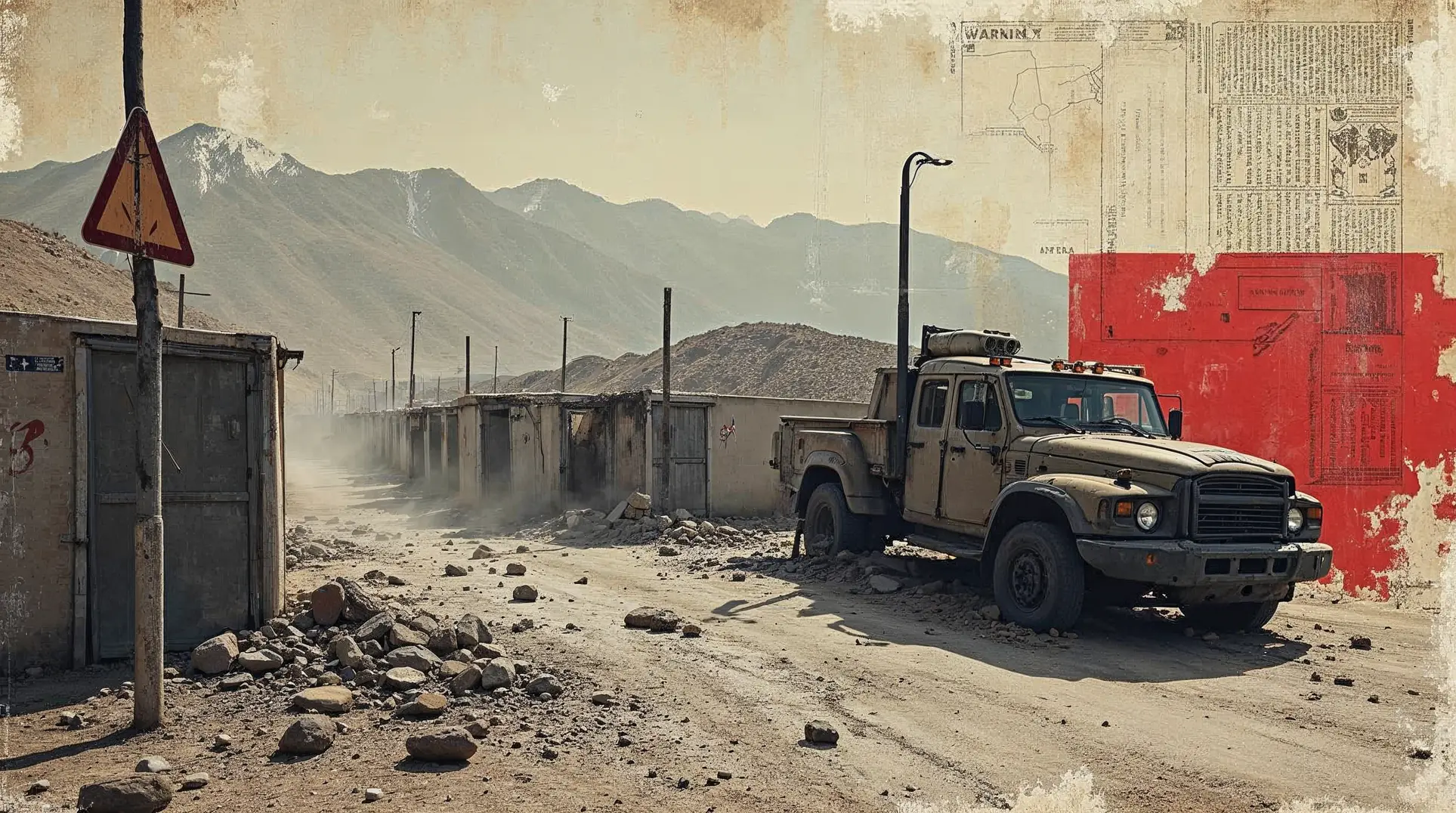
Militants detonated a vehicle-borne explosive device at a security outpost in northwestern Pakistan on Friday, May 15, 2026, killing at least eighteen troops and injuring 35 others. The assault began when attackers rammed an explosives-laden vehicle into the border post in Khyber Pakhtunkhwa province, immediately followed by a sustained gun battle. Pakistani officials reported the attack occurred at a facility near the Afghan frontier, though they did not immediately confirm the precise location or provide details on militant casualties.
The attack pattern—combining a vehicle bomb breach with armed follow-up assault—represents a tactical sophistication increasingly evident along Pakistan's northwestern border. While no group immediately claimed responsibility, the operation's design and location point toward likely involvement of the Tehreek-e-Taliban Pakistan (TTP), which has steadily rebuilt operational capacity since the Afghan Taliban's 2021 return to power in Kabul.
Escalating tactical complexity
The coordination required to execute a synchronized vehicle bomb and infantry assault indicates planning beyond opportunistic attacks. Security forces stationed at border posts typically employ checkpoints, barriers, and defensive positions designed to identify and engage potential threats at distance. The attackers' ability to deliver a vehicle bomb to the target suggests either a breach in perimeter security protocols or an acceptance that casualties would be absorbed to achieve the objective.
This tactical evolution mirrors patterns seen in recent months across Khyber Pakhtunkhwa. In February 2026, a suicide bomber killed 12 at a Pakistan security post in Bajaur district, employing similar combined-arms methodology. Two weeks before Friday's attack, militants executed a coordinated car bomb and ambush that killed 14 police officers in Bannu district, using the initial explosion to draw first responders into a prepared kill zone.
The pattern suggests not isolated incidents but a deliberate shift in militant operational doctrine. Vehicle-borne explosive devices require technical expertise in fabrication, transportation logistics that evade security checkpoints, and coordination between bomber and supporting infantry elements. The repeated execution of such attacks indicates organizational capacity that extends beyond individual cells to coordinated planning structures.
Members are reading: Structural analysis of how porous borders, multi-front security demands, and intelligence gaps enable tactical escalation despite Pakistani firepower superiority.
The broader security landscape
The frequency and sophistication of attacks in Khyber Pakhtunkhwa expose the limitations of purely kinetic responses. Pakistan retains overwhelming firepower advantage in direct engagements, routinely inflicting heavy casualties on militant forces after attacks occur. Yet this tactical superiority does not translate into the intelligence dominance or perimeter security necessary to prevent attacks before they reach their targets.
The pattern of violence places pressure on Pakistan-Afghanistan relations, with Islamabad consistently accusing Kabul of providing sanctuary to TTP fighters. These accusations, whether accurate or convenient for deflecting responsibility, highlight a fundamental diplomatic impasse that leaves operational space for militant organizations to plan, train, and launch attacks with relative impunity.
As militant tactics evolve toward combined-arms assaults on hardened targets, Pakistan faces questions not merely about force posture but about the underlying security architecture. The gap between the state's ability to respond to attacks and its inability to prevent them reflects challenges that extend beyond military capacity to questions of intelligence, legitimacy, and the sustainability of current counterinsurgency approaches along a contested frontier.
Subscribe to our free newsletter to unlock direct links to all sources used in this article.
We believe you deserve to verify everything we write. That's why we meticulously document every source.


