


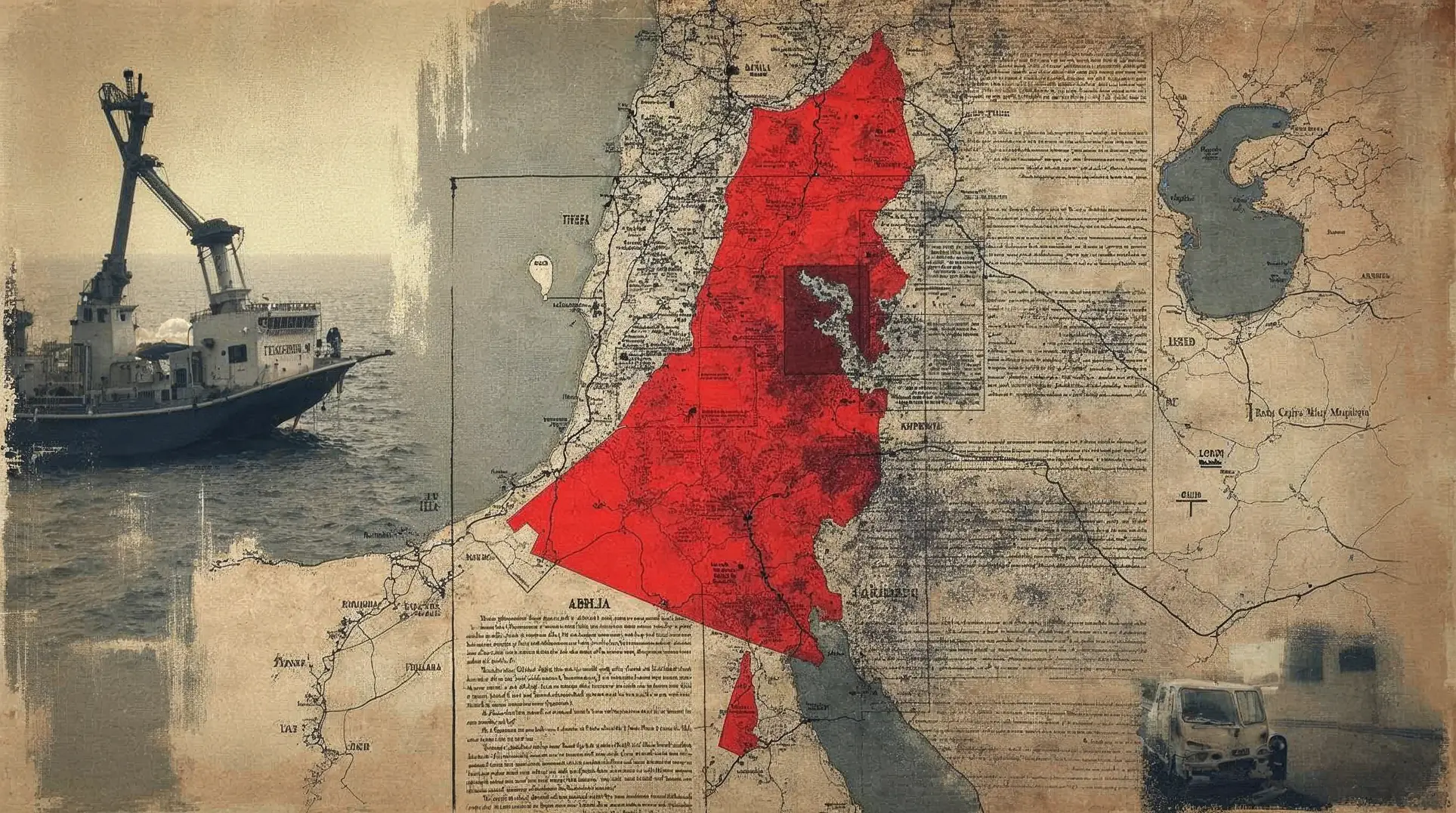
Israeli Prime Minister Benjamin Netanyahu ordered the military on Thursday to expand territorial control within Gaza to 70 percent, extending Israeli presence beyond the boundaries established by the October 2025 U.S.-brokered ceasefire. The directive represents a formal escalation of control that has been developing incrementally for months, with military maps already showing Israeli forces occupying approximately 64 percent of the territory by late April.
The ceasefire agreement stipulated Israeli withdrawal to a "Yellow Line" encompassing roughly 53 percent of Gaza. Netanyahu stated the expansion would proceed "step by step," framing the move as necessary to pressure Hamas and establish buffer zones. Defense Minister Israel Katz has referenced "voluntary migration" for Palestinians as part of broader strategic objectives.
Current territorial control exceeds ceasefire terms
By late April 2026, Israeli military maps distributed to international aid organizations indicated effective control had already expanded to 64 percent of Gaza, exceeding the ceasefire demarcation by approximately 11 percentage points. The new directive to reach 70 percent formalizes what had been a pattern of incremental territorial expansion since the October truce took effect. This places Israeli forces in control of territory stretching across the majority of the 141-square-mile coastal enclave, compressing available space for approximately 2 million Palestinian residents.
The expansion directive contradicts the terms of the U.S.-brokered agreement and marks a unilateral shift in Israeli military positioning. International aid groups operating in Gaza report that the reduced Palestinian-controlled territory has complicated humanitarian access, with supply routes and distribution networks constrained by expanding Israeli military zones.
Members are reading: Why Netanyahu's expansion tests whether Washington will enforce its own ceasefire terms
Hamas condemns unilateral territorial shift
Hamas issued a statement accusing Israel of "explicit and ongoing undermining of the ceasefire agreement" and called the expansion a "serious violation of its provisions, and an exposed attempt to impose new facts on the ground by force." The organization characterized the directive as threatening the viability of any future negotiations, arguing that Israeli territorial control eliminates the basis for Palestinian governance structures.
The expansion continues a pattern established since the October ceasefire, with Israeli forces systematically demolishing infrastructure and establishing permanent positions in areas designated for withdrawal under the agreement. The compression of Palestinian-controlled territory increases population density in remaining areas and strains already limited resources for housing, sanitation, and medical services.
Subscribe to our free newsletter to unlock direct links to all sources used in this article.
We believe you deserve to verify everything we write. That's why we meticulously document every source.


