


Germany temporarily withdrew Bundeswehr troops from Erbil, northern Iraq, on February 19, 2026, as regional tensions intensified following the escalating US-Israeli war on Iran. While German bases in Iraq and Jordan came under Iranian counterattack, Berlin explicitly ruled out participation in offensive military strikes against Iran, citing insufficient regional military infrastructure. The decision places Germany at odds with its European partners, France and the United Kingdom, both of which have reinforced their military presence in the Eastern Mediterranean and Red Sea in recent days.
The divergence highlights a fundamental challenge facing the European Union: the absence of a coherent collective response to a rapidly destabilizing Middle East. While EU foreign ministers held emergency talks and foreign policy chief Kaja Kallas emphasized diplomatic efforts to prevent Iran from acquiring nuclear weapons, individual member states are pursuing sharply different operational strategies—from Spain's outright condemnation of US-Israeli actions to France's deployment of an aircraft carrier battlegroup. The crisis is testing whether Europe can forge a unified position that balances legal commitments, economic interests, and the complex dynamics of the transatlantic alliance.
E3 unity fractures over operational participation
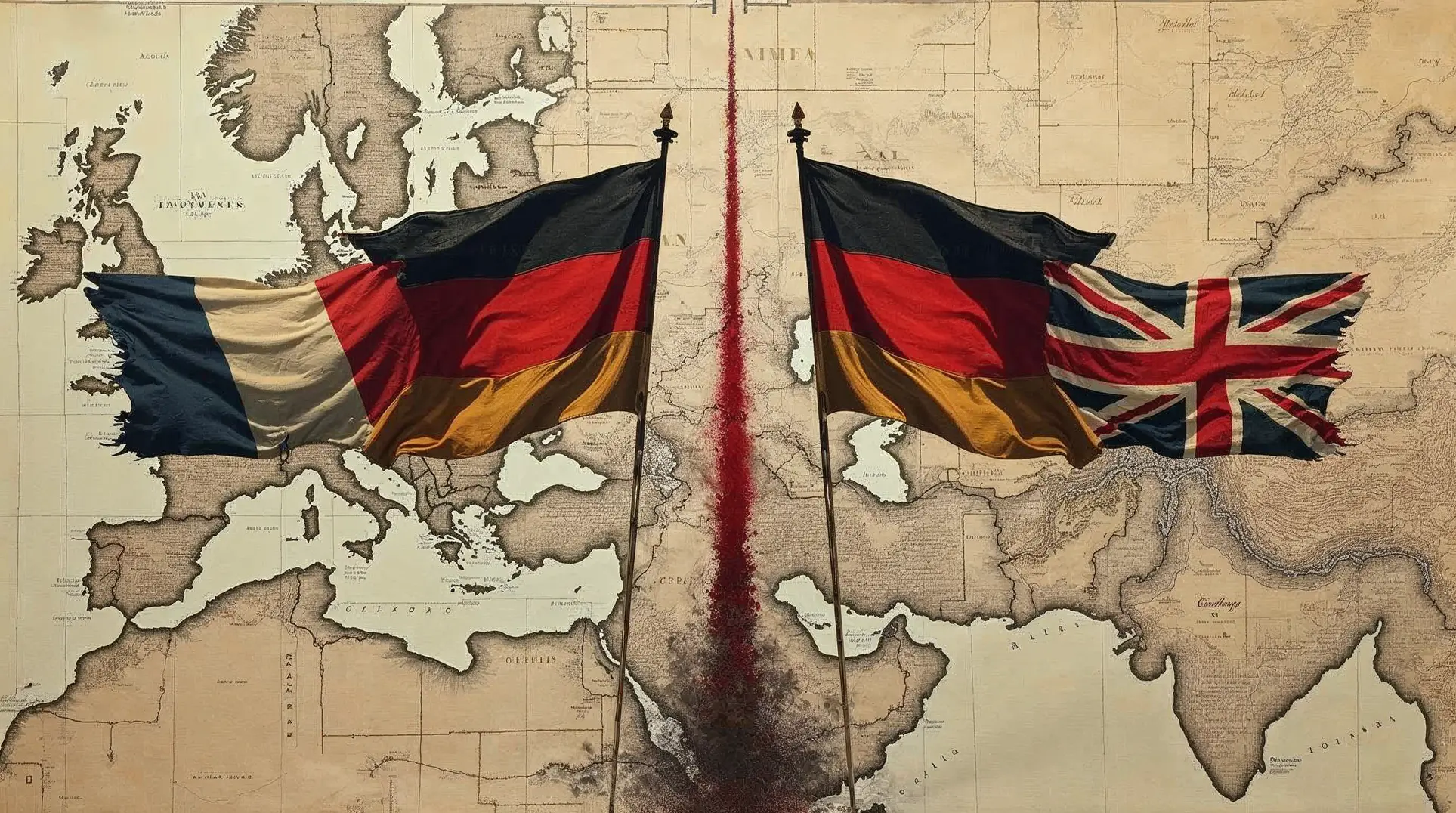
France, Germany, and the United Kingdom issued a joint statement on March 2, 2026, condemning Iran's missile attacks and expressing readiness for "necessary and proportionate defensive measures" against Iran's missile and drone capabilities. However, Germany's subsequent clarification that it would not join offensive strikes revealed the limits of E3 coordination. While the statement projected European consensus, the operational reality is fragmentation.
The United Kingdom agreed to allow the United States to use British regional bases for what it characterized as "defensive" strikes. Following an Iranian-made drone attack on a British air base in Cyprus on March 2, London dispatched a Type 45 destroyer and specialized drone-busting helicopters to the island. France went further. President Emmanuel Macron announced on March 3 the retasking of the aircraft carrier Charles de Gaulle and its escort to the Eastern Mediterranean, with the FREMM frigate Languedoc deployed to Cyprus and two additional surface combatants sent to the Red Sea as part of Operation Aspides. France also plans to send air defense systems and additional Rafale fighters to Cyprus and the United Arab Emirates.
Germany's position stands in stark contrast. Despite coming under Iranian attack, Berlin has no appetite for offensive action. The Bundeswehr lacks the regional military infrastructure to support such operations, but the decision also reflects a deeper reluctance to be drawn into a conflict where Germany sees limited strategic interest and substantial legal ambiguity.
Members are reading: Why Europe's inability to reconcile French activism, British reinforcement, and German restraint reveals the structural limits of strategic autonomy.
Transatlantic tensions compound European disunity
Spain's position further illustrates the absence of consensus. Prime Minister Pedro Sánchez openly condemned the US-Israeli attack on Iran as "unjustified and dangerous," marking the most direct European criticism of Washington's actions. While other European capitals have largely avoided publicly criticizing the US-Israeli offensive, Sánchez's statement reflects domestic political pressures and a different assessment of where European interests lie.
NATO Secretary General Mark Rutte, meanwhile, affirmed Europe's "absolute support" for US actions, with NATO bases placed on heightened alert. The contradiction is stark: the alliance's institutional leadership endorses American operations, while individual member states pursue divergent national strategies ranging from active military support to outright condemnation.
Iran's warning on March 3 that it would strike European countries and cities if they joined the conflict adds another layer of complexity. Tehran's threat is designed to exploit precisely these divisions, making European capitals calculate whether their participation serves or undermines their security. The threat is not idle—Iranian counterattacks have already targeted German and British bases in Iraq and Cyprus. European defense planners must now assess whether their current posture adequately protects their forces and citizens, or whether deeper involvement increases exposure without providing commensurate influence over the conflict's trajectory.
The cost of incoherence
The crisis reveals a hard truth about European security policy: coordination is easiest when stakes are lowest. When the question is whether to issue a joint statement or impose sanctions, European unity is achievable. When the question is whether to commit military forces to a theater where kinetic operations are underway and adversaries are actively targeting European assets, national interests diverge sharply, and institutional frameworks prove inadequate.
Europe's disunity is not lost on Washington, Tehran, or other actors assessing the continent's strategic weight. The inability to forge a coherent position undermines European leverage in any diplomatic effort to de-escalate the conflict. It also reinforces doubts—already acute given debates over transatlantic reliability and European defense spending—about whether Europe can function as a unified strategic actor in crises that directly affect its security and economic interests.
Subscribe to our free newsletter to unlock direct links to all sources used in this article.
We believe you deserve to verify everything we write. That's why we meticulously document every source.


