


The diplomatic calendar has converged on Berlin. U.S. special envoy Steve Witkoff and President Donald Trump's son-in-law Jared Kushner are scheduled to meet Ukrainian President Volodymyr Zelenskyy and key European leaders this weekend, according to a U.S. official briefed on the matter. The meetings, set for December 13–15, 2025, represent Washington's most intensive attempt yet to close gaps over a U.S.-led peace framework for Ukraine—and to test whether European capitals will align behind it.
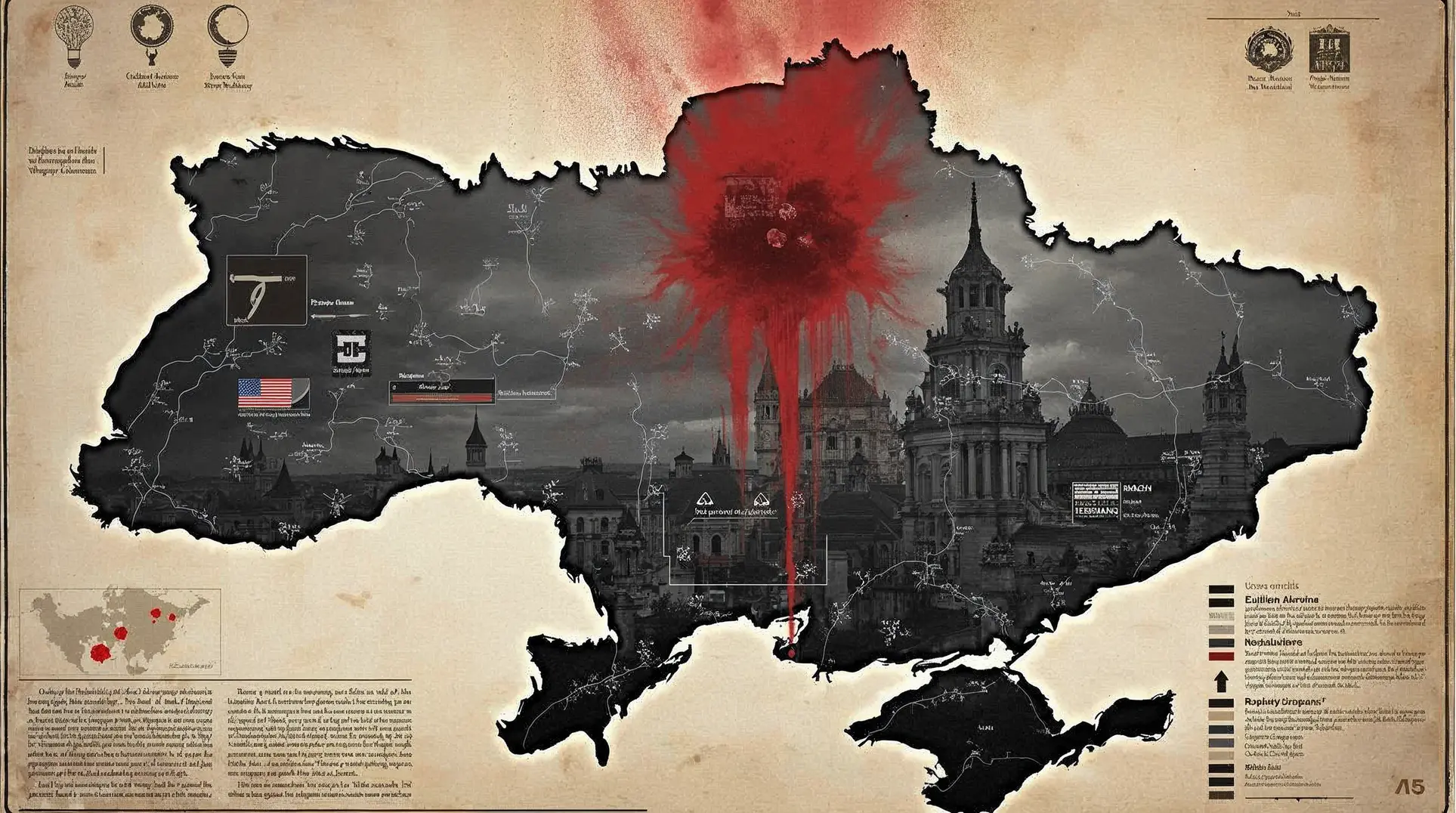
The central fault line remains unresolved: territorial control in eastern Ukraine and how to enforce any ceasefire without legitimizing conquest. Europe aims to harden what officials are calling "sovereignty guardrails"—institutional and legal constraints designed to prevent recognition of borders changed by force. Washington, meanwhile, is testing Kyiv's tolerance for a demilitarized zone or staged withdrawals. No outcomes are confirmed; this weekend is about aligning a joint offer, or admitting there isn't one yet.
The diplomatic architecture
Witkoff will hold separate meetings with national security counterparts from France, Britain, and Germany on Sunday and Monday, according to the U.S. official. These sessions precede a higher-level leaders' gathering expected to include France's Emmanuel Macron, the UK's Keir Starmer, and Germany's Friedrich Merz, as reported by multiple outlets citing the Wall Street Journal and Deutsche Welle.
Context matters: Witkoff has led recent U.S. talks with both Ukraine and Russia on a peace proposal. His last trip to Moscow drew a cautious Kremlin response. Kremlin aide Yury Ushakov called the discussion with President Vladimir Putin "useful" but said "no compromise plan" was found, and that territorial issues remain "the most important issue," according to ABC News. Russia signaled readiness to continue negotiations but maintained hardline positions, including preconditions for Ukrainian territorial withdrawals before any ceasefire.
Kyiv's stance is equally firm. Zelenskyy has reaffirmed his refusal to cede any territory, stating that Ukraine doesn't want to give up anything and that any changes to Ukraine's borders would need to be authorized by a public referendum, as confirmed by multiple sources including The New York Times and The Kyiv Independent. The strongest security guarantees, he argues, would come from the United States, potentially through Congressional codification. Ukraine has delivered a revised 20-point counterproposal to Washington, refining an earlier 28-point U.S. framework, according to ABC News and BBC reporting. Details remain unpublished and in flux.
Members are reading: The institutional logic behind Europe's "sovereignty guardrails" and why speed without enforcement risks repeating the failures of Minsk.
What to watch
The real metric for success in Berlin is not a grand communiqué, but specific indicators of alignment. Does any joint language explicitly reference sovereignty and territorial integrity—and how do the parties phrase "territory" and "security guarantees"? Any vague formulation will signal unresolved divergence. Watch for signals on U.S. Congressional codification of guarantees, European coalition mechanisms, and enforcement architecture. If a demilitarized zone is referenced, does the text include verification, monitoring, or third-party roles? Kyiv's reaction will clarify whether it views the framework as a genuine security upgrade or a territorial trap.
Territorial sequencing is critical. Does the emerging framework move away from Russia's precondition of Ukrainian withdrawal toward a ceasefire-first approach, or does it defer the sovereignty question to later negotiations? Any mention of referendums in Ukraine—constitutionally required for territorial concessions—or timelines for EU accession will indicate whether the deal is politically viable in Kyiv or a non-starter.
Turkish President Recep Tayyip Erdogan has proposed a limited ceasefire in talks with Putin, according to Deutsche Welle, adding another variable. Whether Ankara's initiative complements or complicates the U.S.-European track remains unclear.
The durability test
As of Saturday morning, no outcomes are confirmed from Berlin; developments are expected over the weekend. The gathering is a test of whether Washington's deal-making urgency can be reconciled with Europe's institutional realism. Durable peace requires more than a signed document; it requires enforceable commitments, credible deterrence, and political legitimacy in Kyiv, Brussels, and Washington. If Berlin produces a coherent joint offer with those elements, it will mark a genuine breakthrough. If not, expect more shuttle diplomacy—and the risk that the territorial question remains unresolved while the battlefield shapes facts faster than the negotiators can align frameworks.
Guardrails are not the enemy of peace. They are the prerequisite for any settlement that lasts.
Subscribe to our free newsletter to unlock direct links to all sources used in this article.
We believe you deserve to verify everything we write. That's why we meticulously document every source.


