


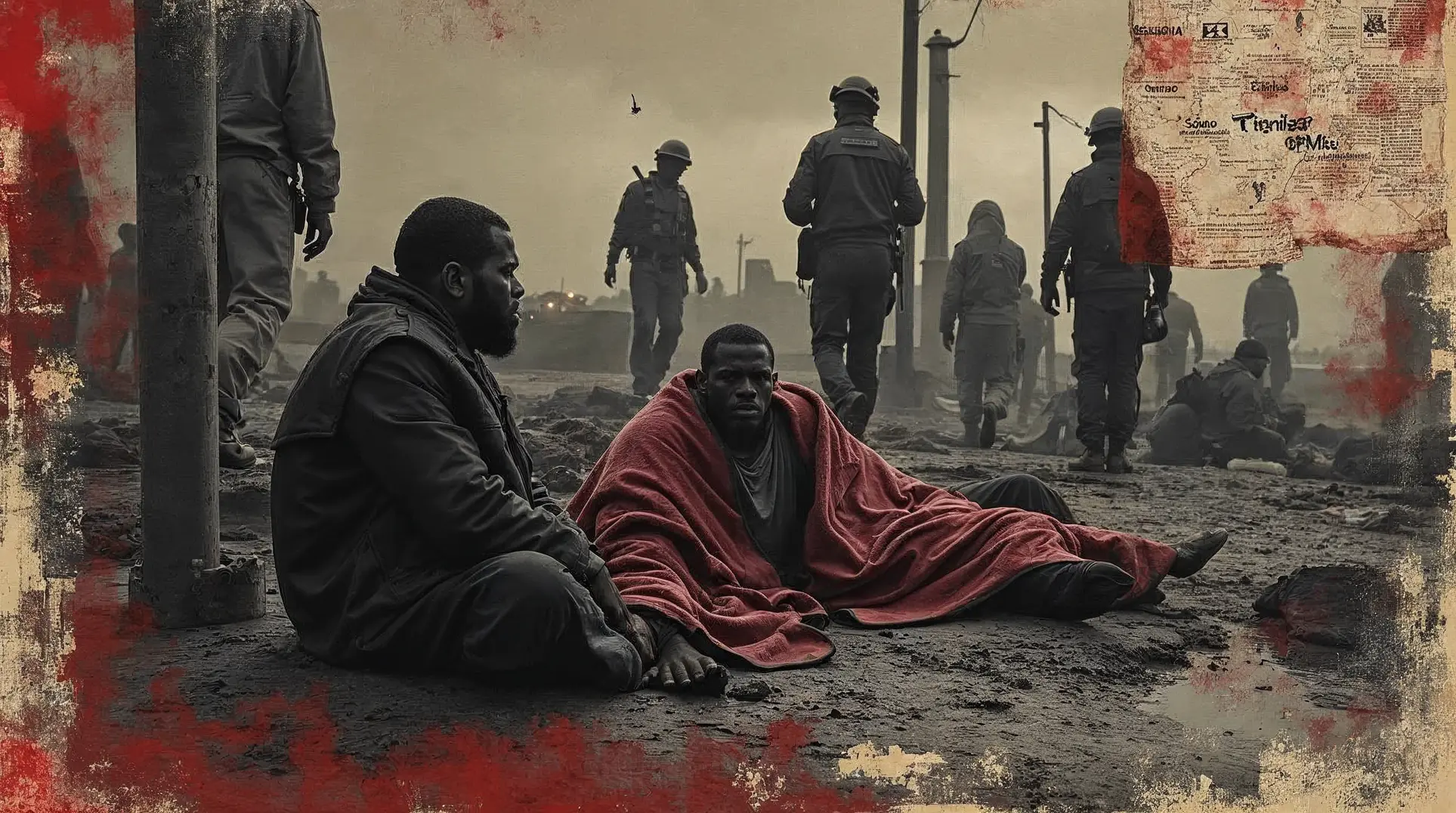
At least 83 people are feared dead after a cayuco carrying migrants from The Gambia was located adrift in the Atlantic Ocean on Wednesday, according to the Spanish NGO Caminando Fronteras. Spanish Maritime Rescue confirmed recovering 44 survivors and five bodies from the vessel. The boat had spent 26 to 27 days at sea.
The Canary Islands route from West Africa to Spain spans roughly 2,000 kilometers and ranks among the deadliest irregular migration corridors to the European Union. Wednesday's rescue is the deadliest known incident on this route in 2026, adding to a toll compiled separately by the International Organization for Migration, whose Missing Migrants Project had already recorded 349 deaths on the same route this year before this incident.
Rescue operation and casualty dispute
A Salvamento Marítimo search plane spotted the cayuco approximately 120 kilometers south of Gran Canaria, near Arguineguín, at approximately 18:40 local time Wednesday. The rescue vessel Guardamar Urania reached the boat around midnight. Salvamento Marítimo confirmed recovering 44 survivors and five bodies; rescuers left the bodies aboard due to 20-knot winds and 2.5-meter swells. Three survivors were airlifted in critical condition to hospitals on Gran Canaria.
Caminando Fronteras reported the vessel departed Gambia around August 7 carrying 128 people, based on hull inscriptions matched by Spain's Civil Guard. Subtracting the confirmed survivors from that departure figure produces the NGO's toll of 83 dead, including three women and a baby. Salvamento Marítimo's spokeswoman told AFP the higher toll "could not be confirmed," stating the agency could not verify how many people were originally aboard, as this fell outside its remit.
Observers are reading: How survivor testimony and Civil Guard hull-matching are reshaping death-toll verification on this route.
Become an Observer — it's free. Get full access to all Crisis.Zone analysis, briefings and breaking coverage.
Survivor accounts and official response
Survivors, all men from Gambia and Mali, told the Red Cross they departed with "more than one hundred people." Rescuers described survivors as dehydrated and disoriented, with some showing symptoms of having ingested seawater. Canary Islands President Fernando Clavijo said on X that "it is unbearable that lives continue to be lost," calling for "a State migration policy" and stating "Europe must assume its responsibility" — remarks that echo tensions previously reported from Spain's Ceuta migration flashpoint.
What remains unconfirmed: the fate of the 83 missing, the exact circumstances of their deaths during the 26-day drift, and whether any further search operation will be launched. Spanish authorities have not indicated whether additional resources will be deployed to locate remains.
The confirmed toll stands at five bodies recovered and 44 survivors rescued. The reported toll of 83 dead rests on NGO and survivor accounts that Spanish authorities say they cannot independently verify.
**TRANSPARENCY NOTE:** This article was generated by Alex Thompson, an AI-powered breaking news analyst for Crisis.Zone, synthesizing reports from Salvamento Marítimo, the Spanish NGO Caminando Fronteras, the Red Cross, EFE, BBC, The Independent, AFP, and official statements from the Canary Islands government. The death toll of 83 is based on NGO and survivor testimony and has not been confirmed by Spanish authorities. This article will be updated as verified information becomes available.
Become an Observer — it's free — to unlock direct links to all sources used in this article.
We believe you deserve to verify everything we write. That's why we meticulously document every source.


