


The United States has offered to hold nuclear talks with Iran in Geneva this Friday, but only if Tehran delivers a detailed written proposal within the next 48 hours, a senior U.S. official confirmed Sunday. The conditional offer, extended through negotiators Steve Witkoff and Jared Kushner, represents what may be the final diplomatic window before President Trump's explicit 10-to-15-day deadline for a comprehensive deal expires.
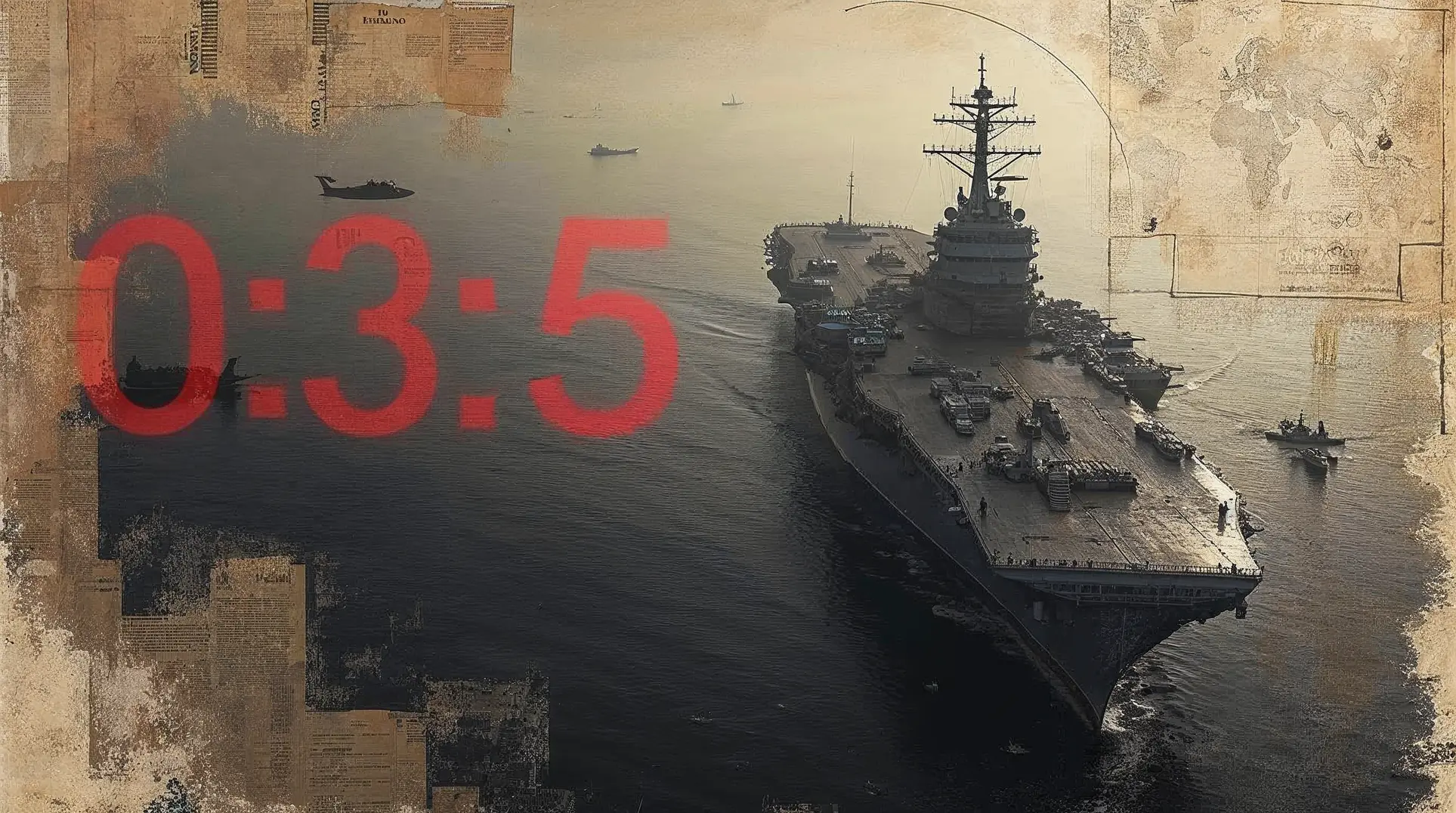
The timing is deliberate. Trump publicly issued his ultimatum on February 20, stating he is actively considering limited military strikes to pressure Tehran into capitulating on its nuclear program. The Friday meeting, should it materialize, would occur against the backdrop of an unprecedented U.S. military buildup in the region, with the USS Gerald R. Ford carrier strike group having crossed into the Mediterranean Sea and positioned within operational reach of the Middle Eastern theater. Iranian Foreign Minister Abbas Araghchi has stated he is drafting a counterproposal, but whether it will meet Washington's threshold for serious engagement remains highly uncertain.
Latest diplomatic positioning
The U.S. negotiating position has shown minimal movement from its maximalist stance. Officials continue to demand what they term "zero enrichment" or close to it on Iranian soil, though there are subtle signals that Washington might consider a proposal including "token enrichment" if accompanied by what one official described as "exhaustive safeguards blocking any possible path to a weapon." This represents the narrowest of openings in an otherwise rigid framework.
Iran's public response has been carefully calibrated. Araghchi has characterized a diplomatic resolution as "within reach," but Tehran's substantive position suggests otherwise. Iranian officials have indicated willingness to discuss diluting their stockpile of uranium enriched to 60 percent purity—dangerously close to weapons-grade—but have categorically refused to export the material. More significantly, Iran has declared its ballistic missile program entirely non-negotiable, a stance that directly conflicts with U.S. demands for a comprehensive agreement addressing both nuclear and delivery systems.
The structural gap between these positions is profound. For the Iranian government to accept near-total abandonment of enrichment capabilities would constitute political capitulation on a scale that could destabilize the regime domestically. Tehran appears to be calculating that a "conciliatory" proposal—one that offers symbolic movement without genuine strategic concessions—might be sufficient to delay military action, buying time in a crisis where time itself has become the contested resource.
Members are reading: Why Iran's likely proposal may be designed to delay rather than prevent strikes, and why that strategy could backfire catastrophically.
The next 48 hours will determine whether Iran produces a proposal sufficient to trigger Friday's meeting, but the more consequential question is whether any Iranian proposal can bridge the structural divide between Washington's demands and Tehran's red lines. With Trump's ultimatum entering its final week and the largest U.S. naval concentration in the region since 2003 nearly in position, the diplomatic window is not merely narrow—it may be largely performative. The talks offer, framed as a final off-ramp, increasingly appears to be the last checkpoint before a military resolution both sides have spent months preparing for, even as both maintain the fiction that diplomacy remains the preferred path.
Subscribe to our free newsletter to unlock direct links to all sources used in this article.
We believe you deserve to verify everything we write. That's why we meticulously document every source.


