


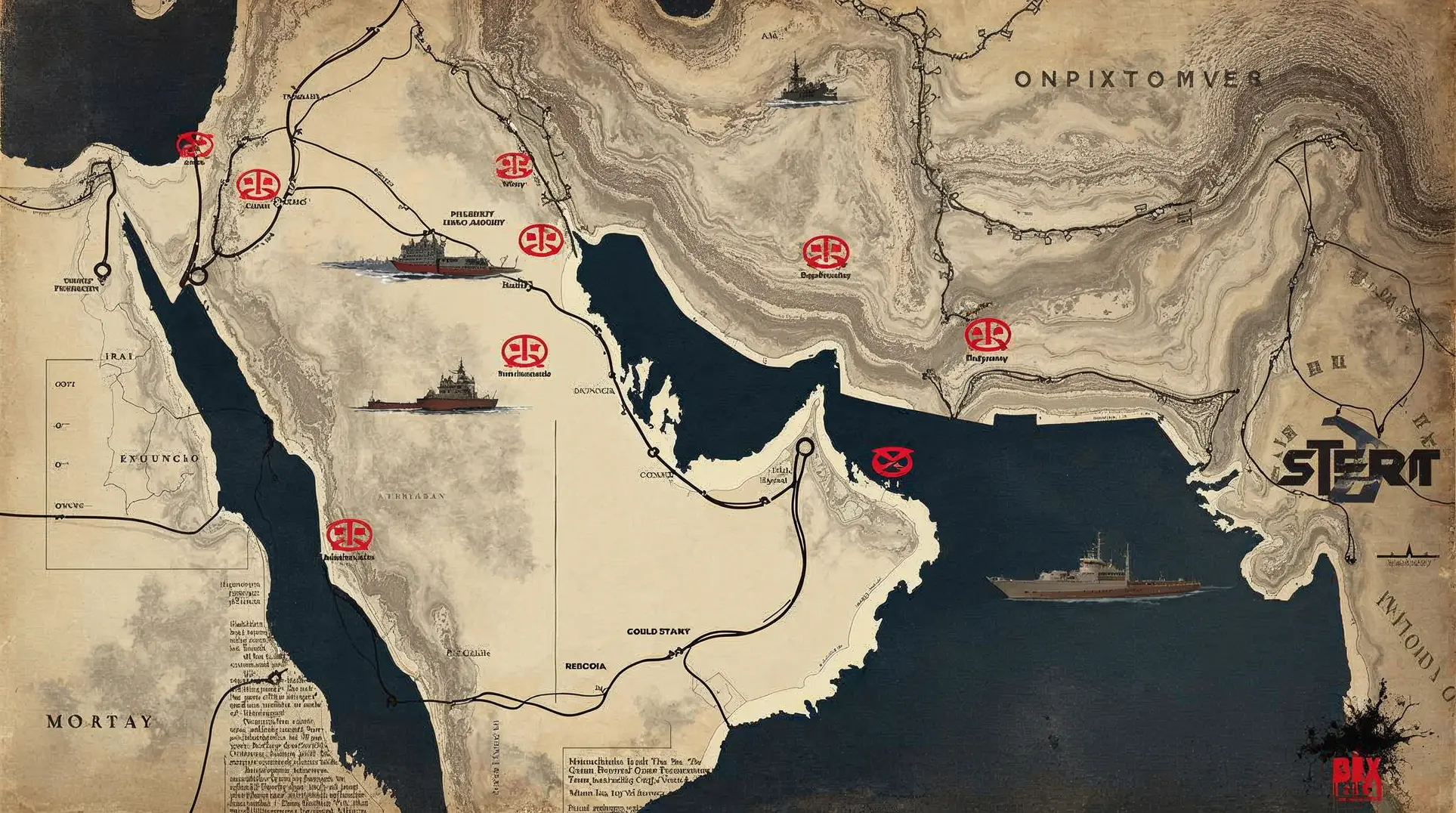
At least four Iran-linked vessels transited the Strait of Hormuz on April 14, 2026, without US enforcement action, directly testing the credibility of Washington's newly declared blockade on its first full day of operation. Among them was the US-sanctioned tanker 'Rich Starry,' which passed through the strait into the Gulf of Oman without interdiction, according to maritime tracking data and regional shipping sources.
The unimpeded passage of these vessels raises immediate questions about the operational execution of the blockade that President Trump announced following the collapse of Islamabad peace talks. No incidents or interceptions by US forces have been reported despite CENTCOM's stated aim to interdict and seize Iranian-linked vessels entering or departing Iranian ports.
First operational test reveals enforcement gap
The 'Rich Starry,' a China-linked tanker under US sanctions, represents the most significant challenge to the blockade's stated objectives. A third Iran-linked tanker was observed entering the Gulf via the Strait of Hormuz on Tuesday, followed by additional vessels on Wednesday. The consistent pattern of unrestricted passage suggests either operational constraints on US naval forces or a deliberate decision to avoid immediate confrontation despite Washington's public rhetoric.
The blockade began at 10:00 a.m. ET on April 13, targeting vessels of all nationalities attempting to access Iranian ports in the Arabian Gulf and Gulf of Oman. CENTCOM explicitly stated that freedom of navigation through the Strait to non-Iranian ports would not be impeded, but the scope of interdiction for Iran-bound vessels remained the operation's central premise. The first 24 hours of implementation reveal a gap between declaratory policy and operational reality.
Members are reading: Why Tehran's first-day test reveals structural weaknesses in the US blockade strategy and what happens next
Blockade's strategic viability in question
The apparent non-enforcement occurs against the backdrop of oil prices that surged above $100 per barrel following the blockade announcement. The Strait of Hormuz, carrying approximately 20% of global oil and natural gas supply, remains the critical chokepoint where economic leverage and military capability intersect. Iran's demonstrated ability to move vessels through this space without US response shifts the tactical advantage in what has become a high-stakes game of credibility and resolve.
Iran's Revolutionary Guard had threatened to turn the Strait into a "deadly whirlpool" for US warships and vowed "harsh and decisive" resistance to any interdiction attempts. Yet the absence of direct confrontation on day one suggests both sides may be maneuvering within boundaries that preserve options for either escalation or de-escalation. The pattern of uncontested transits, however, provides Tehran with operational intelligence about US enforcement posture that will inform its next moves—whether to increase vessel traffic, challenge the blockade with higher-value targets, or maintain a level of activity that exposes the operation's limitations without triggering the direct military engagement both capitals claim to want to avoid but whose threats have defined this crisis.
Subscribe to our free newsletter to unlock direct links to all sources used in this article.
We believe you deserve to verify everything we write. That's why we meticulously document every source.


