


Ukrainian naval drones have disabled two sanctioned Russian oil tankers and forced the closure of a major export terminal, delivering the most direct blow yet to Moscow's sanctions-evasion logistics at sea. The weekend strikes off Turkey's coast demonstrate Kyiv's expanding capacity to disrupt Russian energy flows far beyond Ukraine's borders—raising new questions about maritime escalation risk in NATO-adjacent waters.
The attacks occurred within 24 hours. On November 28 at approximately 15:00 GMT, the Gambian-flagged tanker Kairos was struck about 28 nautical miles off Turkey's Kocaeli coast. The vessel, built in 2002 and designated under Western sanctions for transporting Russian crude, caught fire. All 25 crew members were evacuated. Hours later, the Virat—a larger 2018-built tanker also under Gambian flag and EU, UK, and US sanctions—was hit roughly 35 nautical miles offshore, suffering minor damage above the waterline. It was struck again early on November 29; its 20 crew remained unharmed. Both vessels were reportedly empty, en route to Russia's Novorossiysk terminal for loading.
Coordinated maritime offensive
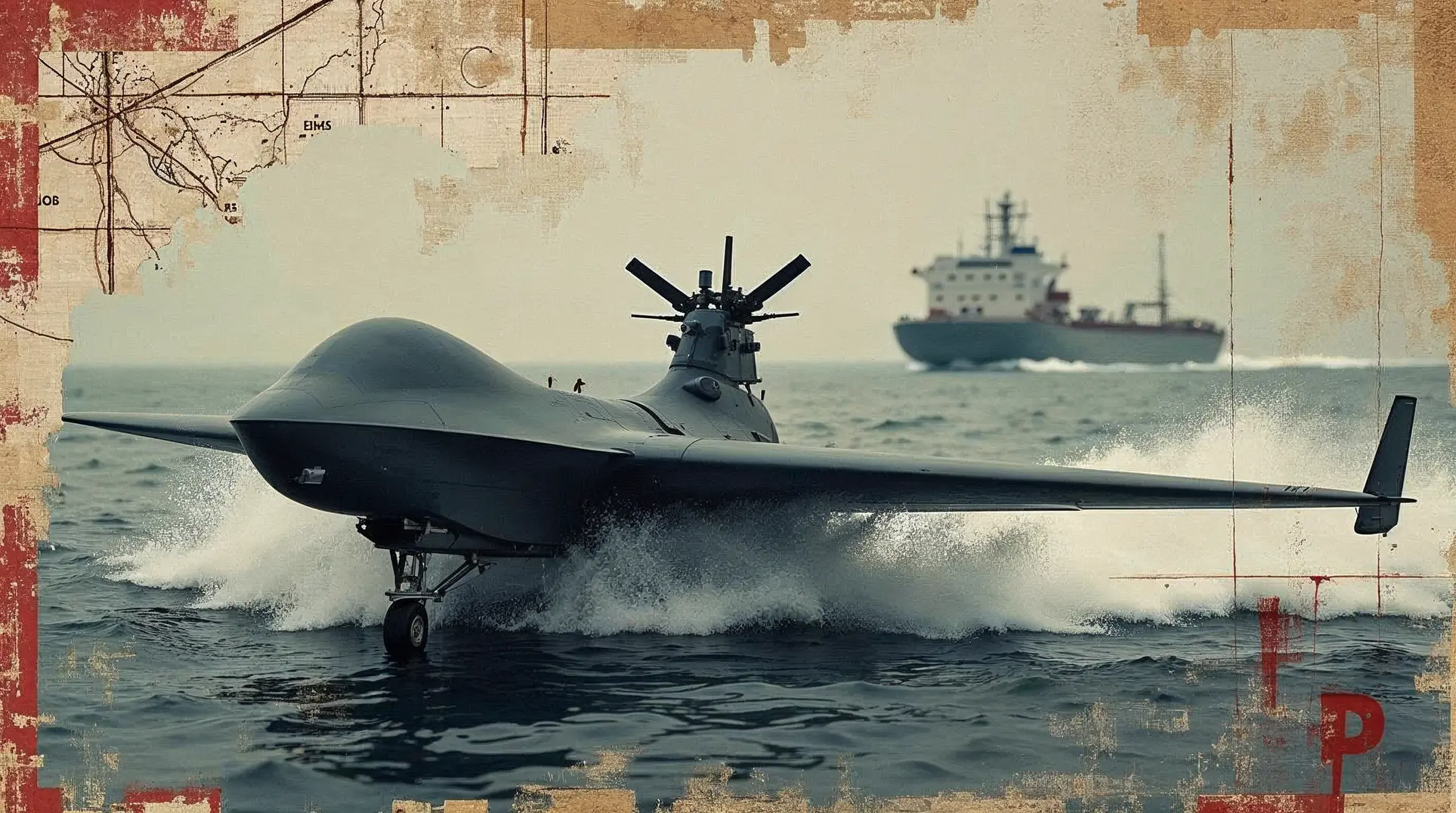
Turkish maritime authorities confirmed on November 29 that the Virat was attacked by an unmanned maritime vehicle (UMV). Initial statements from Turkey's Transport Minister Abdulkadir Uraloglu suggested the tankers may have been hit by mines, drones, or missiles, with external interference from mines, missiles, marine vessels, or drones cited as possible causes. The Turkish Transport Ministry's subsequent post on X provided the first official confirmation that the Virat was attacked by drones. A Ukrainian security source told CNN and Interfax-Ukraine that the operation was conducted jointly by Ukraine's SBU security service and Navy using Sea Baby drones—long-range platforms previously used against Russian warships and Crimean infrastructure. Ukraine has not issued a formal public claim, but Ukrainian security services released video footage consistent with drone strikes.
The timing and geography are significant. Both vessels had transited the Bosphorus under Turkey's oversight before being struck in international waters just beyond Turkish territorial limits. The proximity to a NATO member's coast, combined with Ankara's acknowledgment of UMV involvement in the Virat strike, underscores the friction such operations introduce into Black Sea maritime governance and the Montreux Convention framework that regulates warship passage.
Novorossiysk terminal operations halted
A separate naval drone strike early on November 29 damaged a mooring at the Novorossiysk oil terminal's SMP-2 facility, operated by the Caspian Pipeline Consortium (CPC). CPC, which handles more than one percent of global oil flows and serves as a key export node for Russian and Kazakh crude, confirmed it had halted operations due to "significant damage" and characterized the strike as a "terrorist attack." Ukrainian security sources claimed responsibility for attacks on the two oil tankers in the Black Sea, alleging they were covertly transporting sanctioned Russian oil, and stated that modernised Sea Baby naval drones had successfully targeted the vessels. The incident is directly linked to Ukraine's maritime drone campaign.
The operational pause at Novorossiysk represents the clearest short-term export disruption tied to Ukrainian strikes. Unlike earlier attacks on refineries or storage depots—which have targeted Russia's energy infrastructure inland—this weekend's campaign struck the logistics chain itself: the vessels and infrastructure that move crude to market despite sanctions.
Members are reading: How Ukraine's strikes reshape the economics and liability landscape for Russia's shadow tanker network and export terminals.
Implications for Black Sea security and European policy
The strikes force difficult conversations within NATO and the EU. Targeting civilian-flagged vessels—even those under sanctions—in international waters near Turkish territory introduces legal gray zones and escalation risk. Turkey's public confirmation of UMV involvement in the Virat strike signals awareness of the friction these operations create within Montreux-governed waters and alliance cohesion.
For European policymakers, the weekend attacks underscore both the opportunity and the dilemma. Ukraine's maritime campaign exerts pressure on Russian revenues that regulatory enforcement has struggled to match. But it also raises the specter of environmental disaster from aging, poorly insured tankers and the risk of uncontrolled escalation in crowded sea lanes. Poland's recent scramble of jets in response to Russian strikes illustrates the hair-trigger environment across NATO's eastern flank; maritime drone strikes near Turkish waters add another dimension to that volatility.
The path forward will likely combine kinetic disruption with tighter regulatory enforcement. Ukraine has demonstrated that naval drones can reach Russia's export logistics at scale. The question is whether Western allies accelerate insurance verification, flag-state accountability, and port-access restrictions to compound that pressure—or whether the risk of spillover and environmental catastrophe prompts efforts to constrain Ukraine's maritime operations. For now, the shadow fleet faces a new cost: operational exposure at sea, not just in port or on paper.
Subscribe to our free newsletter to unlock direct links to all sources used in this article.
We believe you deserve to verify everything we write. That's why we meticulously document every source.


