


The diplomatic split screen is now stark. At the Reagan National Defense Forum on Saturday, U.S. Special Envoy Keith Kellogg declared that a Ukraine peace deal is in "the last 10 metres," contingent on resolving two core issues: the future of the Donbas region and control arrangements for the Russian-held Zaporizhzhia Nuclear Power Plant. "If we get those two issues settled, I think the rest of the things will work out fairly well," Kellogg told reporters. "We're almost there." Hours later, the Kremlin's foreign policy aide Yuri Ushakov countered that Washington's draft proposals require "radical changes," citing persistent disagreement over what Moscow calls "territorial problems"—Kremlin shorthand for insisting on recognition of occupied lands across Donetsk, Luhansk, Zaporizhzhia, and Kherson.
The divergence is not rhetorical posturing. It maps onto the negotiating geometry that will determine whether any ceasefire can hold, and whether Europe will accept it. Donbas territorial status goes to the heart of post-1945 sovereignty norms; the Zaporizhzhia plant embodies acute nuclear safety risk intertwined with political control. Both are foundation stones, not technical footnotes. Any framework that fudges them risks rapid collapse or, worse, legitimizing conquest and creating permanent instability on NATO's eastern flank.
The Donbas deadlock: who controls what, and who decides
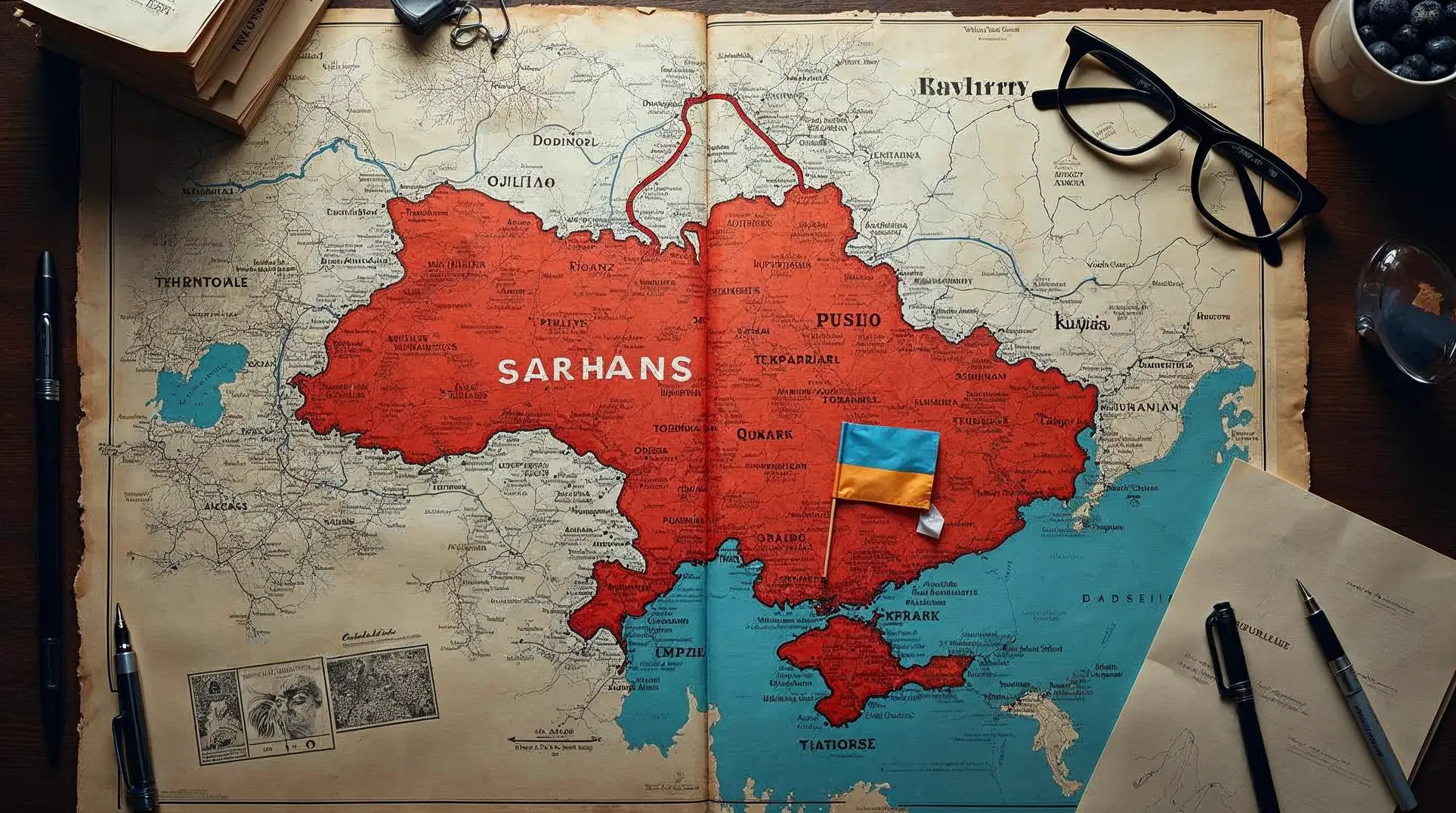
Russia currently occupies roughly one-fifth of Ukraine's internationally recognized territory, including almost all of Luhansk oblast and approximately 75 percent of Donetsk, plus substantial portions of Zaporizhzhia and Kherson regions where Russia controls about 74 percent. Moscow's position, articulated repeatedly by Foreign Minister Sergei Lavrov and formalized in annexation decrees signed in September 2022, is maximalist: full recognition of the four regions within their administrative boundaries—territories Russia does not even fully control on the ground. President Zelenskyy has signaled legal and political limits on concessions, stating that handing over the remainder of Donetsk would require a national referendum under Ukraine's constitution. Public polling by the Kyiv International Institute of Sociology, cited by Deutsche Welle, shows strong nationwide resistance to ceding Donbas, with more nuanced views emerging in eastern oblasts that have borne the brunt of combat.
European capitals are coordinating to prevent a settlement that rewards territorial aggression. On December 8, French President Emmanuel Macron, British Prime Minister Keir Starmer, and Germany's incoming Chancellor Friedrich Merz will meet Zelenskyy in London—a trilateral consultative format designed to align guardrails before any U.S.-brokered deal is finalized. Brussels has already positioned itself as the battleground for Ukraine's peace terms, and the London summit extends that institutional logic: no de jure recognition of borders changed by force, and credible multilateral security guarantees that do not grant Moscow a veto over Ukraine's future alignment. Europe's institutional memory is long; territorial concessions in 2025 would set precedents for revisionist claims from the Baltics to the Balkans.
Zaporizhzhia nuclear plant: the safety-sovereignty nexus
The second sticking point is Europe's largest nuclear facility. The Zaporizhzhia Nuclear Power Plant has been under Russian military occupation since March 2022. All six reactors are in cold shutdown, but the site still requires reliable external electricity to cool reactor cores and spent-fuel pools. Overnight, the plant lost all offsite power for the eleventh time since the full-scale invasion began, forcing automatic start-up of emergency diesel generators, according to statements by the International Atomic Energy Agency reported by Reuters and other outlets. The IAEA has maintained a rotational presence on site, but its inspectors have faced access restrictions and report persistent safety concerns tied to military activity in the exclusion zone.
Members are reading: Why proposed electricity-sharing arrangements at Zaporizhzhia risk institutionalizing Russian control and creating permanent radiological hazards.
Europe's role: guardrails, not surrender
The London trilateral on December 8 will not produce a counter-proposal to Washington's draft, but it will coordinate red lines. Macron has already condemned Russia's ongoing combined missile and drone strikes on Ukrainian infrastructure—attacks that continued even as U.S. envoys Steve Witkoff and Jared Kushner spent four to five hours in Moscow last week without achieving a breakthrough. Kremenchuk's mayor reported a massive strike over the weekend; separate waves targeted energy installations across multiple oblasts. The pattern is clear: Moscow negotiates under fire, using infrastructure destruction to shape the diplomatic endgame.
Europe's institutional stake is existential. Trump alone will not unlock Russia-Ukraine peace, whatever NATO's chief says, and any settlement that bypasses EU and NATO equities will fracture transatlantic cohesion. The emerging European position is procedural and substantive: support a ceasefire framework that includes enforceable security guarantees, reject any arrangement that recognizes territorial seizure, and insist on a nuclear-safety architecture at ZNPP that restores stable operations without implying sovereignty transfer.
The last meters, or the foundation stones
Kellogg's "almost there" optimism and Ushakov's demand for "radical changes" are not contradictory; they describe the same impasse from opposite sides. Donbas and Zaporizhzhia are not technical details to be resolved after the big questions are settled—they are the big questions. Territory determines whether this war ends in a durable peace or a frozen conflict primed for renewed escalation. Nuclear safety arrangements determine whether Europe's energy infrastructure remains vulnerable to hybrid coercion and radiological risk. If these two issues can be resolved in ways that reconcile sovereignty norms, enforce accountability, and provide credible guarantees, the rest may indeed "work out fairly well." If not, the last 10 metres will prove the longest distance of all.
Subscribe to our free newsletter to unlock direct links to all sources used in this article.
We believe you deserve to verify everything we write. That's why we meticulously document every source.


