


President Donald Trump on Tuesday declared that any country trafficking illegal drugs into the United States "is subject to attack," explicitly citing Colombian cocaine during a White House cabinet meeting. The statement drew an immediate rebuke from Colombian President Gustavo Petro, who has previously warned that "attacking our sovereignty is declaring war." The exchange comes as bipartisan congressional leaders launch what they call "vigorous oversight" into the administration's three-month maritime strike campaign—specifically, confirmation that a September 2 follow-up strike killed survivors clinging to wreckage after an initial missile disabled their boat off Venezuela.
That second strike has become the legal fault line for the entire operation. If survivors were no longer combatants when they were killed, the attack may constitute a war crime under the laws of armed conflict the administration itself invokes to justify the campaign. The White House has confirmed the follow-up strike occurred but denied that Defense Secretary Pete Hegseth issued a "kill everyone" directive, saying he authorized Admiral Mitch Bradley to conduct strikes within legal parameters. The administration insists it is engaged in a "non-international armed conflict" with cartels designated as foreign terrorist organizations, rendering boat crews "unlawful combatants." But that framing depends entirely on the legality of each individual strike—and killing incapacitated survivors would shatter it.
The legal gap widening between force and law
The confirmed presence of a second strike on September 2 transforms what was already contentious policy into potential criminal liability. Under international humanitarian law, combatants who are hors de combat—out of action due to injury, capture, or surrender—may not be attacked. Killing them is a grave breach of the Geneva Conventions. Senators Tim Kaine and others have said that if survivors were deliberately targeted, it could meet the threshold for war crimes prosecution. The Senate and House Armed Services Committees are now moving to obtain full audio and video footage of the strikes, a rare bipartisan effort that signals genuine alarm even among some Republicans who have otherwise supported the campaign.
The administration's legal architecture rests on two pillars: the designation of major cartels as terrorist organizations under the International Emergency Economic Powers Act, and the assertion that ongoing drug trafficking constitutes an armed attack justifying self-defense. This allows the White House to bypass traditional law enforcement frameworks and apply the laws of war. But those same laws impose strict limits—distinction, proportionality, necessity—and prohibit targeting civilians or those no longer participating in hostilities. No public evidence has been released showing that struck vessels were armed, carried drugs, or posed imminent threat. In at least one case, reporting indicates a boat had turned back toward the coast before it was hit.
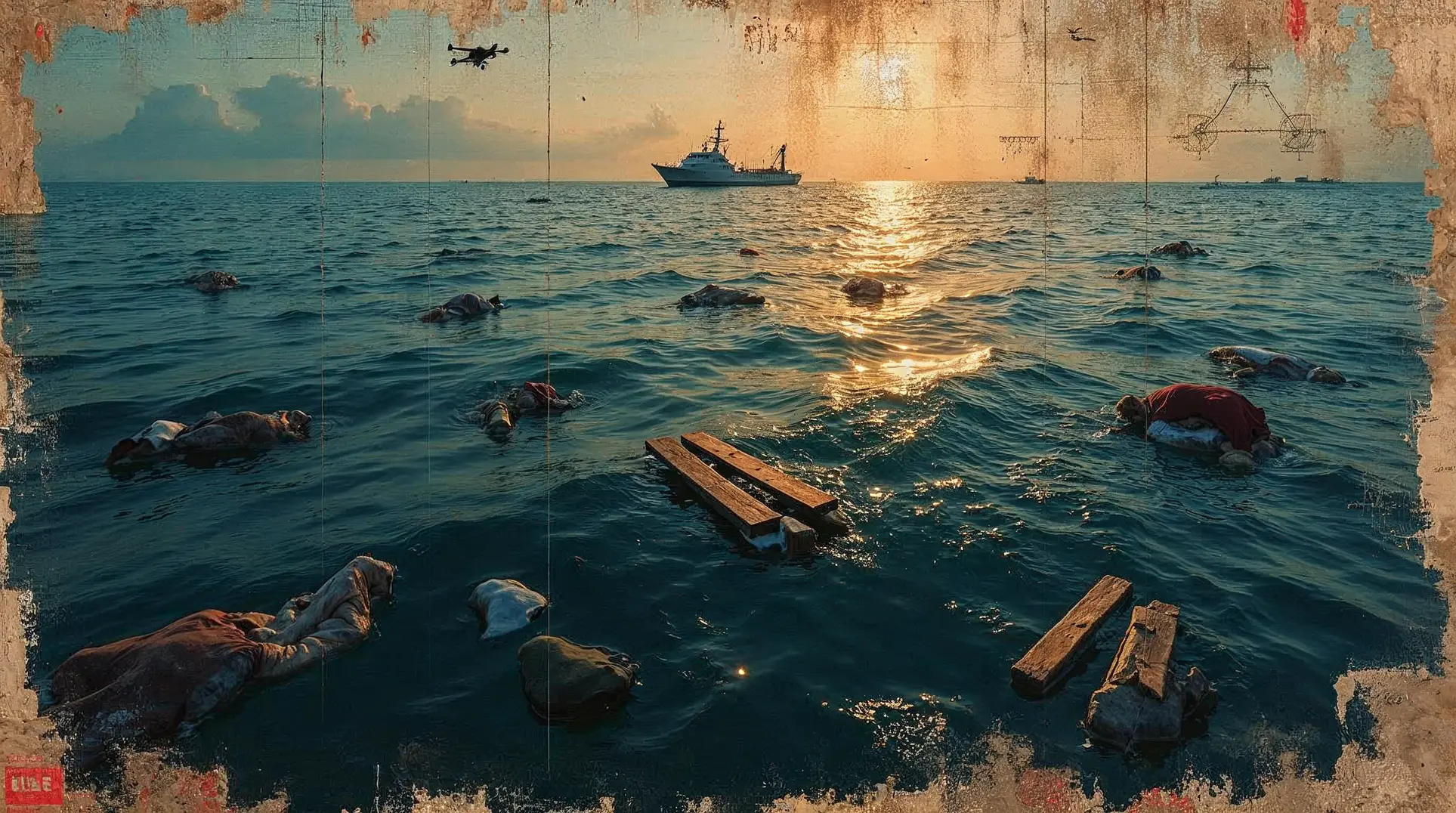
Members are reading: How the confirmed follow-up strike that killed survivors creates potential war crimes exposure that could unravel the administration's entire legal framework.
Colombia becomes the flashpoint for sovereignty and escalation
Trump's explicit reference to Colombian cocaine and Petro's immediate pushback make clear that the next phase of escalation will center on the Andean region. Petro has repeatedly objected to the maritime campaign, noting in October that some of those killed may have been Colombian nationals—a claim later confirmed by two U.S. officials who acknowledged Colombians were aboard at least one struck vessel. In mid-October, Petro said a September strike killed a Colombian fisherman. The presence of Colombian civilians among the dead transforms an abstract sovereignty argument into a bilateral crisis with a sitting U.S. ally and the world's largest cocaine producer.
Trump has signaled that land strikes may come "very soon." Any such operation on Colombian soil—or even Ecuadorian or Peruvian territory—would represent a categorical leap from interdiction to invasion, triggering clear violations of the UN Charter's prohibition on the use of force against the territorial integrity of another state. The administration's cartel-as-terrorist framing does not override sovereignty; the U.S. cannot unilaterally declare a non-state armed conflict on the territory of a third country without that government's consent. Petro has made clear no such consent exists. The October case in which the U.S. alleged links between a struck boat and the Colombian ELN guerrilla group—links the ELN flatly denied—suggests the administration may attempt to conflate drug trafficking with insurgency to justify cross-border action. That conflation has never been accepted under international law.
The campaign has already expanded from the Caribbean to the Eastern Pacific and grown in tempo: as of mid-November, at least 20 strikes have killed between 80 and 83 people, according to composite reporting. A November 6 strike occurred just hours after the Senate vote failed to constrain the president's authority, signaling the administration's intent to press ahead regardless of legislative resistance.
What comes next: oversight, evidence, and the risk of normalization
The immediate variable is whether congressional committees obtain and release the audio and video footage of the September 2 strikes. If that evidence shows survivors were alive and visible when the second missile was launched, it will be difficult for the administration to maintain its legal position. Bipartisan support for oversight creates genuine political risk, and could force either operational constraints or a public legal defense that withstands scrutiny.
The deeper risk is normalization. If the administration successfully redefines suspected drug trafficking as an armed conflict subject to lethal targeting without trial, it will have established a precedent that future administrations—and other governments—can invoke. The global drug trade involves dozens of countries; the logic Trump articulated on Tuesday, if accepted, would license military strikes across Latin America, West Africa, and Southeast Asia. For countries in the region, the question is no longer whether U.S. interdiction is effective, but whether it is becoming a framework for regime change under cover of counter-narcotics, and whether the shift from law enforcement to lethal strikes represents an irreversible militarization of hemispheric relations.
Colombia, with its history of U.S. military aid and its strategic position in cocaine supply chains, is the test case. If Petro holds firm and Trump proceeds with land strikes, the hemisphere will face its gravest sovereignty crisis in a generation—one in which the legal distinction between war and law enforcement has already been deliberately erased.
Subscribe to our free newsletter to unlock direct links to all sources used in this article.
We believe you deserve to verify everything we write. That's why we meticulously document every source.


