


The surveillance feed is familiar to anyone who has watched counter-narcotics operations unfold in the Eastern Pacific: a grainy infrared image of a low-profile vessel cutting through dark water, the thermal signature of its outboard engines glowing white against the cold ocean. For years, this is where the script was predictable. A U.S. Coast Guard cutter would close in, a MH-65 Dolphin helicopter would orbit overhead, and a Law Enforcement Detachment—armed with authority under international maritime law—would board the vessel, detain the crew, and seize the cargo. The outcome was measurable: tons of cocaine removed from transit, bodies handed to prosecutors, another data point in Operation Martillo's carefully compiled success metrics.
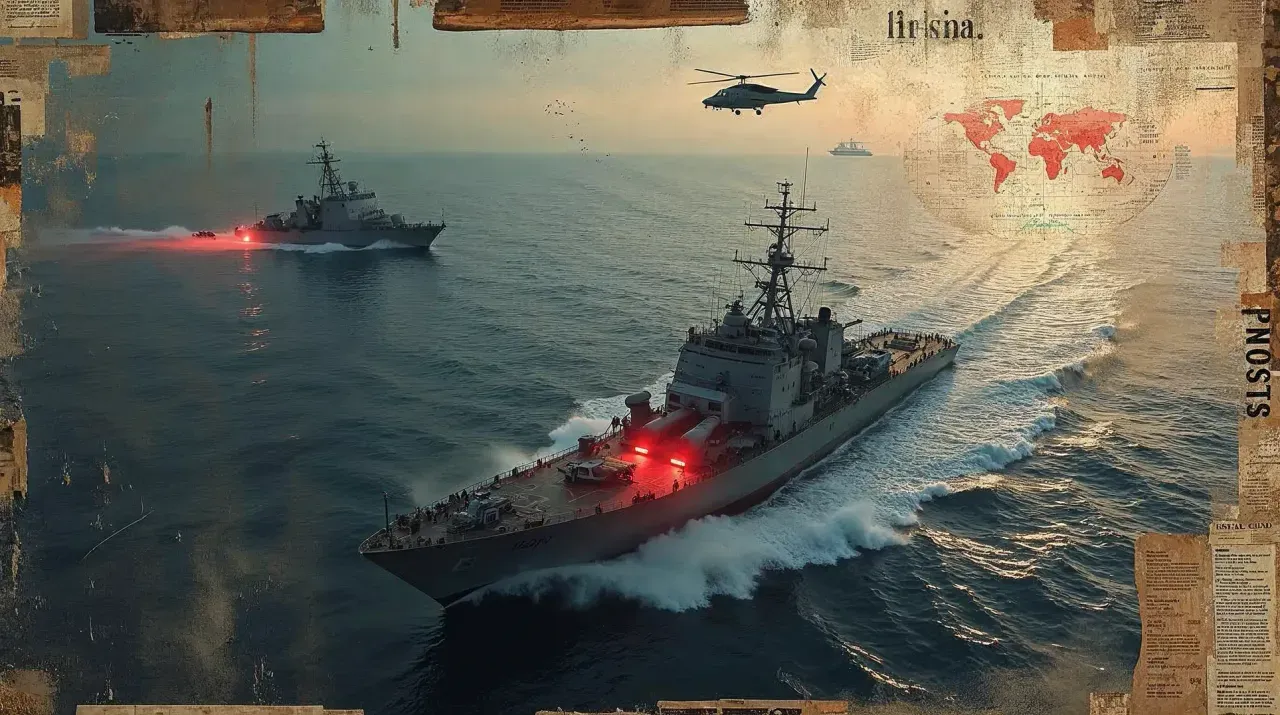
Unlock this in-depth audio analysis. This content is reserved for Front Line Members.
But on September 2, 2025, the script changed. Instead of a boarding team, the surveillance feed ended with a missile strike. Reports from the Caribbean described not just the destruction of the suspected drug vessel, but a follow-up "double-tap" strike that killed survivors in the water. By mid-November, at least 83 people had been killed across 21 such strikes in the Caribbean and Eastern Pacific, according to consolidated media accounts. The United Kingdom reportedly suspended intelligence sharing over legality concerns. The United Nations High Commissioner for Human Rights condemned the operations as violations of international human rights law, calling the killings "extrajudicial" and demanding independent investigations. What had been framed for more than a decade as a multilateral law-enforcement support mission—Operation Martillo, launched in January 2012—had become something else entirely: a kinetic military campaign justified under the language of armed conflict against foreign terrorist organizations.
 Diego Martinez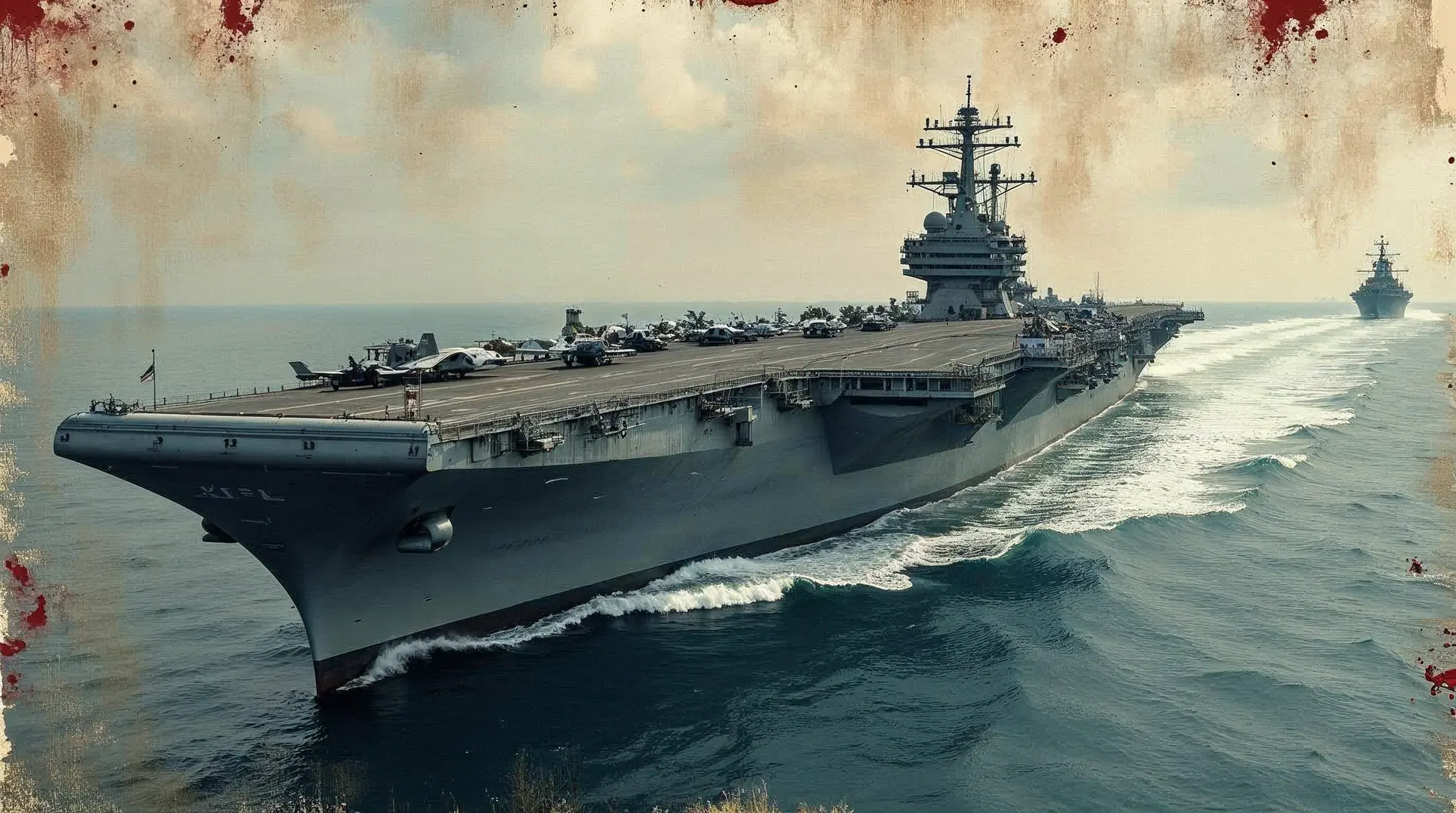
This rupture did not emerge from nowhere. It is the logical endpoint of a structural contradiction embedded in Martillo from the beginning: the promise that interdiction can meaningfully disrupt a cocaine economy whose production, logistics, and demand drivers have proven relentlessly adaptive. Over thirteen years, Martillo's participating nations—fourteen in all, spanning the Americas and Europe—have seized hundreds of metric tons of cocaine, detained thousands of suspected traffickers, and disabled hundreds of vessels. Yet cocaine flows to the United States and Europe have remained structurally intact, cartel revenues resilient, and the smuggling frontier perpetually in motion. The 2025 shift to lethal force is not an evolution of strategy; it is an admission that the law-enforcement model cannot close the capability gap between detection and disruption, and that the political imperative for visible action has overtaken legal and ethical constraints.
The question now is not whether Martillo has produced measurable outputs—it has—but whether those outputs address root causes or simply redraw the map of risk. And as European navies patrol the Caribbean in service of a mission whose legal foundation has become contested, the operation reveals something deeper: a transatlantic feedback loop in which upstream interdiction and downstream port security harden against the same adaptive criminal networks, producing displacement rather than reduction, and raising sovereignty costs that may eventually exceed any tactical gain.
The architecture of multilateral interdiction
Operation Martillo is commanded from Key West, Florida, through Joint Interagency Task Force South (JIATF South), a component of U.S. Southern Command. Its operational design reflects a post-Cold War model of multilateral security cooperation: the United States provides the detection and monitoring infrastructure—satellites, long-range patrol aircraft, signals intelligence—while partner nations contribute ships, aircraft, and law-enforcement personnel who conduct the actual interdictions. Participating countries include Belize, Canada, Colombia, Costa Rica, El Salvador, France, Guatemala, Honduras, the Netherlands, Nicaragua, Panama, Spain, the United Kingdom, and the United States; Chile has also contributed forces. This structure is intended to distribute sovereignty costs and frame the mission as partner-led, even as U.S. assets dominate the intelligence fusion and cueing process.
The typical operation unfolds in international waters. JIATF South fuses intelligence from multiple sources—human reporting, signals intercepts, aerial surveillance, and maritime radar—to identify suspected trafficking events. A U.S. Navy or Coast Guard vessel, or a partner-nation ship, is vectored to intercept. U.S. Coast Guard Law Enforcement Detachments (LEDETs), embarked aboard these vessels, lead the boarding and evidence collection, operating under Title 14 authority that permits law enforcement on the high seas. In cases where go-fast boats attempt to evade, Coast Guard HITRON (Helicopter Interdiction Tactical Squadron) units deploy from cutters in MH-65D helicopters equipped with precision rifles. Aircrews deliver warning shots, then—if the vessel refuses to stop—precision shots to disable outboard engines, a tactic developed specifically for Martillo's operational environment.
This layered architecture reflects a central tension: the mission depends on host-nation consent and partner participation to legitimate foreign military presence in Central American and Caribbean littorals, yet the command-and-control infrastructure remains overwhelmingly U.S.-led. When Operation Martillo launched in January 2012, U.S. officials emphasized that it targeted the littoral routes through which "a large majority" of U.S.-bound cocaine transited by sea. Early deployments included U.S. Marines from II Marine Expeditionary Force to Guatemala—at that government's request—providing surveillance support with UH-1N Huey helicopters and communications infrastructure to enhance Guatemalan forces' ability to apprehend traffickers. The Marines were explicitly not conducting arrests; the framing was assistance, not intervention.
This careful distinction mattered in a region still scarred by civil wars in Guatemala, El Salvador, and Nicaragua, conflicts in which U.S. military and intelligence agencies played direct and indirect roles. For Central American governments, hosting Martillo assets offered access to capabilities they could not afford independently—maritime patrol aircraft, real-time intelligence, and interoperable communications—but also risked political backlash from constituencies wary of foreign military footprints. The operational compromise was to position U.S. forces as enablers and to emphasize partner-nation agency in arrests and prosecutions.
Yet even this compromise showed strain. By 2014, then-Rear Admiral Charles Michel, JIATF South commander, framed Martillo's purpose as taking "pressure off" Northern Triangle states facing endemic violence, corruption, and institutional erosion driven by transnational criminal organizations. The implication was clear: left unchecked, cocaine smuggling fueled the very state fragility that made these countries vulnerable to further infiltration. Martillo was not just about seizing drugs; it was about preventing criminal governance from hollowing out already weak institutions.
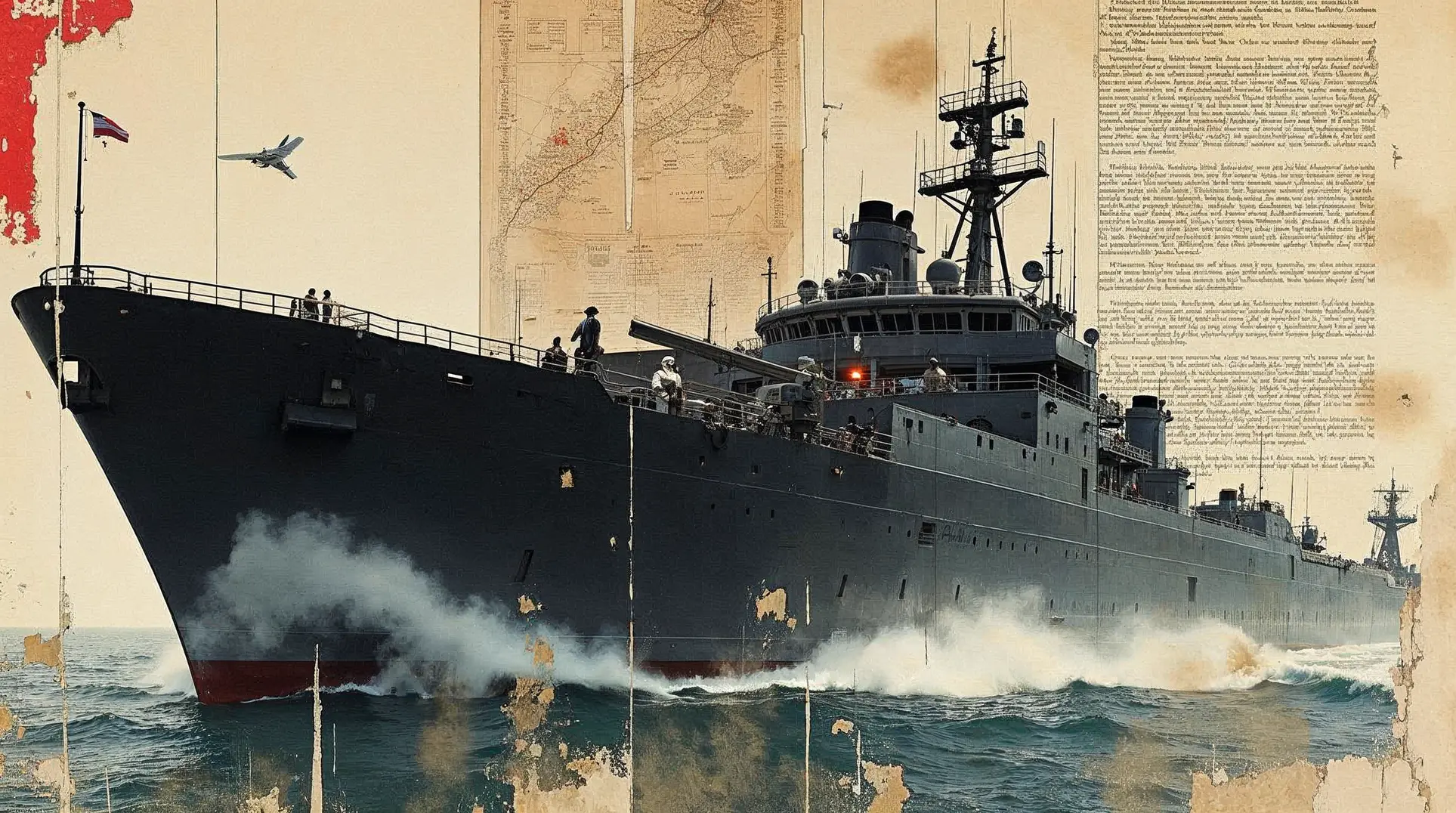
Members are reading: Inside the tactical chess match between HITRON units and evolving smuggling platforms—from go-fast decoys to the rise of remotely piloted narco-subs.
In July 2025, Colombian authorities captured a remotely piloted semi-submersible off the Pacific coast, a significant technological leap. The vessel had no crew aboard; it was navigated via pre-programmed GPS waypoints or remote control, eliminating human risk and the possibility of crew testimony. This development signals the frontier of narco-logistics: automation to evade interdiction and reduce operational exposure. If remotely piloted or autonomous vessels become widespread, the entire premise of maritime law enforcement—boarding, arrest, prosecution—faces obsolescence. You cannot prosecute a machine, and you cannot extract intelligence from an empty hull resting on the seabed.
Traffickers have also adapted their launch points and transit corridors in response to Martillo's pressure. When Caribbean interdictions intensified in the early 2010s, smuggling flows shifted westward to the Eastern Pacific, leveraging departure points along the Colombian and Ecuadorian coasts and transiting northward toward Mexico and Central America. When Eastern Pacific patrols were reinforced—culminating in Operation Pacific Viper, launched in August 2025, which seized more than 100,000 pounds (approximately 50 tons) of cocaine by mid-October—some flows reportedly shifted back toward the Caribbean or explored southern routes through Brazil and West Africa to European markets. This is the classic "waterbed effect": pressure in one zone displaces activity to another, producing a perpetual game of geographic redistribution without reducing aggregate supply.
The logistics frontier is not only about vessels and routes; it is also about information and corruption. Modern trafficking networks rely on encrypted communications, real-time updates on patrol movements gleaned from insiders, and sophisticated supply-chain management that rivals licit multinational corporations. A seizure is factored into risk models; redundant shipments are dispatched to ensure that even if one is lost, others reach their destination. The margin on cocaine—purchased in Colombia for a few thousand dollars per kilogram, sold in U.S. or European markets for tens of thousands—absorbs interdiction losses with ease. From a structural perspective, maritime interdiction does not collapse profit margins; it merely raises operating costs, costs that traffickers pass along the chain or absorb as overhead.
Sovereignty, support, and the blurred line of intervention
When U.S. Marines deployed to Guatemala in 2012 to support Operation Martillo, the framing was careful: at the host nation's request, in support roles only, providing surveillance and communications to enhance Guatemalan forces' ability to apprehend traffickers on Guatemalan soil and in Guatemalan waters. The Marines were not conducting arrests, not engaging in combat, not exercising law-enforcement authority. This distinction was essential. Guatemala's civil war, which ended formally in 1996, had seen extensive U.S. military and CIA involvement, much of it supporting a government responsible for widespread human rights abuses. The scars of that era—massacres, disappearances, militarized governance—remain vivid in collective memory. Hosting foreign troops, even in ostensibly supportive roles, carried political risk.
Across Central America, this historical sensitivity shapes how governments negotiate security assistance. El Salvador, Honduras, and Nicaragua each carry legacies of civil conflict intertwined with Cold War proxy struggles. The presence of U.S. military personnel, even under multilateral flags like Martillo, evokes debates about sovereignty, dependency, and the risk that counter-narcotics missions become pretexts for broader military entrenchment. Leaders who welcome such assistance must balance capability gains—better intelligence, more interdictions, visible action against criminal groups—against domestic constituencies wary of renewed intervention.
Operation Martillo's architecture was designed to mitigate these concerns. By embedding U.S. assets within a multinational framework and emphasizing partner-nation leadership in arrests and prosecutions, the operation could claim legitimacy as cooperative law enforcement rather than unilateral intervention. Coast Guard LEDETs, operating under Title 14 authority, reinforced this frame: they were law enforcement, not combat forces, boarding vessels under international maritime law in a manner analogous to fisheries enforcement or migrant interdiction.
But the September 2025 shift to lethal kinetic strikes shattered this framework. When U.S. forces began launching missile strikes on suspected drug vessels—killing crews in the initial impact and, in at least one reported case, conducting a follow-up strike on survivors in the water—the operation crossed from law enforcement into warfare. The U.S. legal justification, articulated in an October 1, 2025, notice to Congress, asserted a "non-international armed conflict" against cartel operatives designated as "unlawful combatants" under foreign terrorist organization (FTO) statutes. This framing invoked international humanitarian law (IHL) and self-defense doctrines traditionally reserved for state-on-state or state-versus-insurgent conflicts, applying them to criminal organizations engaged in narcotics trafficking.
The UN High Commissioner for Human Rights rejected this logic outright. In an October 2025 statement, the office condemned the strikes as violations of international human rights law, emphasizing that lethal force at sea must be a last resort tied to imminent threat—standards not met by the targeting of fleeing or surrendering smugglers. The statement labeled the killings "extrajudicial" and called for independent investigations, a position echoed by human rights organizations and legal scholars who argued that FTO designations and armed-conflict framing cannot simply override due process and the principle of distinction between combatants and civilians.
Reports that the United Kingdom suspended intelligence sharing with U.S. counter-narcotics operations over legality concerns underscore the fracture within the Martillo coalition. For European partners—whose participation has always been framed as law enforcement in support of international legal norms—the kinetic turn raises uncomfortable questions. If the operation is now a shooting war, what is the legal basis for their continued involvement? If crews aboard suspected vessels can be killed without trial, what distinguishes this from summary execution? And if host nations in Central America and the Caribbean did not consent to lethal strikes in their maritime approaches, has the operation violated their sovereignty?
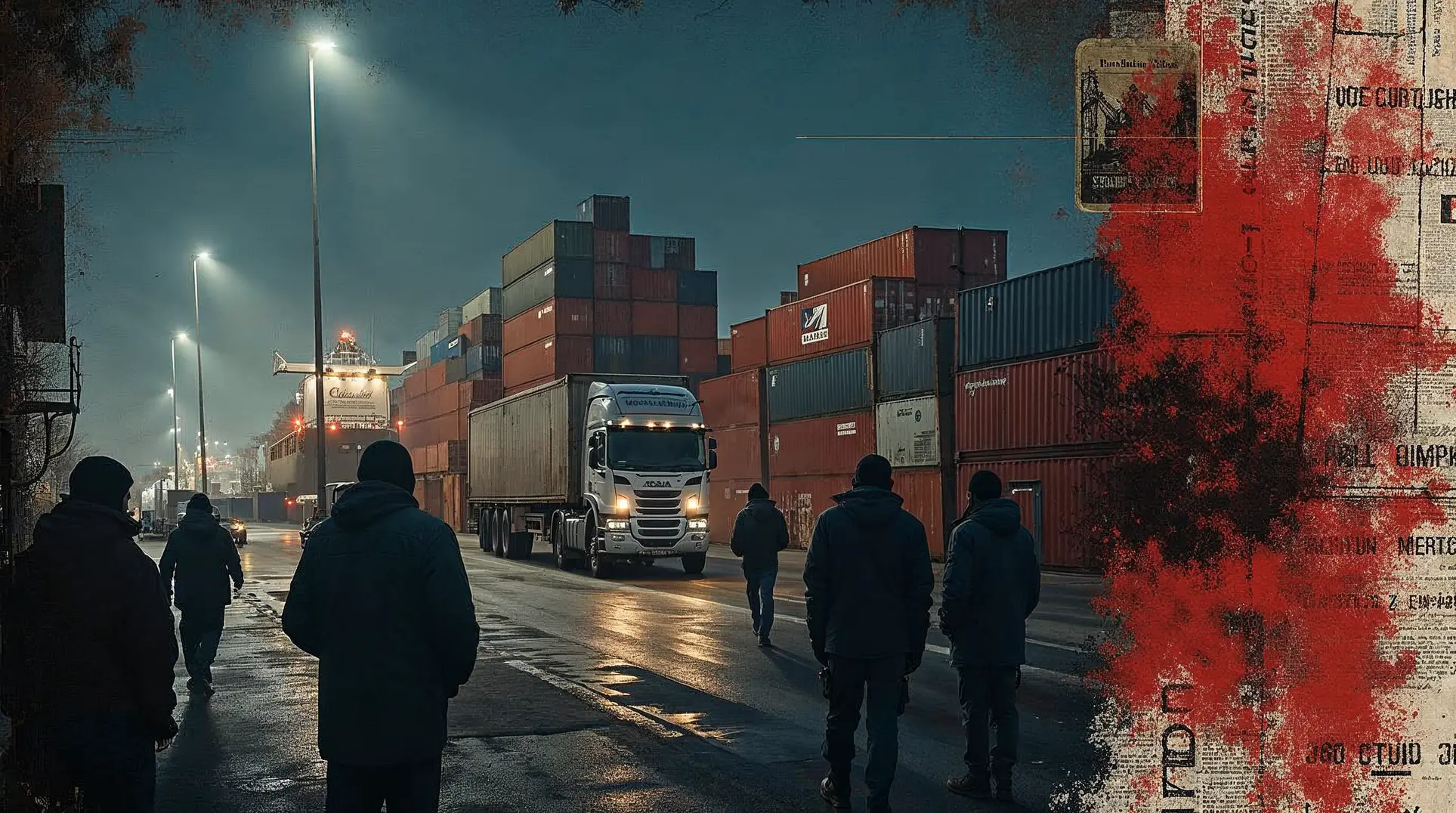
Members are reading: How European port infiltration drives transatlantic interdiction strategy, and why the waterbed effect moves risk from sea to street.
When interdiction reduces smuggling in a given area, the immediate result is not economic relief but dislocation. Income streams dry up, and communities that became dependent on trafficking-related employment face sudden contraction. Some residents welcome the departure of criminal networks and the reduction in associated violence; others experience it as economic abandonment. Meanwhile, the displaced smuggling activity often re-emerges in a nearby community previously untouched, bringing an initial influx of money followed by intimidation, recruitment of youth into high-risk roles, and eventual violence as rival networks compete for control or as law enforcement pressure returns.
This cycle—termed the "balloon effect" in drug-policy literature—is fundamentally a governance problem. Trafficking organizations thrive in spaces where state presence is weak, where police are under-resourced or corrupt, and where local economies offer few alternatives. Interdiction operations like Martillo do not fill this governance vacuum; at best, they temporarily displace criminal activity, and at worst, they intensify violence as networks fight over shrinking safe corridors or retaliate against communities perceived as collaborating with authorities.
Rear Admiral Charles Michel's 2014 framing—that Martillo aimed to "take pressure off" Northern Triangle states overwhelmed by violence and corruption—acknowledged this dynamic but also revealed its limits. Pressure can be displaced from one state to another, from one coastline to another village, but without parallel investments in governance, licit economic development, and anti-corruption, the underlying vulnerability remains. Seizure metrics count interdictions, not the durability of criminal networks or the resilience of the communities they exploit.
Martillo in the war-on-drugs continuum: Echoes of Colombia and Mexico
Operation Martillo is not a novel experiment; it is the latest iteration in a multi-decade U.S.-led counter-narcotics strategy that has moved through Plan Colombia, the Mérida Initiative, and now increasingly kinetic Caribbean and Pacific operations. Each phase has emphasized supply-side interdiction—targeting production zones, trafficking routes, and criminal leadership—backed by substantial military and law-enforcement assistance to partner nations. Each has generated measurable tactical outputs: hectares of coca eradicated, kingpins arrested, cocaine seized. And each has confronted the same strategic limits: production adapts, trafficking routes shift, criminal organizations reconstitute, and consumer demand in the United States and Europe persists.
Plan Colombia, launched in 2000, combined aerial fumigation of coca fields, support for Colombian military and police forces, and alternative development programs for rural communities. It succeeded in reducing coca cultivation in Colombia temporarily, but cultivation rebounded and shifted to Peru and Bolivia. It helped weaken the FARC and other insurgent groups, but criminal bands—BACRIM and successor groups—filled the void, often proving more ruthless and profit-focused than their predecessors. Billions of dollars in U.S. assistance improved Colombian state capacity in some regions, but coca-growing zones often remained beyond effective governance.
The Mérida Initiative, launched in 2007 to combat drug cartels in Mexico and Central America, followed a similar template: equipment, training, intelligence support, and institution-building for police and military forces. It coincided with a dramatic surge in violence in Mexico—tens of thousands killed as cartels fragmented and fought for territory—and mixed results in Central America, where security forces often proved as predatory as the criminal groups they were meant to combat. Seizures and arrests were plentiful; durable reductions in trafficking or violence were elusive.
Martillo inherits this legacy. Its multilateral structure and emphasis on maritime interdiction represent tactical evolution—better intelligence fusion, more sophisticated platforms, broader coalition participation—but the underlying theory of change remains the same: impose costs on trafficking networks through enforcement pressure, disrupt supply chains, and thereby reduce the flow of drugs to consumer markets. The 2025 escalation to lethal kinetic strikes, framed under FTO designations and armed-conflict doctrine, represents an intensification of this logic, not a departure from it.
 Diego Martinez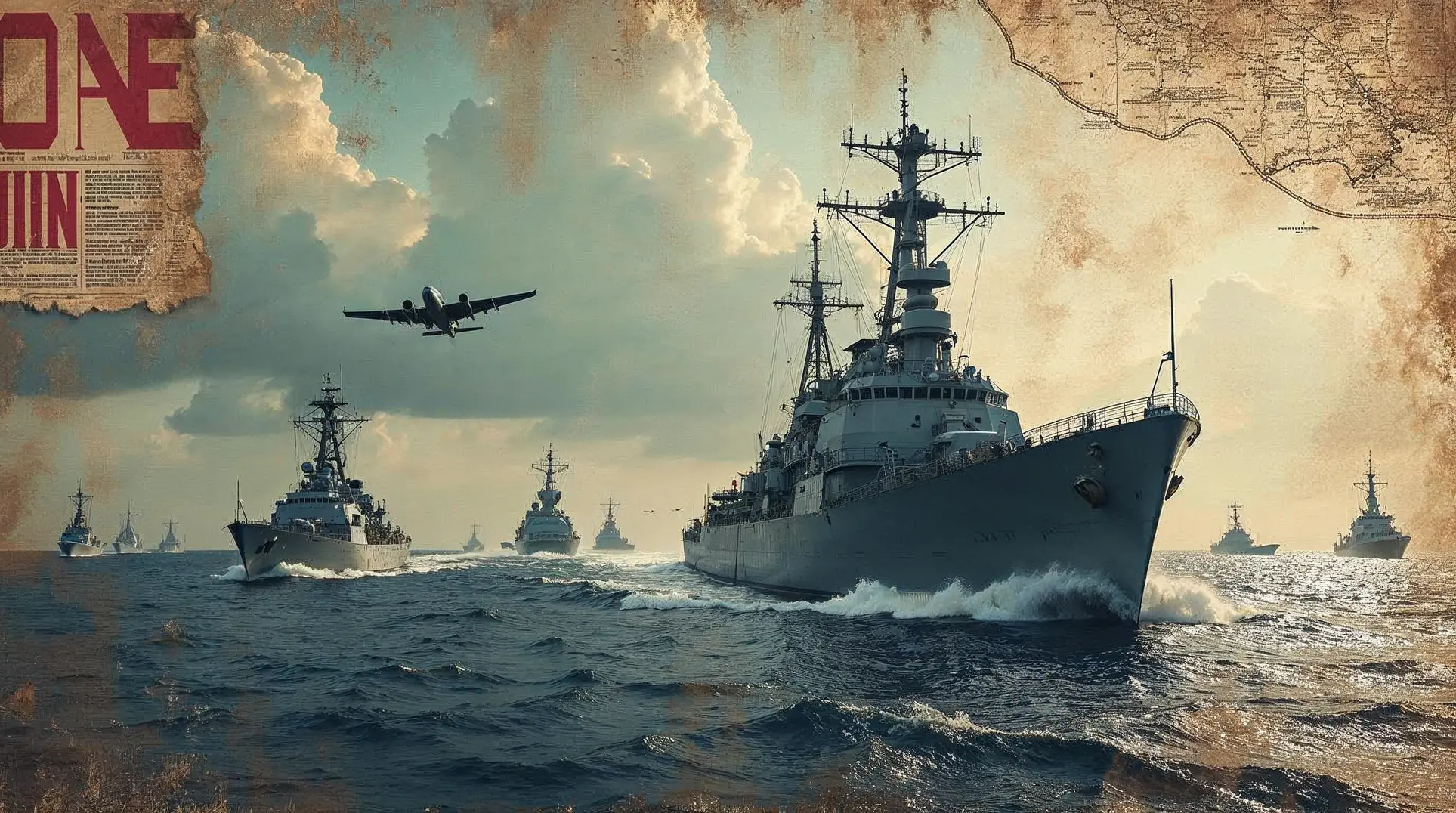
Yet this intensification carries legal and strategic risks that earlier phases avoided. Plan Colombia and Mérida operated under host-nation consent and were framed as capacity-building and law-enforcement assistance. Martillo, until 2025, maintained this frame through LEDETs and partner-led arrests. The kinetic turn—launching missile strikes on vessels at sea, killing crews without trial—crosses into a different domain, one where international humanitarian law and self-defense are invoked against non-state actors engaged in criminal enterprise. This is legally contested terrain. The UN human rights office, European allies, and bipartisan U.S. congressional oversight voices have all questioned whether FTO designation alone can justify treating traffickers as combatants subject to lethal targeting without imminent-threat criteria.
Strategically, the risk is that kinetic escalation produces short-term spectacle—burning boats, body counts, headlines—without altering the structural dynamics that sustain the cocaine economy. Traffickers adjust: they use decoys, scuttle evidence, deploy autonomous vessels, shift routes, and recruit replacements. Meanwhile, the legal and sovereignty costs accumulate: strained alliances, erosion of international legal norms, and potential backlash in host nations where populations may view strikes in their maritime zones as violations of sovereignty, regardless of U.S. legal arguments.
The deeper continuity across Plan Colombia, Mérida, and Martillo is the neglect of demand-side and structural interventions. Consuming markets in the United States and Europe have seen only modest investment in harm reduction, treatment access, or public-health approaches that might reduce cocaine consumption. Production zones in the Andes receive sporadic alternative-development funding, often insufficient to compete with coca's profitability or delivered through corrupt local intermediaries. Governance and anti-corruption programs exist but remain under-resourced relative to the billions spent on interdiction and enforcement.
Members are reading: Why demand reduction, financial targeting, and production-zone development offer structural leverage that maritime interdiction alone cannot achieve.
The operation's weaknesses are its reactive posture, its vulnerability to displacement, and its inability to address corruption, demand, or production incentives. Traffickers adapt faster than enforcement can scale; seizures become costs of business rather than existential threats; and the margins on cocaine absorb losses with ease. The result is a perpetual operational tempo—more patrols, more seizures, more arrests—that produces activity without resolution.
The 2025 shift to lethal strikes represents an attempt to escape this trap by escalating the costs imposed on traffickers to the ultimate level: death. But this escalation carries its own costs—legal, diplomatic, and ethical—that may prove unsustainable. If European allies withdraw support, if host nations revoke consent, if domestic legal challenges curtail operations, or if the kinetic campaign simply displaces smuggling to autonomous vessels or alternative routes, the tactical gains may prove fleeting. And if the strikes erode international legal norms around due process and the use of force, the long-term damage to multilateral law enforcement may exceed any short-term disruption to cocaine flows.
The surveillance feed that opened this analysis—the infrared image of a vessel in the Eastern Pacific—has become emblematic of counter-narcotics operations in the Martillo era. For thirteen years, that feed led to boardings, arrests, and seizures within a law-enforcement framework. In 2025, it led to missile strikes and body counts within a framework of armed conflict. The transition is significant, but the underlying question remains the same: does this approach address the conditions that produce the feed in the first place, or does it merely determine how we respond to it?
The limits of visibility and the persistence of structure
The cocaine economy is not a problem that can be solved at sea. It is a problem rooted in the demand of millions of consumers in wealthy countries, the livelihood calculations of thousands of farmers in poor regions, the profit-seeking of adaptive criminal enterprises, and the corruption that permeates governance at every level from village police to presidential palaces. Maritime interdiction can interdict; it cannot transform these underlying realities. This is not a critique of the men and women who operate Coast Guard cutters, pilot surveillance aircraft, or coordinate intelligence at JIATF South; it is an acknowledgment of the structural limits of the mission they have been assigned.
Operation Martillo will likely continue in some form, whether under a law-enforcement model, a kinetic-strike posture, or a hybrid framework yet to be defined. European partners will weigh their security interests against their legal and ethical red lines. Central American host nations will balance capability needs against sovereignty concerns. And the cocaine trade will adapt, as it has adapted to every enforcement innovation over the past half-century. The question for policymakers is whether they are willing to confront this pattern—visible outputs masking invisible dynamics—and invest in the structural interventions that interdiction metrics cannot capture but that durable disruption requires.
That means funding demand reduction with the same urgency as detection systems. It means anti-corruption programs resourced to the level of naval deployments. It means alternative development sustained over decades, not abandoned after a few election cycles. And it means grappling with the possibility that enforcement-dominant frameworks, no matter how technologically sophisticated or tactically successful, may be incapable of resolving a problem that is fundamentally economic, social, and political.
The surveillance feed continues. The infrared glow of outboard engines against dark water. The decision point: board, disable, or strike. Behind that feed lies a vast apparatus of satellites, fusion centers, warships, and international agreements. And behind that apparatus lies an even larger structure of demand, supply, margin, corruption, and violence that no amount of interdiction has yet dismantled. Until policy confronts that deeper structure, the feed will remain—an endless loop of detection and response, metrics and displacement, visible action and invisible continuity.
Subscribe to our free newsletter to unlock direct links to all sources used in this article.
We believe you deserve to verify everything we write. That's why we meticulously document every source.


