


- US boat strikes killing 34+ people represent extrajudicial war acts under secret legal framework, not legitimate counter-narcotics operations
- Military deployment of 10% of US naval assets signals regime change objective in Venezuela, masked by drug war rhetoric
- Pacific expansion reveals mission creep beyond Caribbean, threatening regional stability while alienating critical allies like Colombia
The USS *Jason Dunham* cuts through Caribbean waters with the kind of deliberate menace that signals more than routine patrol. Overhead, F-16s from Venezuela's air force make provocative passes—a dangerous game of chicken that, according to multiple Defense Department officials, has become routine in recent weeks. Below deck, sailors prepare for operations that blur the line between law enforcement and acts of war. This is the new normal in the Caribbean, where the Trump administration has deployed a military force unprecedented in scale for what it claims is a counter-narcotics operation.
Since early September, US forces have struck at least eight vessels in international waters, killing at least 34 people. The administration insists these were "narco-terrorists" transporting drugs. But the evidence remains classified, the legal justification murky, and the strategic logic increasingly suspect. What began as strikes in the Caribbean has now expanded to the Pacific, signaling not a focused counter-drug operation but the opening phase of something far more ambitious—and potentially catastrophic.
From my vantage point covering transnational crime and US policy in Latin America for over a decade, the pattern is unmistakable. This isn't about cocaine or fentanyl. It's about regime change in Venezuela, wrapped in the politically palatable language of the War on Drugs. And if history is any guide, the consequences will reverberate across the hemisphere for years to come.
The military buildup: Overwhelming force for uncertain ends
The sheer scale of the US military presence now arrayed against Venezuela defies any conventional counter-narcotics logic. According to official statements and open-source intelligence, the deployment includes four Aegis guided-missile destroyers, one cruiser, one nuclear-powered attack submarine, amphibious assault ships carrying over 4,000 Marines, Coast Guard cutters, P-8 Poseidon reconnaissance aircraft, E-3 AWACS surveillance platforms, and recently, F-35 fighter jets stationed in Puerto Rico.
This represents more than 10 percent of all deployed US naval assets—a concentration of firepower not seen in the Caribbean since the Cuban Missile Crisis. To put this in perspective: during Operation Just Cause in Panama in 1989, the last major US military intervention in Latin America, the United States deployed approximately 27,000 troops. The current Caribbean force, while smaller in total personnel, brings vastly superior technological capabilities and strike capacity.
Defense Secretary Pete Hegseth's recent visit to the USS *Iwo Jima* off Puerto Rico was revealing. "What you're doing right now—it's not training," he told assembled sailors and Marines. The message was clear: this is operational deployment, not an exercise. The functional reactivation of Roosevelt Roads Naval Station in Puerto Rico—closed officially since 2004 but now serving as a strategic staging area for fighter jets, cargo, and training exercises—demonstrates the administration's tactical response to current regional tensions, even as defense officials confirm there are no plans for permanent reopening.
Yet the stated objective—disrupting drug trafficking—doesn't align with the force structure. Venezuela doesn't produce fentanyl, the synthetic opioid driving the majority of US overdose deaths. And while cocaine does transit through Venezuelan waters, approximately 75-84 percent of South American cocaine bound for the United States travels through the Pacific corridor from Colombia, not the Caribbean routes the US is now heavily patrolling.
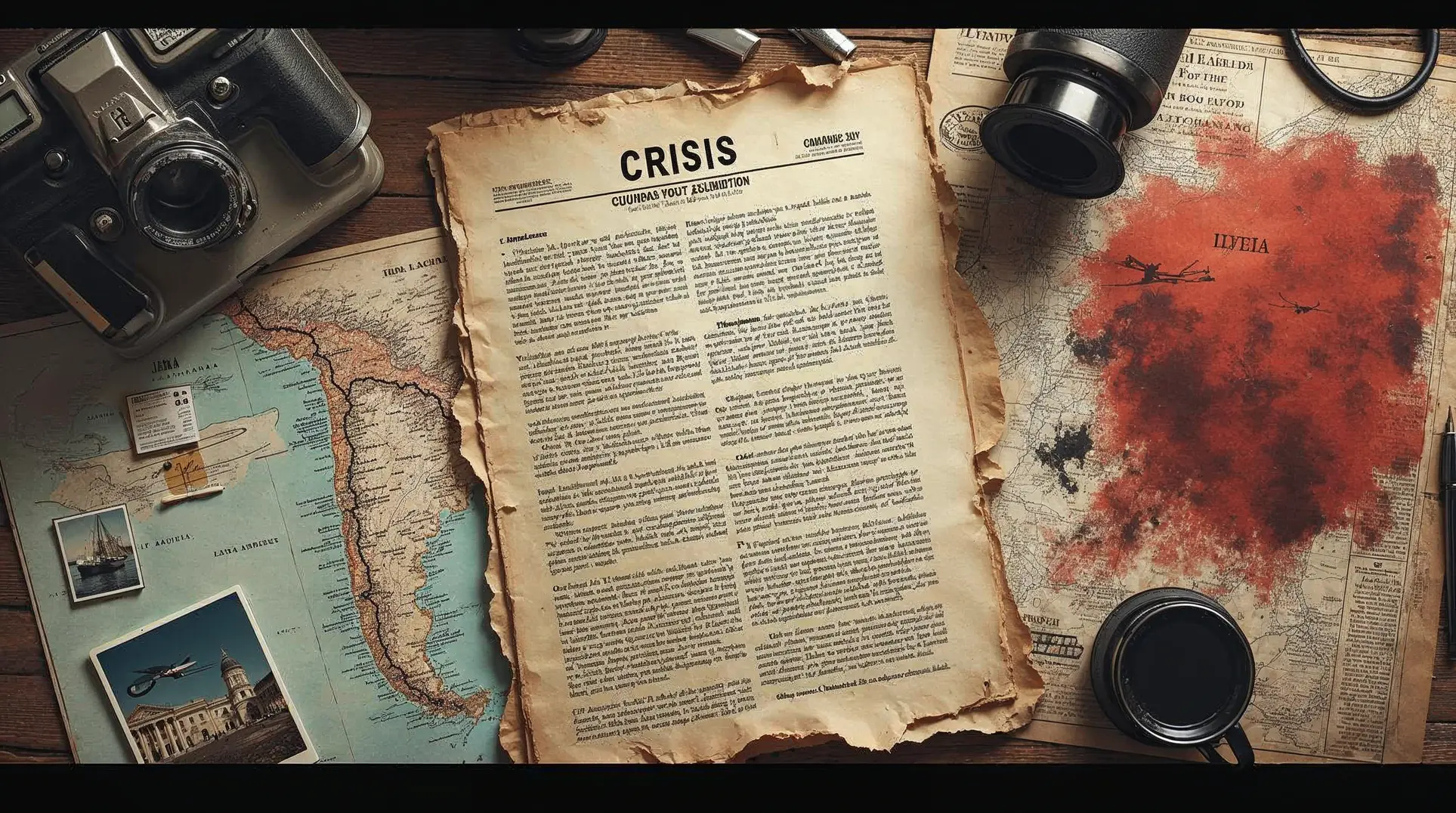
The secret DOJ memo transforming drug suspects into 'unlawful combatants'—and why Pentagon lawyers are quietly resisting what comes next.
Maduro's response: Mobilization and the specter of asymmetric warfare
Nicolás Maduro is many things—authoritarian, economically incompetent, responsible for Venezuela's humanitarian catastrophe—but he is not politically naive. He understands that the Trump administration's ultimate objective is his removal, and he is preparing accordingly.
Venezuela has activated what it claims are over 4.5 million militia members, though experts question both the number and the quality of training. The Bolivarian National Armed Forces, numbering approximately 123,000, have been repositioned along the coast and the Colombian border. Russian-made S-300VM air defense systems have been showcased in military parades—a clear signal that any US air campaign would face resistance, however brief.
More concerning are the Iranian-provided missile boats now deployed in Venezuelan waters. While no match for US destroyers in open combat, these fast attack craft armed with anti-ship missiles represent an asymmetric threat. In confined waters like the Caribbean, they could inflict casualties and create the kind of incident that escalates beyond anyone's control.
Maduro has also activated a constitutional provision allowing him to declare a state of emergency and assume special powers in matters of defense and security. This grants him legal cover—at least domestically—to suspend civil liberties, crack down on political opposition, and frame any dissent as collaboration with foreign aggression. Venezuelan political analyst Anibal Sanchez Ismayel warns that US strikes on Venezuelan soil "would have consequences from diplomatic protests to an increase in political persecutions of those they classify as collaborators."
The perverse effect of US military pressure has been to strengthen Maduro's political position. He has successfully framed himself as defending Venezuelan sovereignty against American imperialism—a narrative that resonates not just domestically but across Latin America. Even governments that refused to recognize his fraudulent 2024 election victory have condemned the US boat strikes. Colombian President Petro called them "murder" and urged criminal prosecution of Trump. Brazilian President Lula da Silva warned of a "new war zone" in the Caribbean. This regional solidarity, however reluctant, complicates US efforts to isolate the Maduro regime diplomatically.
The Colombia conundrum: Alienating a critical ally
Perhaps no relationship better illustrates the strategic incoherence of the Trump administration's approach than its deteriorating ties with Colombia. For decades, Colombia has been Washington's most reliable partner in South America on security and counter-narcotics. Colombian forces train with US military units, purchase American weapons systems, and coordinate closely with the DEA and CIA.
Now, that partnership is fraying. President Trump has publicly called Colombian President Gustavo Petro "an illegal drug leader" and threatened to cut off aid and impose tariffs. The State Department has revoked Petro's US visa. In September, the administration "decertified" Colombia as failing to meet its counter-narcotics obligations—the first such designation since 1997.
The proximate cause was Petro's condemnation of the boat strikes and his claim that one attack killed a Colombian fisherman. But the deeper issue is ideological: Petro is a leftist who disagrees with Trump on nearly everything and isn't afraid to say so. He has rejected US military deportation flights, urged American soldiers to disobey Trump's orders, and expressed support for anti-Trump protests in the United States.
From a strategic perspective, this conflict is self-defeating. Colombia is the world's largest cocaine producer, responsible for nearly two-thirds of global supply. If the Trump administration genuinely wanted to reduce cocaine flows to the United States, it would be strengthening cooperation with Bogotá, not threatening to cut aid and impose tariffs. The $230 million in annual US assistance to Colombia funds programs that help Colombian forces fight the very cartels the Trump administration claims to be targeting.
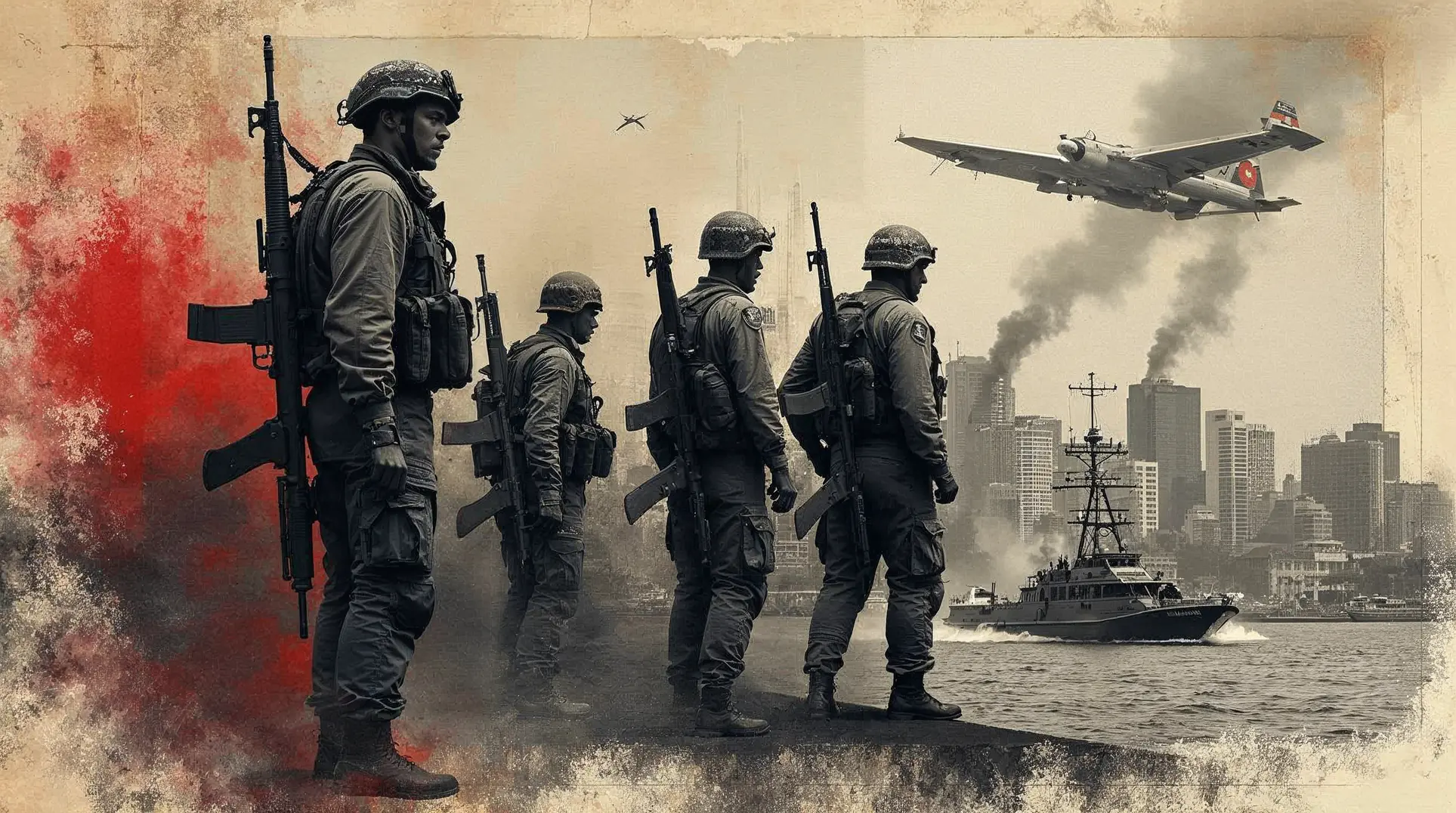
Why Tuesday's Pacific strike reveals the operation's true scope—and what happens when the killing moves from international waters to sovereign territory.
The regional backlash: Isolating Washington, not Caracas
The Trump administration's aggressive posture has generated precisely the opposite of its intended diplomatic effect. Rather than isolating Maduro, it has isolated the United States.
At the United Nations General Assembly, President Petro called for Trump to face criminal prosecution for the boat strikes. At a recent BRICS summit, President Lula urged US restraint and warned against military escalation. Even Argentina, typically aligned with Washington, has engaged in trade deals with China that the Trump administration views as betrayal. Caribbean nations have issued statements calling for the region to remain a "zone of peace"—a not-so-subtle rebuke of US militarization.
This matters because effective counter-narcotics requires regional cooperation. Information sharing, coordinated patrols, extradition agreements, joint operations—all depend on trust and partnership. When the United States is perceived as acting unilaterally and illegally, that cooperation evaporates. Countries become reluctant to share intelligence that might be used for extrajudicial killings. They refuse basing rights for US forces. They limit the scope of joint operations.
The historical parallel is instructive. During the Cold War, US support for right-wing dictatorships and covert operations against leftist governments generated decades of anti-American sentiment in Latin America. The legacy of CIA-backed coups in Chile, Guatemala, and elsewhere still shapes regional politics. The Trump administration's current approach risks creating a new generation of grievances—this time framed around sovereignty violations and extrajudicial killings in the name of drug enforcement.
China is the obvious beneficiary. Beijing has made massive infrastructure investments across Latin America, including port development projects that provide critical capital for cash-strapped governments. While the United States projects power through military operations, China projects influence through economic engagement. For regional leaders, the choice is increasingly stark: accept Chinese investment with no political conditions, or align with a United States that makes demands, threatens sanctions, and conducts military operations in your neighborhood.
The port issue is particularly revealing. The Trump administration has raised concerns about Chinese-operated terminals in Panama, Colombia, and elsewhere, warning they could serve dual-use purposes for Chinese military logistics. But Washington offers no alternative. Unless the United States can match China's infrastructure investment—which it shows no inclination to do—its warnings about strategic vulnerabilities ring hollow.
The humanitarian cost: Desperation and displacement
Lost in the geopolitical maneuvering is the human dimension. Venezuela's economic collapse has created one of the world's worst humanitarian crises. Over 7.7 million Venezuelans have fled the country since 2014, according to the UN Refugee Agency. Those who remain face food insecurity, hyperinflation, and collapsing public services. Ninety percent of the population now lives in poverty.
These conditions are what drive people to drug trafficking, illegal mining, and other illicit activities. When legitimate economic opportunities disappear, criminal networks step in. The Trump administration's military campaign does nothing to address these root causes—and risks making them worse.
If US strikes escalate to Venezuelan territory, the displacement will accelerate. Colombia and Brazil, which already host millions of Venezuelan refugees, would bear the brunt. This would create political pressure on those governments and further strain relations with Washington. It would also increase migration pressure toward the United States—the very outcome the Trump administration claims to want to prevent.
The irony is profound: an administration that came to power promising to reduce illegal immigration is pursuing policies virtually guaranteed to increase it. Military destabilization of Venezuela would trigger mass displacement. Economic sanctions compound the humanitarian crisis. And the criminalization of migration—treating desperate people as national security threats—ensures that those who do flee will take ever-more-dangerous routes and rely on ever-more-ruthless smuggling networks.
Strategic assessment: High costs, minimal gains
From a purely strategic perspective, the Trump administration's Caribbean campaign fails basic cost-benefit analysis. The costs—financial, diplomatic, legal, and humanitarian—are substantial and growing. The benefits remains unclear.
The strategic logic appears to be: use counter-narcotics as legal and political cover for a regime-change operation against Maduro. But regime change by military force carries catastrophic risks. Venezuela is not Panama in 1989 or Grenada in 1983. It has a larger military, more sophisticated air defenses, and millions of militia members—however poorly trained—who could wage asymmetric warfare.
Even if a US military operation successfully removed Maduro, what comes next? The Chavista political structure is deeply entrenched in state institutions, the military, and civil society. Any new government would face armed resistance from Maduro loyalists, criminal groups that have thrived under his rule, and quite possibly Colombian guerrilla groups that operate in Venezuelan territory. The result would be prolonged instability, not democratic transition.
The comparison to Iraq is unavoidable. The United States removed Saddam Hussein quickly in 2003. The occupation and attempted state-building lasted eight years, cost trillions of dollars, killed hundreds of thousands of people, and left Iraq weaker and more chaotic than before the invasion. Venezuela would likely follow a similar trajectory—except it's in America's backyard, its instability would directly affect US allies, and the refugee flows would head north.
The path not taken: Alternatives to militarization
There are alternatives to the current approach, though they require patience, diplomatic skill, and genuine regional partnership—qualities not abundant in the current administration.
Strengthen regional law enforcement cooperation. Rather than conducting unilateral strikes, the United States could enhance support for multinational counter-narcotics efforts through frameworks like the Caribbean Community Implementation Agency for Crime and Security (CARICOM IMPACS) and the Regional Security System (RSS). These organizations already conduct maritime patrols and information sharing but lack resources. US investment in regional capacity would be more effective and legitimate than unilateral military action.
Address root causes. Poverty, food insecurity, and lack of economic opportunity drive Venezuelans into illicit activities. Rather than bombing boats, the United States could support humanitarian assistance, economic development in vulnerable communities, and programs that provide alternatives to criminal livelihoods. This requires working with NGOs, international organizations, and even engaging with the Venezuelan government on humanitarian grounds—politically difficult but strategically sound.
Support democratic opposition. The Venezuelan opposition, led by María Corina Machado and Edmundo González, represents the legitimate democratic alternative to Maduro. Rather than military intervention, the United States could strengthen diplomatic and economic pressure while supporting opposition organizing. This is a long-term strategy, but it has the advantage of being led by Venezuelans rather than imposed by Washington.
Engage in pragmatic diplomacy. Maduro reportedly sent a letter to Trump after the first boat strike, proposing direct talks with special envoy Richard Grenell. The administration could explore whether there are areas of mutual interest—migration management, humanitarian access, even counter-narcotics cooperation—that could reduce tensions while maintaining pressure for democratic reforms. This doesn't mean legitimizing Maduro's rule, but it recognizes that regime change by force is likely to produce worse outcomes than strategic engagement.
Invest in infrastructure. If the concern is Chinese influence through port development, the answer is to offer an alternative. The United States, ideally in partnership with allies and multilateral development banks, could finance infrastructure projects that meet Latin American needs while ensuring they don't create strategic vulnerabilities. This requires resources and long-term commitment—but it would be far cheaper than military operations and far more effective at countering Chinese influence.
None of these alternatives offers the immediate gratification of military strikes or the political theater of warships in the Caribbean. But they have the advantage of actually working—or at least not making the situation catastrophically worse.
Conclusion: The dangers of the undeclared war
What we are witnessing in the Caribbean is the early phase of an undeclared war—one that the Trump administration has launched without congressional authorization, without clear strategic objectives, and without honest public debate about the risks and consequences.
The boat strikes are not counter-narcotics operations in any meaningful sense. They are acts of war against a sovereign state, justified by secret legal opinions, based on classified intelligence, and conducted without accountability or transparency. The expansion to the Pacific, the deployment of overwhelming military force, and the rhetoric comparing drug traffickers to al-Qaeda all point toward escalation, not de-escalation.
The administration's ultimate objective appears to be regime change in Venezuela—a goal that, however desirable in the abstract, cannot be achieved through military force without triggering regional instability, massive displacement, and prolonged conflict. The costs will be borne not just by Venezuelans but by Colombia, Brazil, and other neighbors who will absorb refugees and face spillover violence. The United States will find itself responsible for yet another failed state-building project, this time in its own hemisphere.
Meanwhile, the actual drivers of drug trafficking—poverty, corruption, weak institutions, and insatiable US demand—remain unaddressed. The cartels will adapt, as they always do. Routes will shift. New organizations will emerge. The fundamental dynamic will persist.
The tragedy is that there are better options. Regional cooperation, targeted law enforcement, support for democratic forces, and addressing root causes could achieve more sustainable results with far lower costs. But those approaches require patience, humility, and genuine partnership—qualities in short supply in an administration that prefers the spectacle of military power to the hard work of diplomacy.
As I watch US warships patrol Caribbean waters and count the bodies from strikes on boats we're told were carrying drugs, I'm reminded of a lesson from decades covering the War on Drugs: military solutions to social and economic problems don't work. They create new problems, generate new grievances, and perpetuate the cycle of violence. We've seen this movie before—in Colombia, in Mexico, in Central America. We know how it ends.
The question is whether we have the wisdom to choose a different path before the Caribbean becomes the next theater of America's forever wars—this time, tragically, in our own backyard.
Subscribe to our free newsletter to unlock direct links to all sources used in this article.
We believe you deserve to verify everything we write. That's why we meticulously document every source.


