


President Trump's latest Truth Social pronouncement on Iran marks a striking departure from the administration's traditional focus on nuclear proliferation and ballistic missile development. "If Iran shoots and violently kills peaceful protesters, which is their custom, the United States of America will come to their rescue. We are locked and loaded and ready to go," the president declared as demonstrations swept Iranian provinces and security forces killed at least five protesters. The statement, delivered in Trump's characteristic maximalist style, purports to draw a red line around Iran's treatment of its own citizens—a conditional threat of intervention based ostensibly on humanitarian grounds.
Yet this rhetorical pivot from counter-proliferation to protector of Iranian dissidents demands scrutiny through the cold lens of realpolitik. Is this a genuine doctrinal evolution toward humanitarian intervention, or is it a low-cost, high-impact maneuver designed to maximize pressure on the Islamic Republic while keeping America's actual commitments deliberately vague? The answer matters, because ambiguous threats in an anarchic international system can generate precisely the kind of miscalculation that leads to conflict neither side truly wants.
The predicate: Economic collapse meets political unrest
The protests currently convulsing Iran originated in economic grievances—currency collapse, inflation, and widespread shortages—all exacerbated by years of U.S. sanctions following Washington's withdrawal from the JCPOA. What began as demonstrations against material conditions has evolved into broader anti-regime mobilization, with protesters adopting slogans challenging the legitimacy of the Islamic Republic itself. This represents the most significant domestic challenge to Tehran since the 2022 Mahsa Amini protests, which were themselves brutally suppressed.
The regime's response has followed its established playbook: internet blackouts to prevent coordination and documentation, deployment of security forces, and lethal violence against demonstrators. At least five to seven protesters have been killed according to available reports, providing Trump with the predicate for his intervention threat. The Iranian government clearly views these protests as an existential challenge, making them unlikely to moderate their crackdown based on external pressure—particularly pressure they may perceive as hollow.
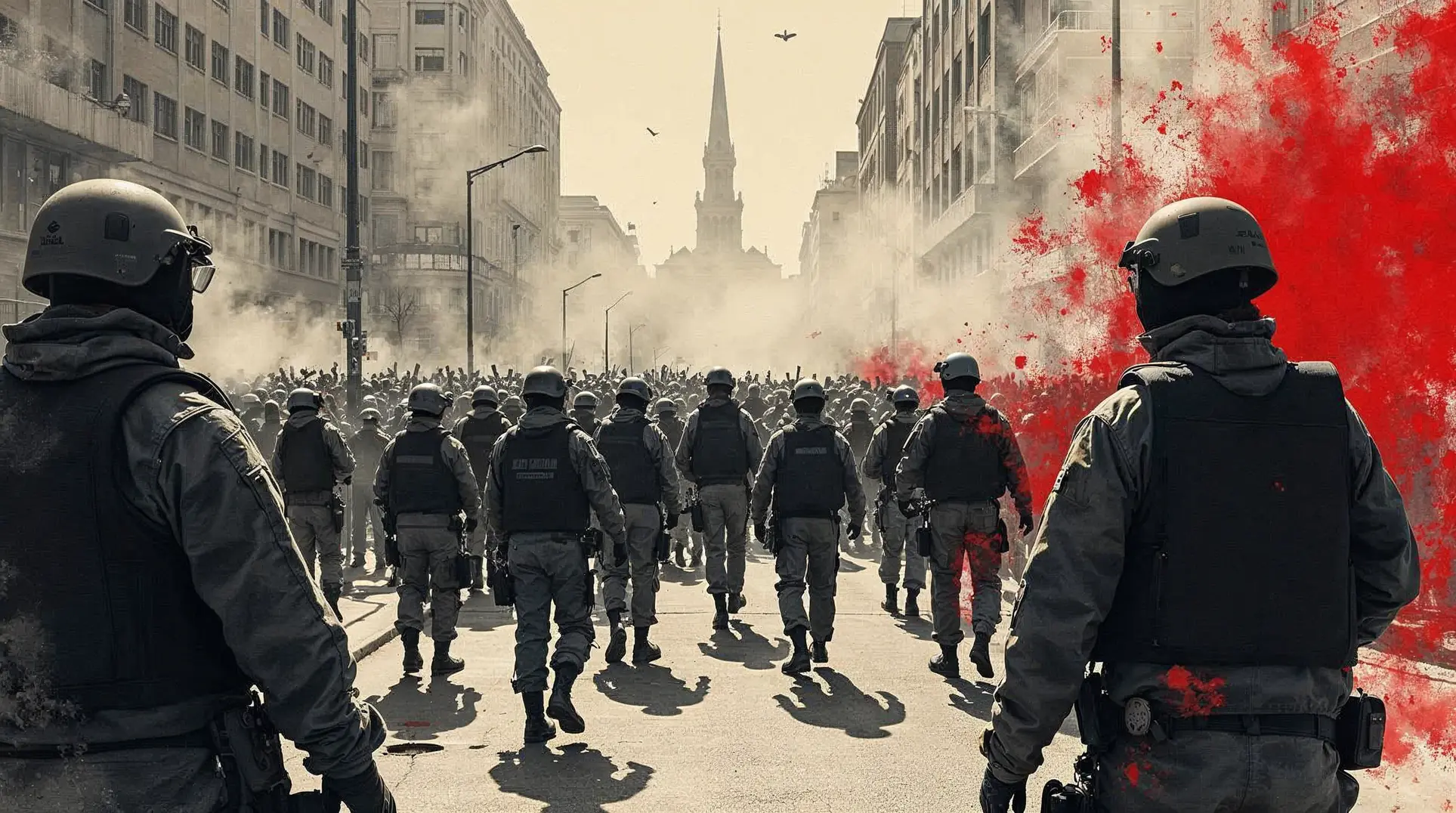
Members are reading: An analysis of why Trump's threat lacks operational substance and how this rhetorical escalation increases the risk of miscalculation.
The strategic utility of studied ambiguity
To dismiss the statement as mere bluster, however, would be premature. Rhetoric is itself an instrument of policy, and Trump has consistently demonstrated skill at using cost-free public declarations to shape adversary behavior and domestic perceptions. The post forces Tehran to divert resources toward assessing American intentions, complicates their internal deliberations about the crackdown's intensity, and signals to Iranian dissidents that Washington supports their cause—potentially encouraging further mobilization. For a domestic American audience, it projects strength and moral clarity without requiring Congressional authorization or troop deployments.
This approach fits the broader pattern of Trump's maximalist diplomacy: stake out an extreme position, create ambiguity about follow-through, and use the resulting uncertainty as leverage. Yet as multiple flashpoints across the fracturing world order demonstrate, this strategy's effectiveness depends on adversaries who can be intimidated or cajoled into accommodation. The Islamic Republic, facing what it perceives as an existential domestic threat, is unlikely to play along. The result is a mismatch between Trump's rhetorical escalation and Iran's willingness to moderate behavior—a recipe for dangerous miscalculation.
Volatility masquerading as strategy
Trump's Iran statement ultimately represents the substitution of rhetorical drama for strategic coherence. It introduces a conditional threat the United States lacks both the capability and the appetite to enforce, while providing Iran's hardliners with evidence of American interference to justify intensified repression. In the anarchic international system, where no higher authority enforces agreements or adjudicates disputes, credibility is the currency of power. Once spent on hollow threats, it becomes extraordinarily difficult to restore. The question is not whether Trump's words will save Iranian protesters—they almost certainly will not—but whether they will accelerate the slide toward a confrontation neither Washington nor Tehran can afford, but which both may stumble into nonetheless.
Subscribe to our free newsletter to unlock direct links to all sources used in this article.
We believe you deserve to verify everything we write. That's why we meticulously document every source.


