


Russia, the United States, and Ukraine convened their first trilateral security talks in Abu Dhabi on Friday, marking the most substantive diplomatic engagement since the Trump administration's envoys began shuttle diplomacy between Kyiv and Moscow. The meeting follows a late-night session between President Vladimir Putin and U.S. envoys Steve Witkoff and Jared Kushner, after which the Kremlin issued an unambiguous message: no durable peace is possible unless territorial disputes are resolved.
The talks represent a significant procedural achievement—getting all three parties into the same room for the first time in years. Yet the Russian precondition exposes the fundamental tension at the heart of this diplomatic push. While Washington seeks a negotiated settlement and the optics of dealmaking, the territorial question remains precisely where it has always been: at the intersection of existential national interests that neither Moscow nor Kyiv can compromise without calling into question their core strategic rationale for the war itself.
The architecture of optimism
U.S. Special Envoy Steve Witkoff led the American delegation in Abu Dhabi, while GRU General Igor Kostyukov led the Russian delegation. The choice of Abu Dhabi as venue reflects both the UAE's growing role as a neutral intermediary and Washington's need for a location acceptable to Moscow. Ukrainian participation, while confirmed, places Kyiv in the awkward position of engaging in discussions where its territorial integrity is framed as a negotiable variable rather than an inviolable principle.
The Trump administration has invested considerable political capital in this process. Trump and Zelenskyy have edged toward a deal, with public statements suggesting progress on security guarantees. President Zelensky himself has acknowledged that arrangements for post-conflict security architecture are nearly complete. The dual-track structure—security guarantees proceeding in parallel with territorial discussions—allows each side to claim forward movement while deferring the hardest questions.
Yet this very structure reveals the strategy's limitation. Security guarantees are abstractions until the territorial question is answered. What precisely is being guaranteed? Within which borders? Under whose sovereignty? The diplomatic momentum obscures rather than resolves these foundational disputes.
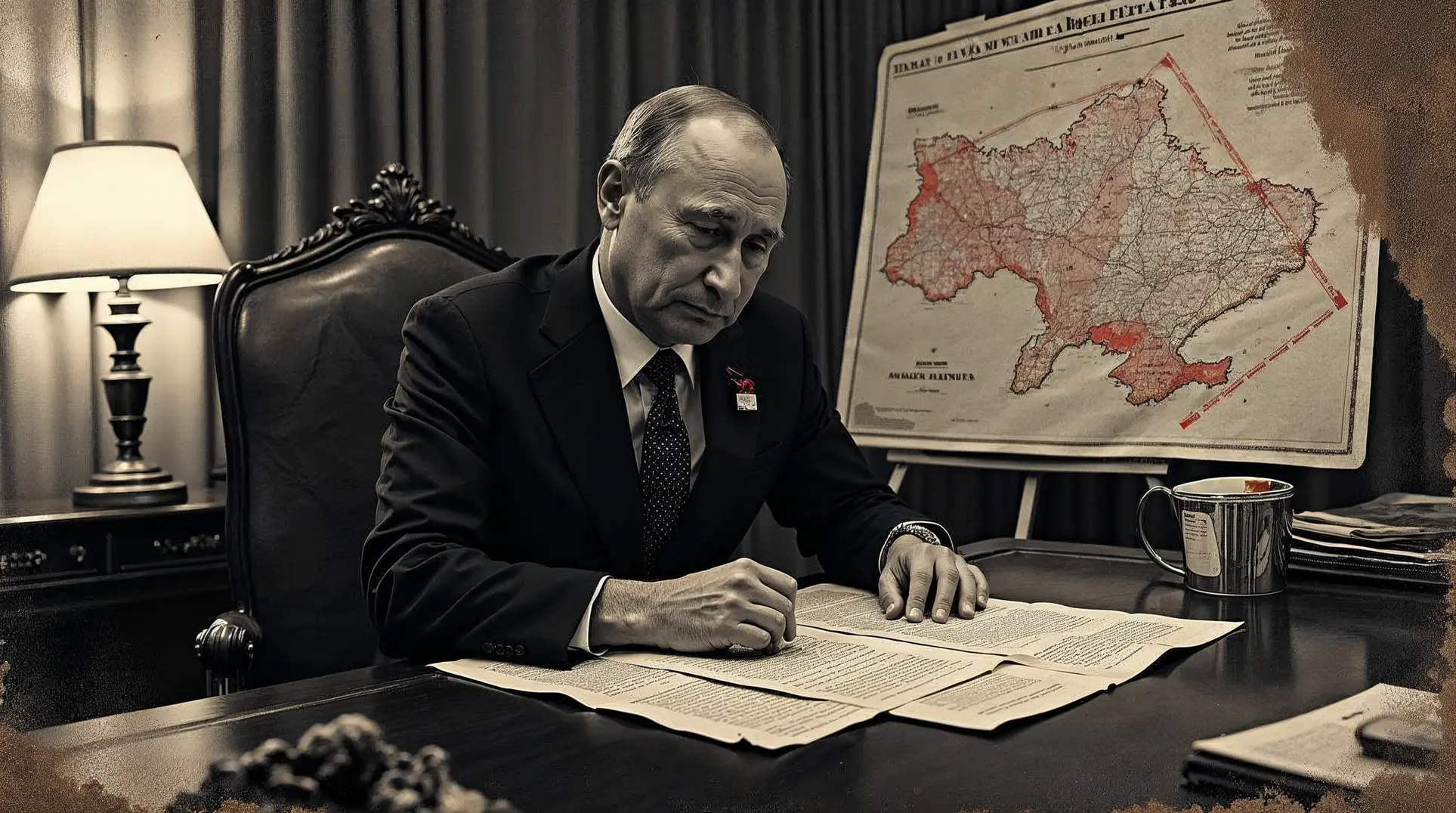
Members are reading: Why Putin's engagement in Abu Dhabi reveals Moscow's confidence, not compromise—and the strategic trap facing Washington's dealmaking ambitions.
The energy crisis as tactical pressure
Russia's systematic destruction of Ukrainian energy infrastructure throughout the winter adds tactical pressure to these negotiations. With cities facing rolling blackouts and industrial capacity severely degraded, Kyiv operates under the constant weight of civilian hardship. Moscow has deliberately created conditions where continued resistance exacts an ever-higher price on Ukraine's population, calculating that war weariness may eventually translate into political pressure for territorial concessions.
This is classic coercive diplomacy: engage in talks while maintaining military pressure that makes the status quo progressively more painful for the adversary. The timing of these talks—in the depths of winter, with Ukraine's energy system crippled—is not coincidental. It reflects Russia's integrated approach to warfare, where kinetic operations, infrastructure strikes, and diplomatic initiatives form a coherent strategy aimed at forcing Ukraine to accept a settlement on Moscow's terms.
Measuring success when core interests collide
The fundamental question facing participants in Abu Dhabi is what realistic success looks like when the core territorial issue remains irreconcilable. The procedural achievement of convening talks matters for U.S. diplomatic credibility and potentially for establishing communication channels that reduce escalation risk. But process is not outcome.
A durable settlement requires either that Russia withdraws from occupied territory—for which there is no military or diplomatic incentive—or that Ukraine accepts territorial losses—which would constitute strategic defeat and regime-threatening domestic crisis for Zelensky. The third option, an indefinite frozen conflict with an unstable ceasefire line, may be the most realistic outcome, but it satisfies no one's core objectives and merely postpones rather than resolves the fundamental dispute.
The talks in Abu Dhabi will likely produce continued dialogue, perhaps interim confidence-building measures on prisoner exchanges or localized ceasefires. What they will not produce is a resolution to the territorial question that Moscow itself has identified as the prerequisite for lasting peace. Until the military balance shifts decisively or one side's strategic calculus fundamentally changes, diplomatic engagement will remain constrained by the hard realities of power, interest, and the price already paid. The gap between talking and settling may prove unbridgeable precisely because both sides still believe they can achieve more through continued conflict than through premature compromise.
Subscribe to our free newsletter to unlock direct links to all sources used in this article.
We believe you deserve to verify everything we write. That's why we meticulously document every source.


