


U.S. Secretary of State Marco Rubio told reporters Friday that Washington is "not concerned" about escalation with Russia over Venezuela, even as the Trump administration assembles the largest Caribbean military presence in decades and weighs extending its kinetic campaign from the sea onto Venezuelan soil. The USS Gerald R. Ford carrier strike group, destroyers with Tomahawk cruise missiles, amphibious assault ships, and more than 10,000 troops now operate in theater. Since September, U.S. forces have conducted over twenty strikes on alleged drug boats, killing at least 83 people, according to the Council on Foreign Relations.
Rubio may be right that Moscow lacks the bandwidth to meaningfully intervene—Russia's commitments in Ukraine sharply constrain its ability to project power in the Western Hemisphere. But his assurance misses the more immediate escalation risk: the yawning gap between a stated counter-narcotics mission and a coercive military architecture capable of regime-decapitation strikes, assembled without clear legal authority or diplomatic off-ramps and already operating under live-fire rules of engagement in congested waters.
A force posture built for more than interdiction
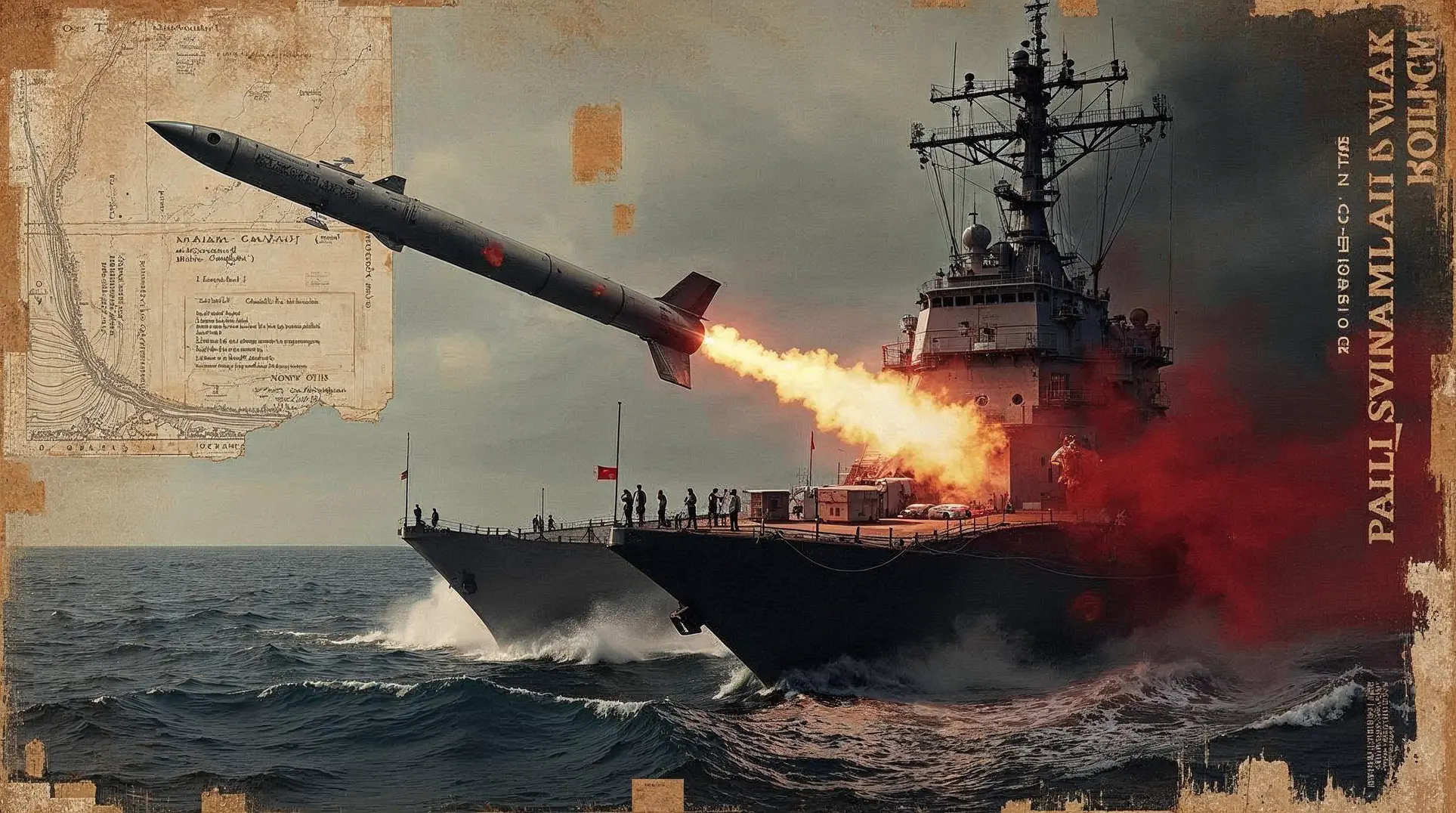
The assets the Trump administration has positioned near Venezuela exceed what classic drug interdiction requires. Alongside the Ford carrier group, the deployment includes Arleigh Burke-class destroyers, Ticonderoga-class cruisers, the amphibious assault ship USS Wasp, a special operations support vessel, B-52 and B-1 strategic bombers, F-22 stealth fighters, MQ-9 Reaper drones, P-8 Poseidon maritime patrol aircraft, and aerial refueling tankers. U.S. forces have also reopened and expanded facilities at the former Roosevelt Roads Naval Station in Puerto Rico and civilian airports across the territory and the U.S. Virgin Islands, building out logistics nodes that support both sustained air operations and potential amphibious readiness.
Carriers and Tomahawk-capable destroyers are instruments of strategic signaling and strike warfare, not customs enforcement. Their presence communicates compellence—the threat of escalating costs if Maduro does not comply—rather than the finite, episodic interdiction ops the Coast Guard has run for decades. The question is: comply with what demand, on what legal basis, and under what theory of military necessity?
Members are reading: Why the legal void around potential land strikes creates tactical-level escalation risks that Rubio's Russia assurance ignores.
Russia's limited hand—and why Moscow still matters symbolically
Moscow's ties to Caracas run through military advisors, arms contracts, and diplomatic cover, and reporting indicates Maduro requested missiles and maintenance support from Russia amid the U.S. buildup. Russian Foreign Minister Sergei Lavrov publicly downplayed that request, and analysts assess that Russia's capacity for meaningful intervention is severely constrained by its war in Ukraine. Direct U.S.-Russia escalation over Venezuela appears unlikely. Yet Moscow has warned U.S. actions "will not lead to anything good," and the reputational cost to Russia if a longtime partner falls to U.S. pressure remains a live concern in the Kremlin.
Still, Rubio's calculus that Russia won't escalate is probably sound. The question is whether that matters. Venezuela has mobilized militias and activated air defenses around Caracas, systems of uncertain readiness facing off against the world's most capable strike platforms in waters dense with civilian traffic, fishing vessels, and regional coast guards. The running kinetic campaign at sea has already produced at least 83 deaths—other outlets report higher figures by mid-December—in strikes that involve split-second identification calls. One misidentified contact, one overzealous patrol, one technical malfunction in a tense intercept could widen the conflict faster than either Rubio or the Kremlin can recalibrate.
The compellence trap
Rubio's assurance that the U.S. is not concerned about Russian escalation may reflect an accurate read of Moscow's constraints. But it risks treating escalation as a bilateral question when the immediate dynamics are multilateral and tactical. The Trump administration has built a coercive architecture designed to signal resolve and impose costs on the Maduro government, yet it has not articulated what concessions it seeks, what legal authority governs strikes inside Venezuela, or how it plans to de-escalate if Caracas refuses to yield. Nearly eight million Venezuelans have already fled the country since 2014; the combination of military pressure, economic collapse, and institutional decay offers no clear pathway to stability.
Downplaying Russia is defensible analysis. But it sidesteps the harder question: whether assembling strike capability, authorizing lethal force at sea, and threatening land operations without a defined end state or legal framework constitutes a strategy—or just the illusion of one, built on the assumption that compellence works when the target has nothing left to lose.
Subscribe to our free newsletter to unlock direct links to all sources used in this article.
We believe you deserve to verify everything we write. That's why we meticulously document every source.


