


US military buildup in the Caribbean reveals the gap between stated objectives and strategic intent as Venezuela mobilizes for potential conflict
The announcement of "Operation SOUTHERN SPEAR" by War Secretary Pete Hegseth marks a dramatic escalation of US military presence in the Caribbean, with the USS Gerald R. Ford carrier strike group leading a force deployment that includes AC-130 gunships, F-35B fighters, MQ-9 Reaper drones, and over 6,500 troops. In total, an estimated 15,000 personnel are deployed for this operation. Officially framed as a counter-narcotics mission to "remove narco-terrorists from our Hemisphere," the operation has already conducted 19 kinetic strikes resulting in over 76 deaths since September 2025.
The scale of military assets deployed—representing over 10% of total US naval capacity in SOUTHCOM's area of responsibility—far exceeds what is typically required for drug interdiction. This discrepancy between the stated counter-narcotics objective and the overwhelming force structure suggests a broader agenda, one that analysts and some US officials privately acknowledge: regime change in Venezuela. The operation reveals how the "War on Drugs" continues to serve as convenient pretext for military intervention in Latin America, masking geopolitical objectives behind law enforcement rhetoric.
The pretext and the reality
The Trump administration has established legal groundwork by declaring a "noninternational armed conflict" against drug trafficking organizations designated as foreign terrorist organizations. This framework provides domestic legal cover for military strikes against suspected "narco-terrorist" vessels in international waters—actions that face increasing international scrutiny regarding their legal and ethical implications.
Venezuela's Nicolás Maduro, whom Washington does not recognize as legitimate and has linked to "narco-terrorist" groups including the "Cartel of the Suns" and Tren de Aragua, has responded by mobilizing thousands of troops and militias along the coast and borders. The close proximity of US and Venezuelan forces creates significant risk of accidental escalation in an environment where military tensions are already dangerously high.
Puerto Rico has re-emerged as a strategic logistical hub, with facilities like Roosevelt Roads Naval Station reopened to support operations. While this aids US force projection, intelligence vulnerabilities persist—US naval port calls in areas of Chinese influence such as Manzanillo, Panama, present potential intelligence gathering opportunities for adversaries tracking American military movements.
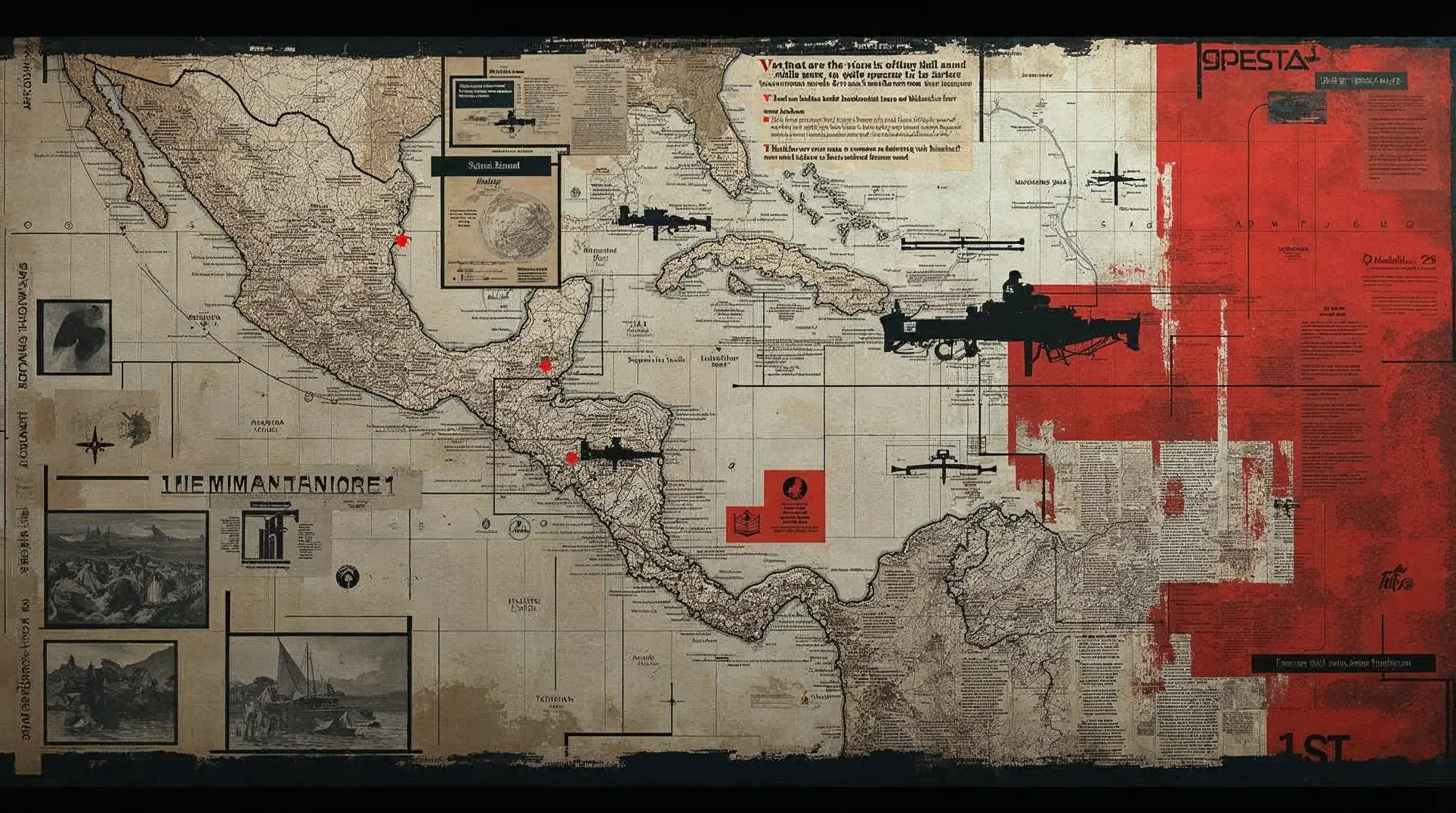
Members are reading: Analysis of how Operation SOUTHERN SPEAR's structural contradictions reveal the inevitable failure of militarized drug policy and escalation risks.
Regional implications and resistance
Brazil's President Lula da Silva and other Latin American leaders have expressed concerns about unilateral military action conducted without regional consultation. The operation's implementation bypasses multilateral frameworks like the Organization of American States, reinforcing perceptions of US hemispheric dominance over partnership-based security cooperation.
Even within Washington, the operation faces scrutiny. The Senate failed to pass war powers resolutions that would have constrained executive military action, yet internal debates persist regarding mission scope and the potential for ground conflict. Warnings about mission creep from military and diplomatic officials suggest awareness that counter-narcotics framing may not contain the operation's strategic logic.
The humanitarian implications are already visible. The 76 deaths from kinetic strikes represent individuals killed without trial, arrest, or judicial process—extrajudicial executions justified through designation as "narco-terrorists." The legal framework allowing these strikes exists in a gray zone between law enforcement and warfare, accountable to neither domestic courts nor international humanitarian law governing armed conflict.
The predictable trajectory
History suggests Operation SOUTHERN SPEAR's likely evolution: initial focus on maritime interdiction expands through mission creep toward broader objectives, regional resistance hardens as sovereignty concerns intensify, and the gap between stated counter-narcotics goals and regime change objectives becomes undeniable. The question is not whether the operation will fail to significantly reduce drug trafficking—decades of precedent make that failure inevitable—but rather how much instability will be generated in pursuit of objectives that remain officially unacknowledged.
The structural conditions driving organized crime and drug trafficking in Latin America—inequality, institutional failure, lack of economic alternatives—receive no attention in militarized approaches. Venezuela's crisis has complex roots in governance failures, economic collapse, and authoritarian consolidation that cannot be resolved through external military pressure. Yet the deployment of carrier strike groups and the rhetoric of "defending our Hemisphere" suggest approaches unchanged since Cold War interventions that destabilized the region for generations.
The operation's ultimate significance may lie not in its stated objectives but in what it reveals about the persistence of intervention frameworks that prioritize military solutions to fundamentally political and economic problems. When the inevitable failure to achieve drug reduction goals becomes apparent, the question will be whether this prompts reflection on the approach itself or merely justifies further escalation.
Subscribe to our free newsletter to unlock direct links to all sources used in this article.
We believe you deserve to verify everything we write. That's why we meticulously document every source.


