


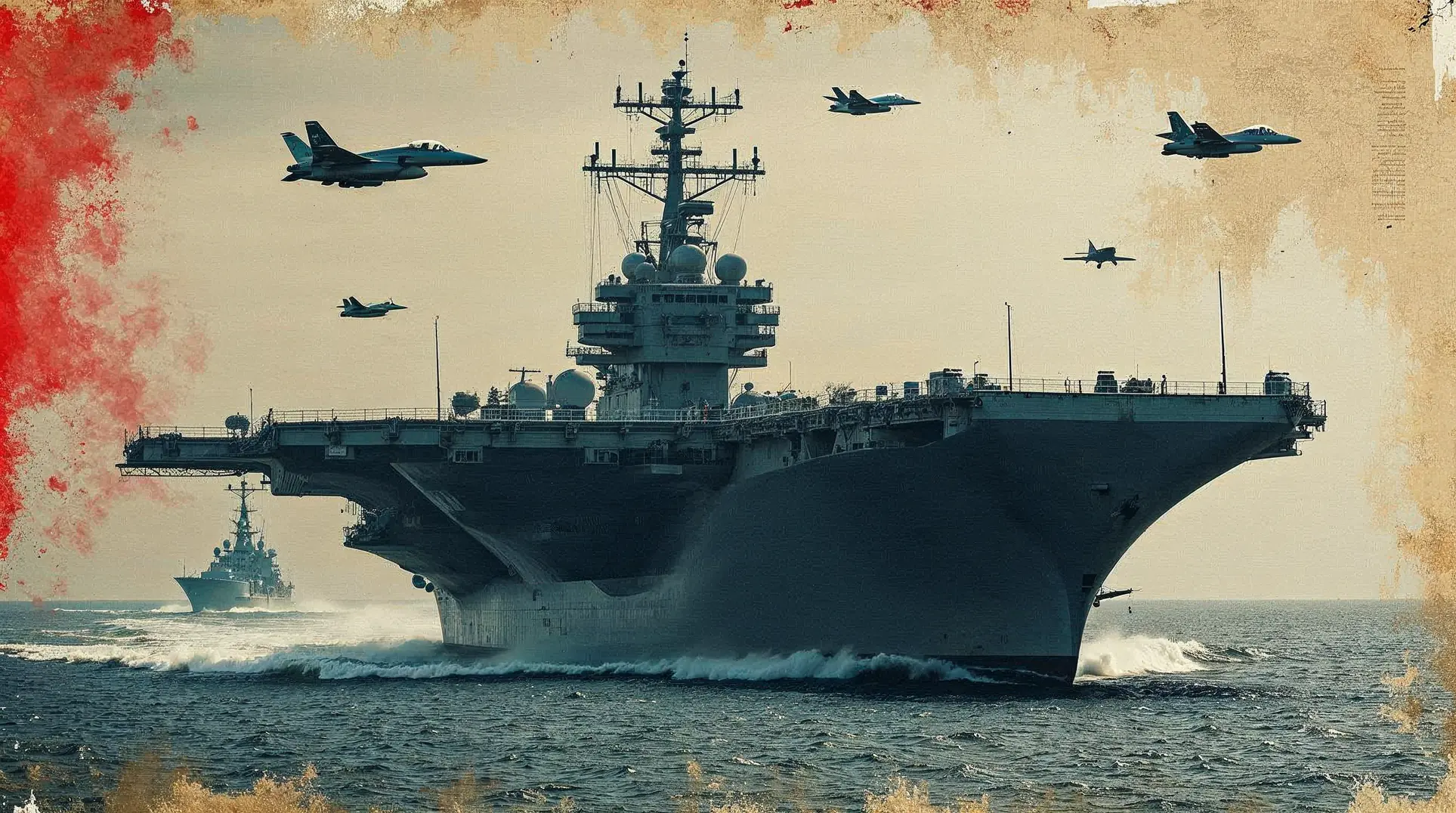
Venezuela's announcement of a massive military mobilization involving land, air, naval, and reserve forces through Wednesday represents the Bolivarian Republic's most significant defensive posture in years. Defense Minister Vladimir Padrino López characterized the deployment as a direct response to what Caracas perceives as an "imperialist threat" from the unprecedented US military buildup in the Caribbean Sea, centered on the USS Gerald R. Ford carrier strike group and over 15,000 American personnel.
The mobilization's scale—including millions of militia reservists alongside conventional forces—reveals the asymmetry at the heart of this confrontation. Venezuela cannot match US military capability, but it can demonstrate political resolve while reinforcing the narrative of external aggression that has sustained the Maduro government through economic collapse and international isolation. The exercises serve domestic legitimacy purposes as much as defensive preparation, transforming military weakness into political theater.
The counter-narcotics pretext
Washington frames its Caribbean deployment as counter-narcotics operations, invoking the decades-old War on Drugs rhetoric that has justified countless Latin American interventions. Yet this framing strains credibility when examined against historical patterns and current strategic context. The counter-drug justification has provided cover for regime change operations from Panama to Colombia, allowing military action to masquerade as law enforcement cooperation.
The discrepancy between stated objectives and deployed capabilities is stark. A carrier strike group represents overwhelming conventional military force designed for state-level conflict, not drug interdiction. Maritime patrol aircraft, coast guard cutters, and intelligence cooperation would address trafficking far more effectively than 15,000 troops and carrier-based strike aircraft. The mismatch between means and proclaimed ends suggests the real target is not cocaine shipments but the Venezuelan government itself.
This pattern reflects structural realities of US-Latin America relations. When Washington seeks to pressure regional governments, counter-narcotics provides politically palatable justification that domestic audiences accept more readily than explicit regime change advocacy. The drug war framework allows military deployments that would otherwise face congressional and public scrutiny, transforming geopolitical objectives into seemingly apolitical law enforcement.
Members are reading: How military pressure paradoxically strengthens authoritarian survival while creating regional catastrophe Washington claims to prevent.
Regional instability amplified
The escalation occurs within a broader context of US military expansion across Latin America, from resumed jungle warfare training in Panama to naval deployments that mark the region's most significant American military presence in decades. This coordinated buildup suggests strategic planning beyond reactive counter-narcotics, indicating longer-term objectives that regional governments can observe but not influence.
Venezuela's mobilization, however symbolic relative to US capability, demonstrates that military pressure generates resistance rather than capitulation. The Maduro government has survived years of maximum pressure sanctions and diplomatic isolation; it will not collapse from carrier group deployments that cannot be sustained indefinitely. The question becomes how long Washington maintains an expensive Caribbean presence without achieving stated objectives, and what escalation follows when demonstrations of force fail to produce desired political change.
The fundamental error in this approach is substituting military solutions for political and economic problems that require different tools. Venezuela's crisis stems from governance failures, oil dependency, corruption, and economic mismanagement—none of which aircraft carriers address. Regime change through external pressure, even if successful, would leave these structural problems intact while adding post-intervention instability. The historical record of such interventions in Latin America offers little confidence that military solutions produce democratic transitions rather than prolonged chaos.
Subscribe to our free newsletter to unlock direct links to all sources used in this article.
We believe you deserve to verify everything we write. That's why we meticulously document every source.


