


The convergence is stark: as the USS Gerald R. Ford carrier strike group entered U.S. Southern Command waters and Washington designated Venezuela's Cartel de los Soles as a Foreign Terrorist Organization, President Nicolás Maduro broadcast a detailed defense map on state television. The presentation outlined an "integral defense plan" to protect the Caracas–La Guaira corridor with heavy weapons and missiles, framing the coastal axis linking the capital to its main port and international airport as Venezuela's strategic heartland. The timing was no accident.
This is a classic security dilemma compressed into forty nautical miles of Caribbean coastline. The U.S. deploys capabilities—F-35 stealth fighters, B-52 bombers, advanced ISR platforms, carrier-based strike aircraft—that far exceed counter-narcotics interdiction requirements, while simultaneously applying a terrorism designation that narrows diplomatic off-ramps and expands legal authorities for kinetic action. Caracas responds by showcasing missile batteries and mobilizing reserves around the infrastructure that sustains regime survival. Each side interprets the other's moves as proof of hostile intent, and the space for miscalculation is shrinking rapidly.
U.S. force posture exceeds drug interdiction logic
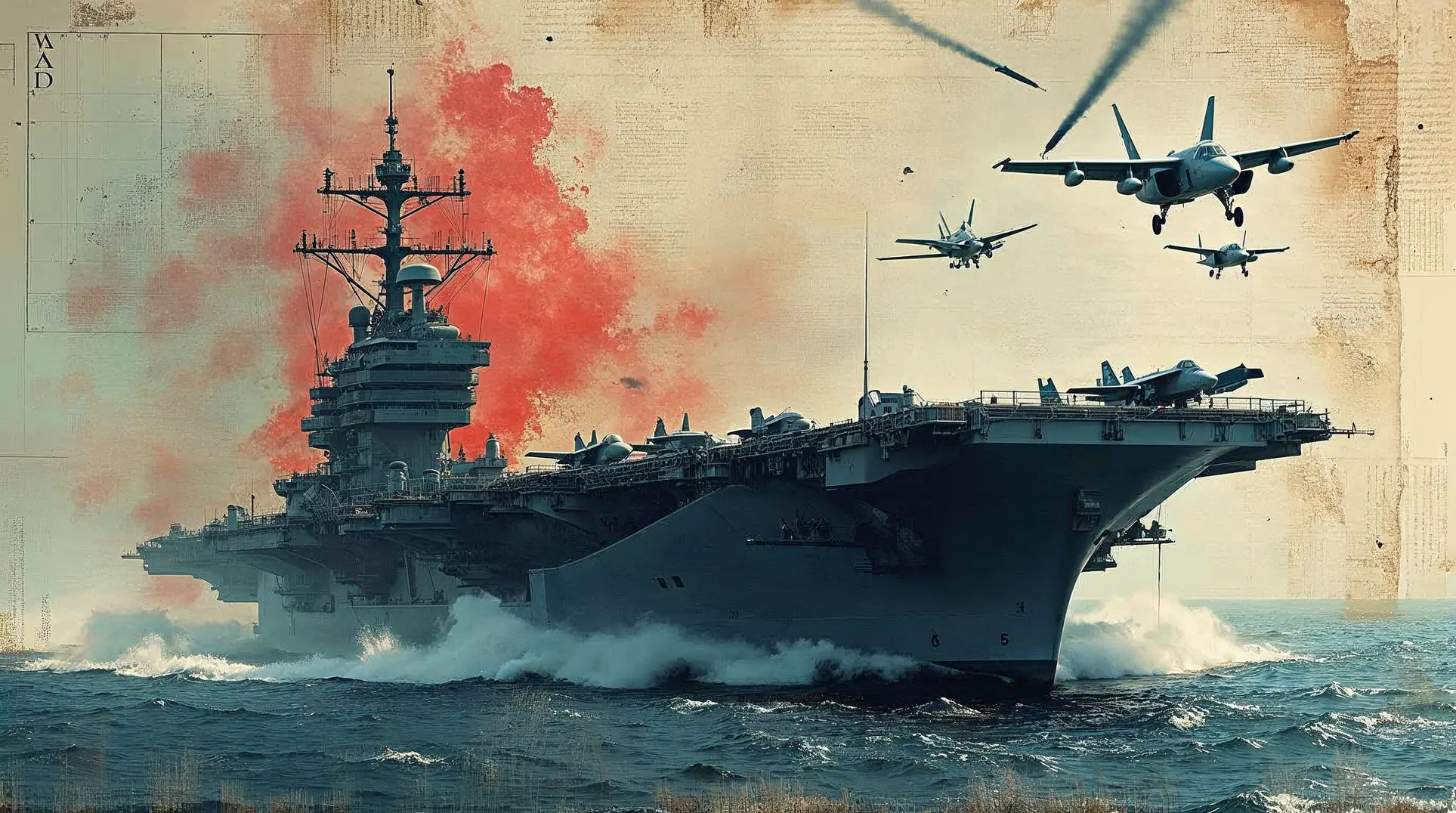
The hardware arriving in theater tells a different story than official counter-narcotics messaging. The Ford—the Navy's largest and most advanced carrier—leads a strike group including multiple Arleigh Burke-class destroyers, bringing more than 4,000 sailors and a full air wing capable of launching dozens of strike sorties daily. Regional deployments include F-35s, MQ-9 Reaper drones, AC-130J Ghostrider gunships, P-8 Poseidon maritime patrol aircraft, and B-52 strategic bombers operating in the region. Naval Station Roosevelt Roads has reactivated after years of reduced operations.
The total U.S. presence in the wider Caribbean and eastern Pacific now approaches 15,000 personnel across naval, air, and special operations elements. Amphibious ships associated with a Marine Expeditionary Unit, additional guided-missile destroyers, a cruiser, and at least one attack submarine round out the posture. Since September, U.S. forces have targeted around 20 vessels in international waters, with at least 76 people killed in strikes the administration frames as counter-drug operations, CBS reports. Colombia's President Gustavo Petro suspended intelligence sharing with Washington, criticizing what he termed "missile attacks on boats" lacking due process or legal clarity.
The capability set assembled does not align with speedboat interdiction. Analysts interviewed by multiple outlets describe a force sufficient "to cause pain but not to seize terrain"—a coercive strike package designed to hold critical Venezuelan infrastructure at risk without committing ground forces.
Members are reading: How militarized pressure historically entrenches rather than removes authoritarian regimes, and why the FTO designation narrows diplomatic paths.
Narrow margins for error as timelines compress
The FTO designation takes effect November 24, triggering implementation of asset freezes and material support prohibitions. Simultaneously, U.S. and Venezuelan forces operate in increasingly proximate air and maritime zones. Venezuela has declared "massive mobilization" and showcased missile systems; the U.S. maintains carrier flight operations and long-range bomber patrols. The risk is not intentional war—neither side benefits—but rather miscalculation born of compressed decision timelines, ambiguous rules of engagement at sea, and the absence of reliable communication channels between operational commanders.
Regional actors are pushing back. Petro's suspension of intelligence sharing signals discomfort with the legal ambiguity surrounding lethal strikes in international waters. In Washington, War Powers debates simmer without resolution, as executive branch lawyers argue counter-drug and now counterterrorism authorities provide sufficient legal basis for kinetic operations. The result is policy drift toward outcomes—sustained military confrontation in the Caribbean—that no clear congressional vote has authorized.
The next two weeks will clarify whether this remains a pressure campaign or slides toward something more dangerous. Watch for U.S. clarification of rules of engagement following the FTO designation's implementation, any Venezuelan declaration of exclusion zones around the Caracas–La Guaira corridor, and whether carrier air operations shift from presence patrols to active enforcement postures. The infrastructure is now in place for rapid escalation; what remains unclear is whether either capital has a theory of victory that does not require it.
Subscribe to our free newsletter to unlock direct links to all sources used in this article.
We believe you deserve to verify everything we write. That's why we meticulously document every source.


