


Key takeaways
- Romania's foreign minister urged NATO to build a joint assessment of hybrid attacks and search systematically for links between incidents.
- Neculăescu said some allies back an operational NATO role while others fear escalation with Russia, so nothing has been adopted.
- A think tank report says Europe's key test is turning national responses to incidents into a Europe-wide strategy.
Romania's foreign minister, Dan Neculăescu, has urged NATO to take joint action against hybrid attacks that Bucharest attributes to Russia. The German news agency dpa reported his remarks, made in Berlin in an interview with the German newspaper Die Welt. He asked allies for a joint assessment of the situation and a systematic search for links between incidents in different countries.
Dan Neculăescu said there was a need for at least a shared picture of the situation and for a systematic search for connections, AGERPRES reported. He also asked: "Are the same actors behind the attacks in Germany, Estonia or Romania?"
Neculăescu said individual EU and NATO states have so far handled hybrid attacks as an internal matter. Such attacks can be military, economic, intelligence or propaganda operations, including cyberattacks and disinformation, and the hostile state often hides its role. He wants NATO to treat defence against them as an operational task, not primarily a national one. Some allies support that, he said, while others reject it because they fear escalation with Russia. It remains a Romanian proposal, and NATO has taken no decision.
The Black Sea case
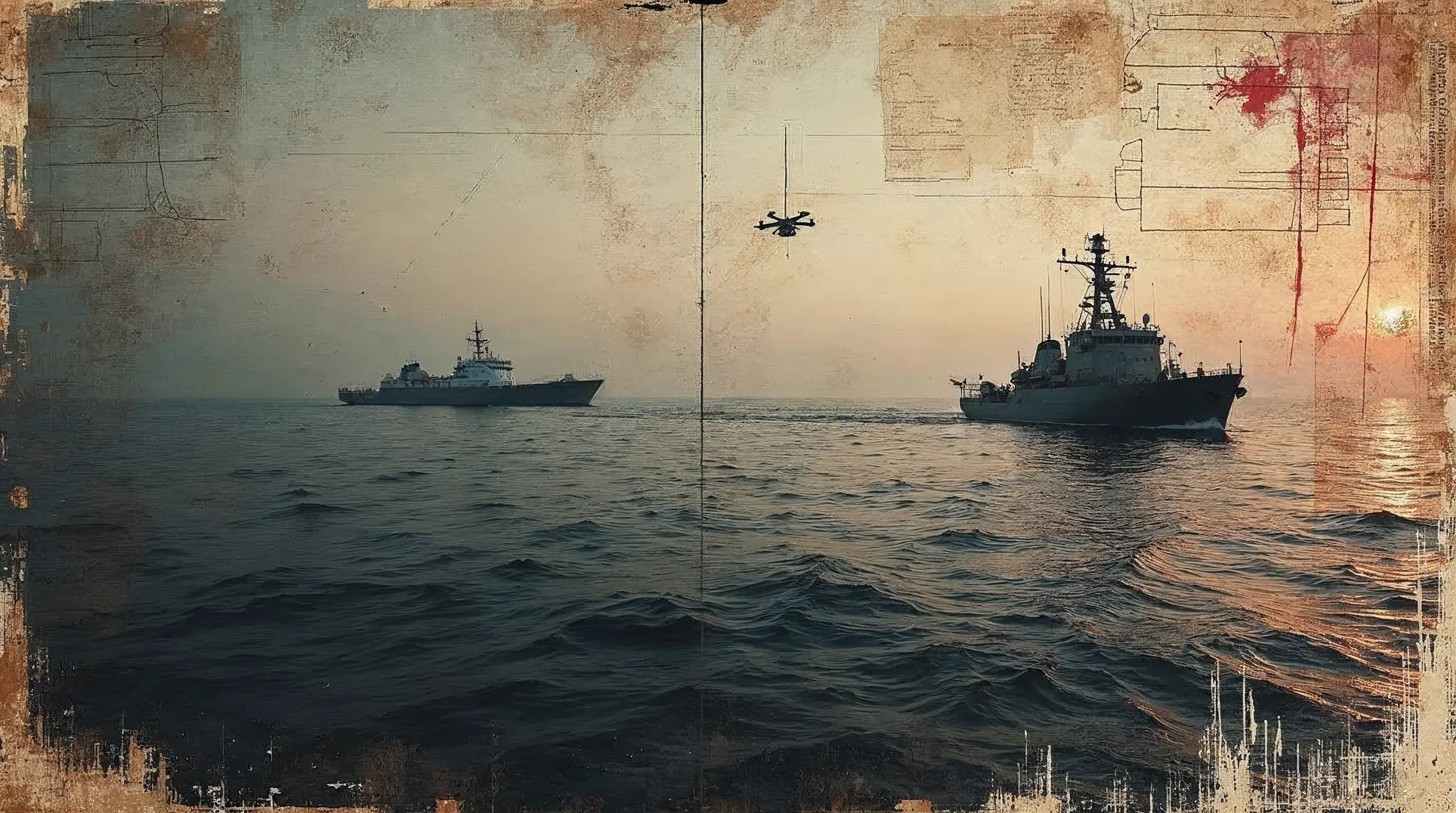
Neculăescu called the Black Sea a weak point in European security and said Moscow seeks exclusive control over the waterway. "Nowhere else in Europe do we face so many incidents that we link to Russia: drone attacks, sea mines, attacks on merchant ships," he said, ua.news reported. Moscow has rejected Western accusations of a Europe-wide disruption campaign, Al Jazeera reported. DW notes that both Russia and Ukraine have stepped up attacks in the Black Sea since summer, and that Turkish vessels have also been hit.
On the evening of 13 November, a drone of unknown origin hit the Palau-flagged cargo ship Larissa 1 in Romanian territorial waters as it headed for Ukraine, the Ukrainian outlet NV reported. It damaged the cargo crane but did not start a fire. No crew were hurt. The following evening, 14 November, drones attacked three commercial vessels near Sulina in the Danube Delta. Crisis.Zone, citing The Insider, named them as Eviapetrol V, Marsol and Ali Najafov. Romanian authorities had not said who launched the drones.
According to dpa, NATO has already stepped up air and naval patrols in response. NATO military spokesperson Col. Martin O'Donnell told CBS News: "In 2025, for example, we saw fewer than 50 incidents in the Black Sea. This year alone, we're talking four to five hundred." Romanian Navy Captain Mihai Iordache told CBS: "Four years ago, we were ready for one drifting mine, and right now we are ready for tens of drifting drones."
Observers are reading: how consensus rules, the Article 5 threshold and Bucharest's own red line shape what NATO can agree on hybrid attacks.
Become an Observer, it's free. Get full access to all Crisis.Zone analysis, briefings and breaking coverage.
No decision yet
The stepped-up air and naval patrols that dpa describes predate Neculăescu's proposal. They were a response to the attacks on shipping, not to his call.
The EU has funded capacity on the Black Sea. Its €60 million package pays for a monitoring hub and Romanian rescue services, which means seeing and rescuing, not deciding who answers an attack. The first test of Neculăescu's proposal is the modest one, whether allies agree to compare notes on Germany, Estonia and Romania in one assessment. Whether any ally commits to that step is the next thing to watch.
Become an Observer (it's free) to unlock direct links to all sources used in this article.
We believe you deserve to verify everything we write. That's why we meticulously document every source.


