


A draft Pentagon assessment reportedly concludes that China has "likely" loaded more than one hundred intercontinental ballistic missiles—specifically solid-fueled DF-31 variants—across its latest three silo fields near the Mongolia border, according to a Reuters report published December 22. If accurate, the finding would mark a dramatic acceleration in Beijing's nuclear buildup and fundamentally alter the targeting calculus for U.S. strategic planners. The draft also estimates China's nuclear stockpile in the "low 600s" warheads as of 2024, with a trajectory toward over 1,000 by 2030, and assesses that Beijing shows "no appetite" for arms control negotiations. The Pentagon declined to comment, and the report—not yet submitted to Congress—could still be revised.
Yet the claim sits uneasily alongside independent open-source analysis. The Federation of American Scientists' 2025 Nuclear Notebook estimates that only around thirty of the new silos are loaded so far, and that China maintains a peacetime low-alert posture with the majority of its roughly 600 warheads in storage rather than mated to delivery systems. The discrepancy is more than a rounding error. It cuts to the heart of how we interpret China's operational concept: Are the silo fields being rapidly filled with ready missiles, or are they part of a shell-game architecture designed to maximize survivability through ambiguity?
Counting holes versus counting missiles
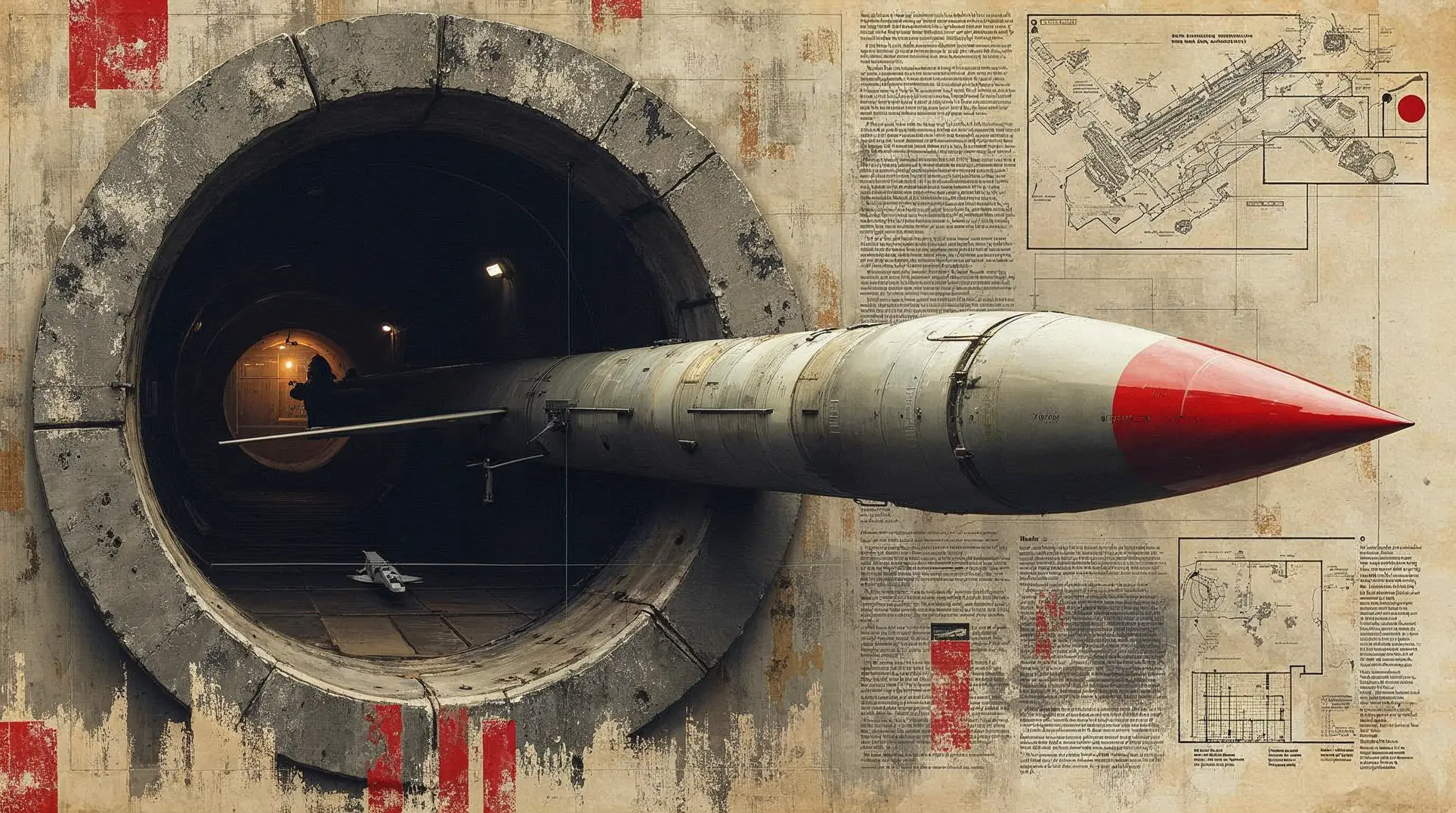
The existence of the silo fields is not in dispute. Commercial satellite imagery documented beginning in 2021 revealed approximately 120 suspected silos at Yumen in Gansu province, roughly 110 at Hami in Xinjiang, plus additional sites at Jilantai and in legacy DF-5 deployment areas. The grid layouts and uniform construction signatures leave little doubt about intent: China is building capacity to disperse and protect its land-based deterrent. What remains contested is how many of those silos currently house missiles, and how many warheads are mated and ready.
"Loaded" can mean different things. A silo may contain a missile airframe without a mated warhead. A missile may be emplaced for testing, training, or deception rather than operational alert. The FAS estimate—around thirty loaded silos—reflects cautious interpretation of what can be verified through imagery and electromagnetic signatures. The draft Pentagon assessment, by contrast, appears to assume a higher operational tempo or to draw on classified intelligence regarding missile production and movement. The difference matters because it shapes threat perception, force-sizing decisions, and the political narrative around strategic stability.
In a realpolitik frame, what states do reveals their interests more reliably than what they say. China has long claimed a posture of "minimum deterrence," but the scale and pace of silo construction—coupled with advancements in MIRV technology for systems like the DF-41—suggest a shift toward assured retaliation through survivable, redundant capacity. Whether thirty or one hundred missiles are currently emplaced, the trajectory is unmistakable: Beijing is thickening the land-based leg of its nuclear triad and compressing the decision timelines available to adversaries in a crisis.
Members are reading: Why China's shell-game silo strategy changes deterrence math even without full missile loading, and how it backstops conventional coercion.
Capabilities over statements
Whether the Pentagon draft or FAS estimate proves closer to ground truth, the strategic picture is clear. China is building the infrastructure and industrial capacity to field a substantially larger, more survivable ICBM force. The gap in current estimates reflects uncertainty about loading schedules and operational concept, not about direction of travel. In a self-help system where capabilities matter more than intentions, prudent planning must assume more missiles in more holes, sooner than optimists hoped.
The concurrent conventional pressure—maritime surges, radar locks, and the $11.1 billion U.S. arms package to Taiwan designed to counter precisely such scenarios—underscores that the silo expansion is not occurring in isolation. It is part of an integrated strategy to shift the regional balance and complicate U.S. extended deterrence commitments. The ambiguity over how many missiles are loaded today is itself a strategic asset for Beijing. For Washington, Tokyo, and other stakeholders, the challenge is to plan against capabilities, not hopes, and to recognize that minimum deterrence is a narrative increasingly at odds with observable behavior.
Subscribe to our free newsletter to unlock direct links to all sources used in this article.
We believe you deserve to verify everything we write. That's why we meticulously document every source.


