


- 10,000 U.S. troops and carrier strike group deploy near Venezuela under counter-narcotics pretext lacking credible evidence of Maduro's cartel leadership
- War on Drugs militarization has consistently produced more violence and corruption across Latin America while strengthening criminal networks
- U.S. military escalation fractures regional cooperation, undermines multilateral institutions, and provides Maduro nationalist justification for authoritarian crackdown
10,000 U.S. troops and carrier strike group deployed near Venezuela represent regime change disguised as counter-narcotics operations. War on Drugs paradigm has consistently produced more violence, corruption, and powerful criminal networks across Latin America. Military escalation undermines regional cooperation while strengthening Maduro's authoritarian control through nationalist narrative and repression justification.
The arrival of the USS Gravely at Port of Spain on October 26, 2025, marks more than a routine military exercise. It represents the return of an old, discredited playbook to Latin American waters—one that has consistently produced more violence, more corruption, and more powerful criminal organizations. As the guided-missile destroyer conducts joint training with Trinidad and Tobago's Defence Force, the larger strategic picture comes into focus: the USS Gerald R. Ford aircraft carrier strike group prowling near Venezuelan waters, eight surface warships deployed across the Caribbean, F-35 jets, MQ-9 Reaper drones, and approximately 10,000 U.S. personnel now stationed in Puerto Rico. This is not counter-narcotics. This is regime change dressed in the tattered costume of the War on Drugs.
The Trump administration's public justification—combating transnational crime and drug trafficking—barely conceals what U.S. officials privately acknowledge: the objective is the removal of Nicolás Maduro. While the Trump administration has designated the "Tren de Aragua" gang and "Cartel de los Soles" as terrorist organizations and accused Maduro of association with these groups, official evidence linking him to direct leadership remains undisclosed, and independent data from UNODC and DEA indicate Venezuela is not a major cocaine producer. These accusations, which serve clear political messaging goals, would be concerning enough on their own, but they're part of a broader pattern of constructing pretexts for intervention. Meanwhile, the CIA has been covertly authorized to conduct lethal operations in Venezuela, either unilaterally or alongside military actions. Since early September, U.S. naval operations have struck alleged drug-trafficking vessels in the Caribbean, killing at least 27 people, with six more deaths reported on October 14. The question we must confront is not whether Maduro's government is corrupt and repressive—it demonstrably is—but whether militarizing the Caribbean will do anything other than deepen the region's multidimensional crisis.
What makes this moment particularly dangerous is how thoroughly it ignores the structural realities that created Venezuela's collapse in the first place. The United States is deploying warships to address a problem that cannot be solved by firepower—a problem rooted in decades of economic mismanagement, institutional decay, and the perverse incentives created by the global drug economy. In doing so, Washington risks not only failing to achieve its stated objectives but also exporting Venezuela's crisis across the region in ways that will reverberate for years.
The anatomy of a failed paradigm
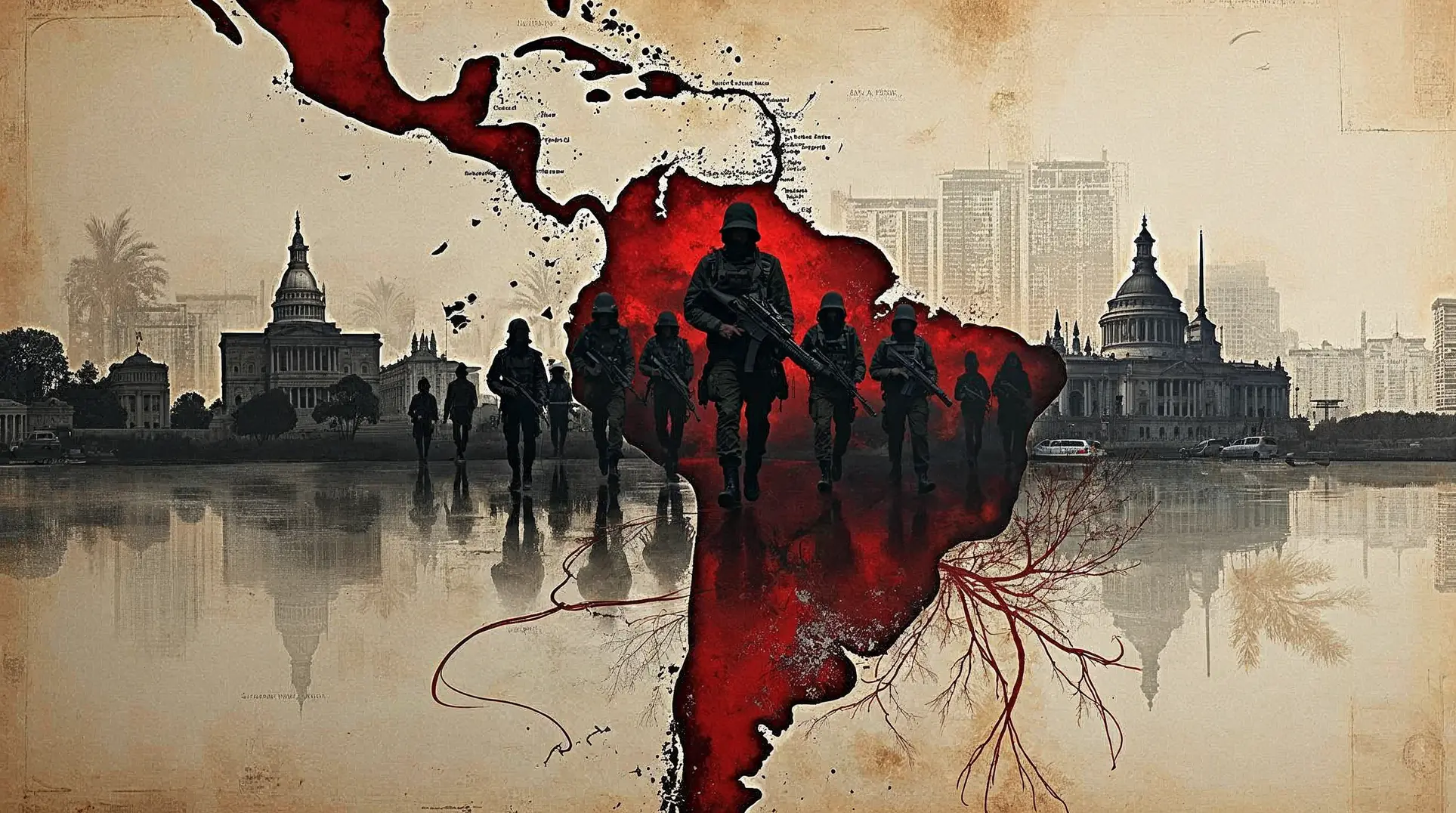
The U.S. military is making the exact same catastrophic mistake that killed 150,000+ Mexicans and created hundreds of violent cartels. Why extrajudicial killings in international waters guarantee the opposite of security—and the institutional collapse that makes it irreversible.
Regional fractures and the erosion of multilateralism
The deployment has exposed and deepened regional divisions in ways that will outlast this immediate crisis. Trinidad and Tobago's Prime Minister Kamla Persad-Bissessar welcomed the U.S. military presence, citing high crime rates—a domestic political calculation that ignores the broader strategic consequences. Guyana, locked in a territorial dispute with Venezuela, endorsed the deployment with Vice President Bharrat Jagdeo's blunt assessment: "You cannot trust Maduro." These positions are understandable from narrow national security perspectives, but they fracture the already fragile framework of Caribbean and Latin American cooperation.
Colombia's response reveals the deepest fault line. President Gustavo Petro condemned the U.S. naval strikes, suggesting they may have killed Colombian citizens and called for criminal proceedings against Trump at the UN. This is not anti-American posturing—it reflects a fundamental disagreement about whether military force should be the primary tool of regional policy. Petro's Colombia has pursued peace negotiations with armed groups and invested in rural development as alternatives to militarization. The U.S. approach in Venezuelan waters represents a direct rejection of this model.
Russia and China's sharp criticism at the UN Security Council, while predictably self-interested, highlights how U.S. unilateralism creates diplomatic openings for rival powers. Russia condemned a "shoot first" policy, while China raised concerns about threats to human rights and freedom of navigation. These arguments will resonate across the Global South, particularly in Latin America, where memories of U.S. interventionism remain vivid. Brazil's call for restraint reflects this broader anxiety—the fear that escalation around Venezuela could destabilize the entire northern coast of South America.
The humanitarian implications are already severe and worsening. Post-election repression in Venezuela has killed 23 protesters, led to over 1,900 political arrests including children, and produced documented cases of enforced disappearance, torture, and sexual violence in detention. The UN Fact-Finding Mission on Venezuela has found reasonable grounds for crimes against humanity. Yet humanitarian aid remains severely underfunded, and the U.S. military deployment does nothing to address these abuses—if anything, it provides Maduro with a nationalist rallying cry to justify further repression.
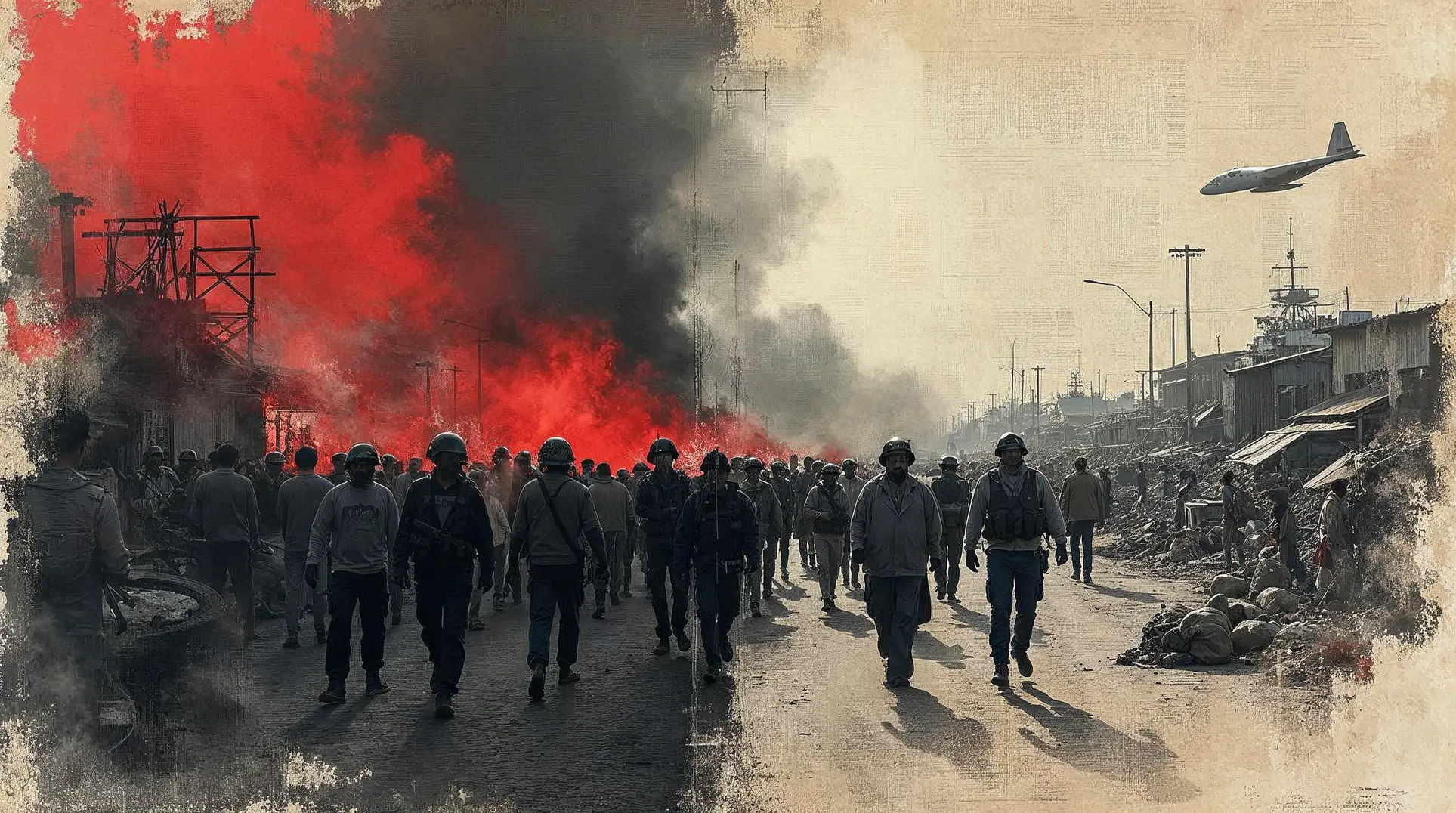
October 6: Trump kills Venezuela diplomacy with one directive. Members discover how the Nobel Peace Prize became a weapon, why authoritarian crackdowns are the guaranteed response to military threats, and the economic devastation pattern the U.S. refuses to acknowledge.
The structural crisis beneath the warships
The fundamental question is not whether Maduro should govern Venezuela—by any democratic standard, he should not. The question is whether U.S. military escalation will produce better outcomes than the catastrophic status quo. History suggests the answer is no. The War on Drugs paradigm has failed across Latin America not because of insufficient military force but because it addresses symptoms rather than causes. Violence in the region is not primarily a law enforcement problem; it is a governance problem, an economic problem, and an inequality problem.
Transnational organized crime thrives where states are weak, where economic opportunities are absent, and where corruption has hollowed out institutions. The Tren de Aragua emerged from Venezuelan prisons—not because of Maduro's ideology, but because the state's capacity to maintain order and provide basic services collapsed. Deploying aircraft carriers off the Venezuelan coast does nothing to rebuild that capacity. It merely adds military pressure to a society already under extreme stress, increasing the likelihood of chaotic collapse rather than democratic transition.
The alternative approach—supporting civil society, strengthening regional institutions, providing humanitarian aid, and pursuing multilateral diplomatic pressure—is slower and less visually dramatic than warships in the Caribbean. But it is also more likely to produce sustainable change. The Venezuelan people deserve better than Maduro's authoritarian rule, but they also deserve better than becoming collateral damage in another failed U.S. intervention. The USS Gravely's docking in Trinidad should be seen for what it is: a symbol of policy failure, not a solution to regional crisis. Until Washington confronts the structural realities that drive instability in Latin America, its warships will continue to address problems they cannot solve while creating new ones that will outlast any single administration.
Subscribe to our free newsletter to unlock direct links to all sources used in this article.
We believe you deserve to verify everything we write. That's why we meticulously document every source.


