


A suicide bombing at Islamabad's Khadija Tul Kubra Shia mosque during Friday prayers killed at least 31 worshippers and injured 169 in the deadliest attack on Pakistan's capital in over a decade. The bomber, stopped by security at the entrance of the Tarlai Kalan mosque, exchanged gunfire before detonating his device. No group has claimed responsibility, though intelligence assessments point toward Tehrik-i-Taliban Pakistan (TTP) or Islamic State Khorasan Province (IS-K).
Boo
 Layla Hassan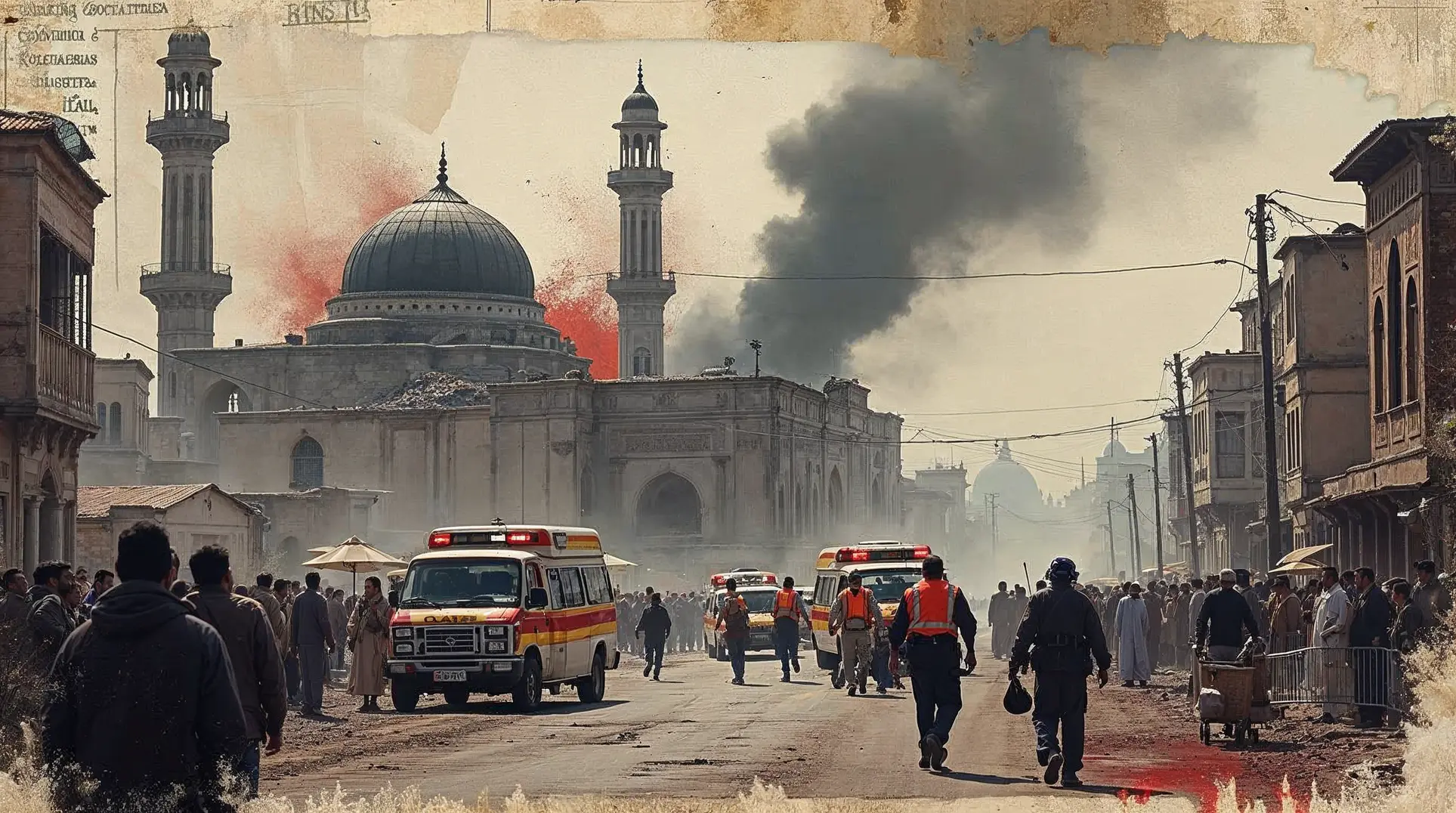
Within hours, India's Ministry of External Affairs issued an unusually sharp statement that went beyond routine condemnation. New Delhi categorically rejected "any and every" allegation of Indian involvement, calling such claims "baseless and pointless" while urging Pakistan to address its "home-grown ills" rather than "deluding itself by blaming others." The preemptive denial arrived before Islamabad had formally leveled any accusations, revealing the practiced reflexes of a decades-old diplomatic pattern where internal Pakistani security failures are immediately externalized toward India.
Latest situation update
The attack represents the most significant breach of security in Islamabad since 2014, targeting a Shia congregation during peak attendance. Pakistani security forces cordoned off the Tarlai Kalan area as forensic teams worked through the night to identify victims and reconstruct the bomber's movements. Survivors described scenes of carnage as the blast tore through the mosque's entrance hall, where worshippers were removing their shoes before entering the prayer space.
Pakistan's interior ministry has remained notably silent on attribution while provincial authorities launched the standard security crackdown. The silence from Islamabad contrasts sharply with the immediate Indian denial, creating a diplomatic vacuum that both governments will likely exploit. This attack follows a pattern of escalating violence: a suicide bombing at an Islamabad district court in January and the coordinated Baloch assault that killed over 145 militants after widespread attacks across southwestern Pakistan. The domestic pressure on Pakistan's security establishment has never been more acute.

Members are reading: Why New Delhi's preemptive denial reveals the structural trap both governments face in addressing militancy.
The Islamabad mosque bombing has claimed 31 lives and exposed the diplomatic reflex that makes addressing Pakistan's genuine security crisis nearly impossible. India's preemptive rejection of involvement—issued before any formal accusation—demonstrates how thoroughly the blame game has replaced serious counterterrorism cooperation. As forensic teams work to identify the perpetrators, the geopolitical theater between nuclear-armed neighbors overshadows the urgent question: which militant network executed this attack and how many more are planned.
Subscribe to our free newsletter to unlock direct links to all sources used in this article.
We believe you deserve to verify everything we write. That's why we meticulously document every source.


