


Key takeaways
- Gunmen shot Christian mourners at a funeral in Hamoud, Karak, on 23 October 2026, leaving eight to nine dead.
- King Abdullah II ordered an iron fist response, and nationwide manhunts and tighter security in Amman followed.
- Karak's Muslim-Christian ties and the 2016 castle siege frame why the attack strikes at Jordan's social cohesion.
Gunmen opened fire on mourners at Saint George's Greek Orthodox Church in the village of Hamoud, in Jordan's southern Karak Governorate, on the afternoon of Friday, 23 October 2026. Official reporting on Saturday put the death toll at eight to nine, with 34 to 40 people wounded. Early accounts had cited six or seven dead. Hamoud lies about 120 kilometres (75 miles) southwest of Amman.
Between 150 and 200 people had gathered for a funeral. Most of the victims were aged 50 to 70. Survivors said the shooting began as the prayers started, with a loud blast followed by about five minutes of gunfire in broad daylight. Nasser al-Burqan, a lawyer, first mistook the noise for an exploding air conditioner. His son was shot in the leg. Father Theodoros Soueiss, the parish priest, said he ordered people to the floor. "The gunfire was indiscriminate, and you never knew where a bullet might land," he said.
Three attackers, a pickup truck and a national response
Security footage aired by state broadcaster Al-Mamlaka shows three attackers. Two arrived together in a vehicle and a third joined them. Two of them appear to be holding handguns, and the third appears to be holding a semi-automatic rifle. They shot at men running along the street outside, fired through windows and doorways, and left, according to witness Khalid al-Mdanat, in a pickup truck, firing as they went. Al-Burqan said he saw two of them after the shooting stopped, one masked and one unmasked with a handgun. A member of the prominent Halasah family in Karak told The National that three local doctors were among the dead. By Saturday, 27 people remained in hospital across five hospitals, two of them in critical condition, Health Minister Ibrahim Al-Budour said. The director of Prince Ali Military Hospital in Karak announced the same day that one of two critically injured patients there had died.
King Abdullah II chaired an emergency National Security Council meeting and visited the wounded in military uniform. "Every Jordanian life is precious, and we will strike with an iron fist against those who dare to threaten our nation," he said, calling the security and safety of Jordanians a "red line". Prime Minister Jafar Hassan declared three days of national mourning. He said the attack came from "extremist terrorist ideology rooted in takfir", the practice of declaring other Muslims or non-believers infidels. Major General Abdullah Al-Maaytah, director of the Public Security Directorate, confirmed nationwide manhunts and said "national unity will not be hit." Security has also been raised at Amman's malls and Western embassies.
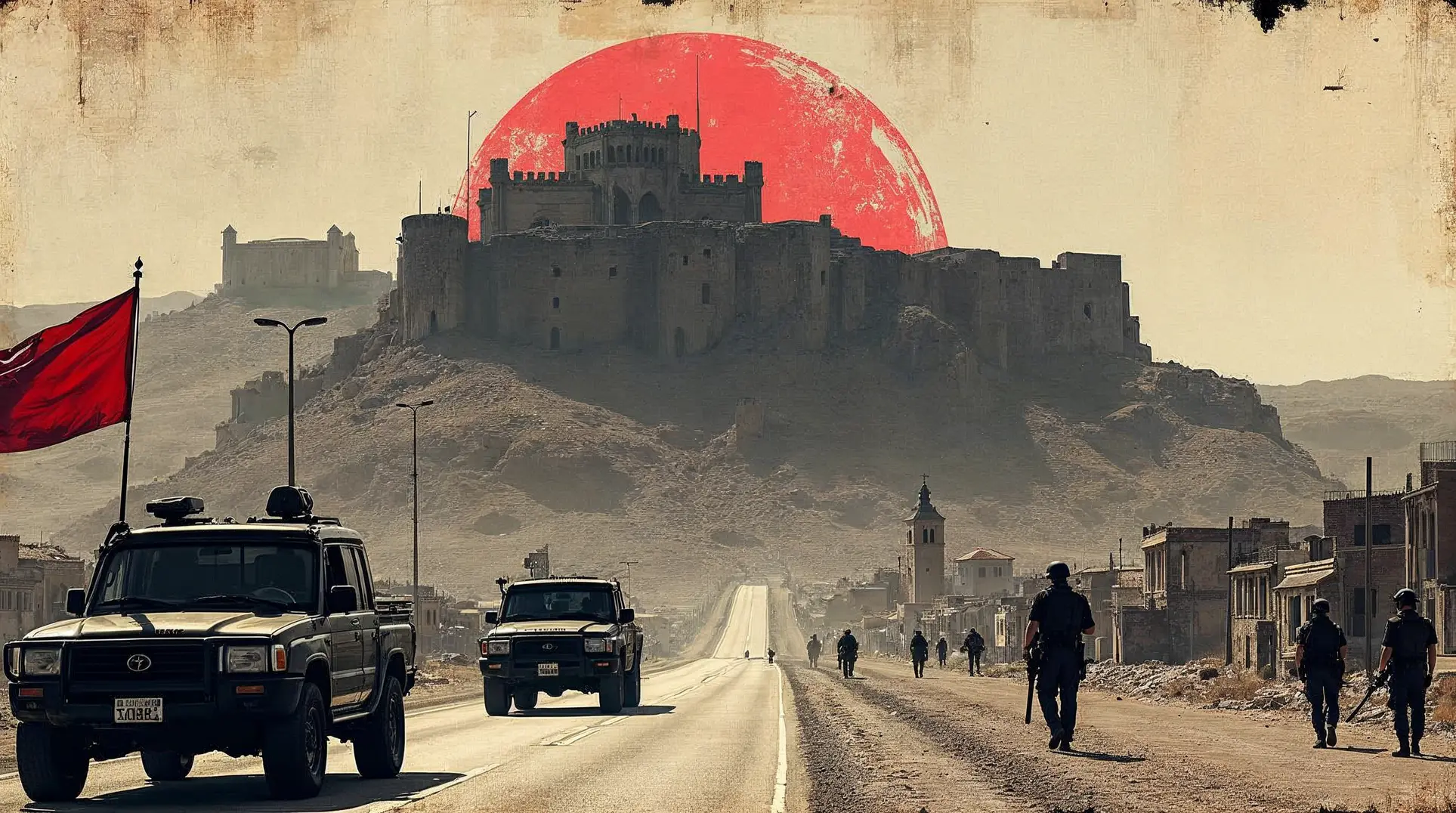
Observers are reading: how the Hamoud attack tests the Hashemite bargain on minorities, and why Jordan's security posture now faces pressure from two directions.
Become an Observer, it's free. Get full access to all Crisis.Zone analysis, briefings and breaking coverage.
An iron fist and a social contract
The King's order sets a visible, forceful course, and security has been stepped up at malls, embassies and other sites across Jordan, the US embassy said. Force alone will not settle the question the attack raises. Jordan's strength has been its cohesion, and that is what cells with sectarian aims try to break. The Greek Orthodox Archdiocese of Jordan answered in those terms. It said that if the aim was to uproot Christians, "it will only make us cling to it more firmly and deepen our roots in it."
Much depends on what the manhunts produce in the coming days. Who the gunmen were, who directed them and why they chose Hamoud will shape the politics of the response. Until then, the state is holding a delicate line. It must reassure Christians in the south and avoid turning mourning into collective suspicion. It must also show a rattled public that its security services are in control.
Become an Observer (it's free) to unlock direct links to all sources used in this article.
We believe you deserve to verify everything we write. That's why we meticulously document every source.


