


The United States struck Iranian rocket launchers on Larak Island in the Strait of Hormuz on Sunday, and hours later the Islamic Revolutionary Guard Corps fired ballistic missiles at two US-operated air bases in Jordan — King Hussein Air Base and Al Azraq. Jordan's army said it intercepted eight missiles; US and Jordanian officials reported no confirmed casualties or significant damage.
CENTCOM spokesman Capt. Tim Hawkins called the Larak operation "limited, precise," aimed at neutralizing IRGC forces observed loading mine-tipped rockets — precisely the scenario Trump had warned, days earlier on Truth Social, would be met with "zero tolerance." Not a show of force. A response to a specific, observed act.
What happened on the ground
Iran's state broadcaster IRIB and the IRGC-affiliated Tasnim news agency reported two killed and several wounded on Larak, figures unverified by independent sources; Tasnim said the strike was carried out by drone. Fars News reported residents heard explosions in two waves, with additional blasts near Sirik attributed by IRIB to Iranian defensive fire.
IRGC spokesman Gen. Hossein Mohebi called the US strike a "fatal mistake by the Trump regime during the economic war" and said the Guards had "targeted technical infrastructure, maintenance facilities, and enemy fighter jet positions" in Jordan — a claim of "heavy damage" that Jordanian and American accounts do not support. The choice of target matters as much as the outcome: Jordan hosted US strikes and Gulf-based retaliation during July's collapse of the Islamabad memorandum, but had not previously been struck as a primary target in this war's Gulf-facing exchanges — a widening of the map, not merely a repeat of it.
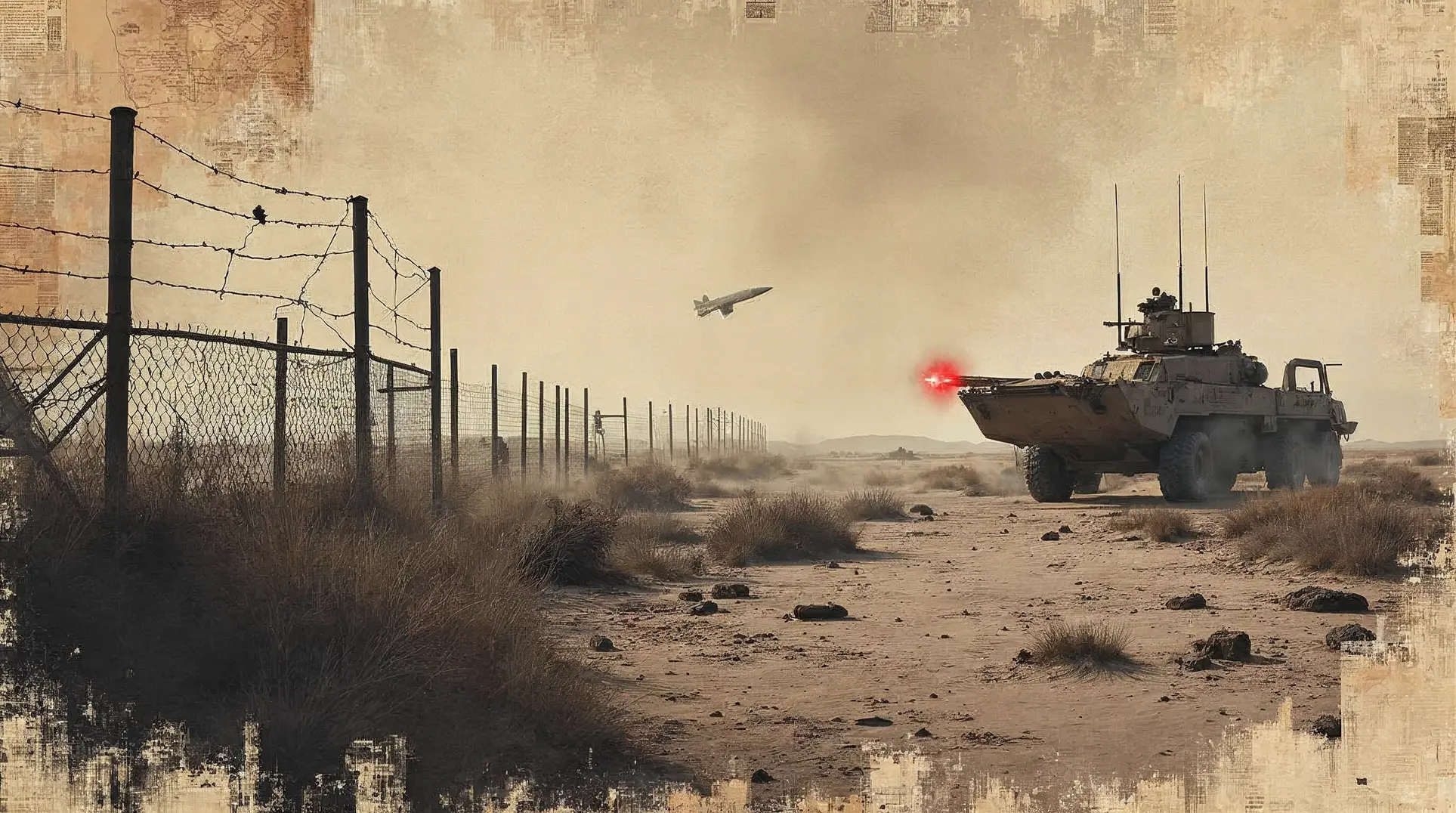
Observers are reading: why Iran's choice of Jordan over Gulf naval targets signals a calculated — not reckless — escalation.
Become an Observer — it's free. Get full access to all Crisis.Zone analysis, briefings and breaking coverage.
A familiar script, larger stakes
Vessel crossings through the Strait fell to as few as five per day over the weekend, and Brent crude climbed above $90 a barrel. The sequence — lull, triggering incident, exchange, damaged diplomacy — mirrors July almost exactly. What differs is the geography and the simultaneity of economic and military pressure. Sen. Jack Reed's Friday assessment that "not a single objective has been achieved" after six months of war will only sharpen as midterm politics converge on a conflict with no visible off-ramp.
Become an Observer — it's free — to unlock direct links to all sources used in this article.
We believe you deserve to verify everything we write. That's why we meticulously document every source.


