


The United States struck Islamic Revolutionary Guard Corps infrastructure at nine locations across southern Iran on Tuesday, CENTCOM confirmed, ending roughly a month of relative quiet in the war that began February 28. The operation, which President Trump described on Truth Social as "large and powerful," hit air defense sites, radar systems, maritime assets, mine-laying capabilities and communications infrastructure from Asaluyeh to Lavan Island.
The strikes followed a rapid 72-hour escalation sequence: a U.S. attack on Iranian rocket-launch sites at Larak Island on Sunday, an Iranian missile barrage on U.S. bases in Jordan hours later, and attacks on two oil tankers exiting the Strait of Hormuz on Monday. The pattern echoes the collapse of the June ceasefire framework in July, when a similar single-incident trigger unraveled restraint within 24 hours.
Retaliation hits four countries, casualty claims diverge
Iran's IRGC claimed responsibility for strikes on U.S.-linked positions in Jordan, Iraq, Bahrain and Kuwait on Tuesday evening. Jordan's armed forces said they intercepted 13 ballistic missiles, destroying 10 and reporting three impacts in remote areas. Kuwait's army said air defenses engaged hostile drones; Bahrain reported intercepting and destroying Iranian drones. The IRGC claimed to have killed "a large number of U.S. forces" near Aqaba and struck bases in Erbil — claims two U.S. officials told Reuters were false, with no American casualties reported.
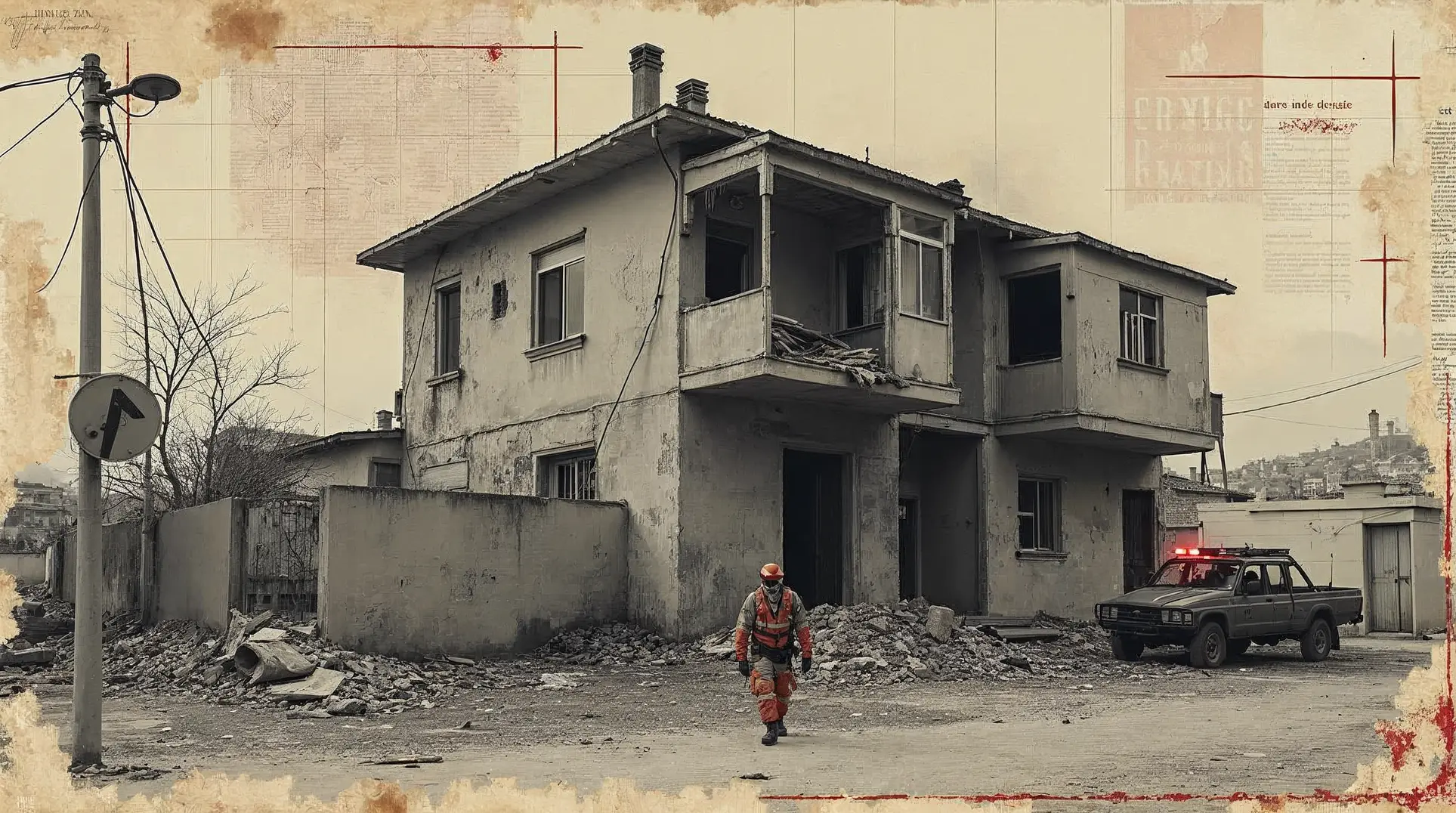
A separate and disputed claim has emerged from Sirik county, Hormozgan province, where Iranian state broadcaster IRIB aired footage alleging a U.S. strike killed civilians at a wedding in Kuhestak. The Iranian Red Crescent reported five dead, including a child, and more than 50 wounded; Mehr specified a four-year-old among the fatalities, while IRNA cited a provincial official putting the wounded at 68. Hormozgan Deputy Governor Ahmad Nafisi told state television that shrapnel from a U.S. missile struck a residential home during the wedding. CENTCOM spokesperson Capt. Tim Hawkins said only that "the U.S. military never targets civilians, unlike the IRGC," without directly addressing the Sirik allegation.
Observers are reading: why Iran's Hormuz threat and Washington's exhausted missile stockpiles point toward the same pressure point.
Become an Observer — it's free. Get full access to all Crisis.Zone analysis, briefings and breaking coverage.
An oil market pricing in the next move
Brent crude rose roughly 4% through the escalation, trading above $95 a barrel, even as Energy Secretary Chris Wright touted a record 17 million barrels transiting the Strait on Monday — a recovery the tanker attacks have likely undone. Treasury Secretary Scott Bessent told G20 counterparts Washington would move to "economically asphyxiate" Iran's leadership through new bank and secondary sanctions. President Masoud Pezeshkian, speaking from the Shanghai Cooperation Organization summit, said Iran is "not looking for war" and offered reciprocal de-escalation if Washington returns to June's terms — an offer that, after Tuesday's threats, appears politically unworkable in Washington. The 60-day negotiation window that framework created has already expired without agreement, leaving no diplomatic structure currently positioned to arrest the exchange now underway.
Become an Observer — it's free — to unlock direct links to all sources used in this article.
We believe you deserve to verify everything we write. That's why we meticulously document every source.


