


The G7 Foreign Ministers gathered in Niagara-on-the-Lake on November 11-12, 2025, to issue yet another joint statement on the world's most pressing conflicts. The document delivered precisely what one expects from such gatherings: "unwavering support" for Ukraine, "strong support" for Trump's Gaza ceasefire plan, and "strong condemnation" of violence from Sudan to Haiti. What the communiqué conspicuously lacked was any mechanism to translate this rhetorical unity into strategic outcomes. The recurring nature of these crises, despite years of G7 statements, raises an uncomfortable question about the relationship between diplomatic pronouncements and geopolitical reality.
The pattern is familiar. Foreign ministers convene, express collective concern about global instability, name adversaries fueling conflicts, pledge solidarity with victims, then depart. Meanwhile, Russia continues its war of attrition in Ukraine, Iranian proxies resist pressure across the Middle East, and armed groups from Sudan's RSF to Haiti's gangs operate with impunity. The gap between the G7's stated intentions and the observable persistence of these conflicts suggests that multilateral statements without enforceable mechanisms represent moral posturing rather than strategic action.
Ukraine: Sanctions fatigue meets reality
The G7's Ukraine statement reaffirmed three years of established positions: unwavering support for Kyiv, intensified sanctions against Moscow and its enablers (North Korea, Iran, and China for dual-use components), and condemnation of Russian attacks on energy infrastructure. The pledge to leverage immobilized Russian sovereign assets for Ukrainian reconstruction acknowledges an important truth—that existing sanctions have failed to compel Russian strategic withdrawal.
The explicit naming of DPRK, Iran, and China reveals how Russia has adapted to Western economic warfare through alternative supply networks. If sanctions were working as intended, Moscow wouldn't be sourcing munitions from Pyongyang or components from Beijing. The G7's response to sanction evasion includes coordinated enforcement mechanisms, export controls, the Enforcement Coordination Mechanism (ECM), and detailed guidance on preventing evasion through the Common High Priority List and enhanced due diligence requirements. The approach involves operational frameworks for monitoring and blocking evasion, coordination with the Global Export Control Coalition, and legal mandates for compliance—measures that extend beyond simple threats of additional sanctions. Nevertheless, the Russia-Ukraine War has exposed the limits of economic coercion against determined adversaries with access to alternative trading partners.
The call for ceasefire with "current line of contact as a starting point" tacitly acknowledges territorial losses while avoiding the politically toxic language of formal concessions. This rhetorical gymnastics reflects the G7's fundamental dilemma: how to support Ukraine's sovereignty while recognizing that neither side appears capable of decisive military victory at acceptable cost.
Middle East: Endorsing Trump's transactional peace
The G7's "strong support" for Trump's Gaza plan reveals Western powers' willingness to embrace whatever deal emerges from American mediation, regardless of underlying sustainability questions. The statement welcomes ceasefire and hostage releases while emphasizing humanitarian aid, reconstruction, and security guarantees for Israel—a wish list that ignores the structural contradictions between Israeli security demands and Palestinian political aspirations.
The ritual invocation of a two-state solution and "political horizon for coexistence" represents diplomatic muscle memory rather than strategic planning. If decades of international consensus on Palestinian statehood couldn't produce viable negotiations, it's unclear what the G7's restatement of this position achieves beyond satisfying domestic constituencies who demand reference to peace processes.
On Iran, the G7's approach combines nuclear compliance demands with condemnation of proxy warfare and missile attacks against Israel. The statement urges Tehran to engage in direct talks with Washington while simultaneously condemning the regional networks that provide Iran's primary deterrent capability. This tension between demanding Iranian strategic concessions and offering vague incentives for negotiation suggests either diplomatic incoherence or recognition that serious engagement isn't actually on offer. The Gaza ceasefire demonstrates the limits of external mediation when underlying power dynamics remain unchanged.
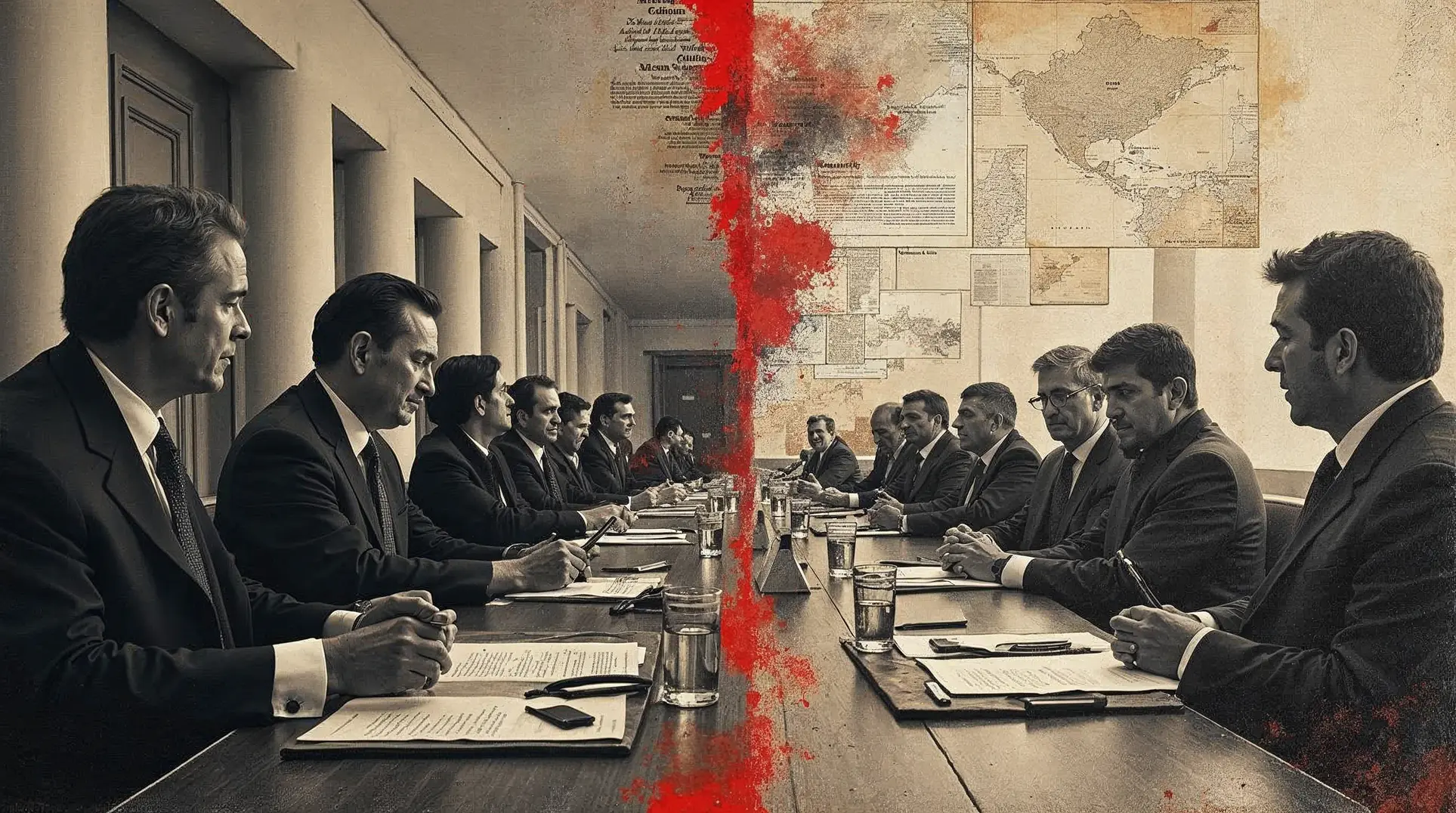
Members are reading: Why the G7's comprehensive crisis statements reveal Western powers' inability to translate diplomatic consensus into strategic outcomes, and what this means for the future of multilateral crisis management.
Diplomatic theater versus strategic competition
The Niagara statement's breadth—covering Ukraine, Middle East, Sudan, Haiti, Indo-Pacific tensions, and DRC violence—demonstrates the G7's continued relevance as a forum for coordinating Western positions. What it cannot demonstrate is that coordinated positions matter when adversaries have learned to operate beyond Western leverage. Russia finances its war through Chinese trade and North Korean munitions. Iran maintains regional influence despite sanctions. Armed groups from Sudan to Haiti continue operations regardless of international condemnation.
The fundamental question isn't whether the G7 can craft coherent joint statements—clearly it can. The question is whether diplomatic consensus among wealthy democracies retains coercive power in a multipolar system where alternative partnerships, sanctions evasion networks, and regional spheres of influence dilute Western leverage. The answer emerging from three years of Ukraine statements, decades of Middle East peace processes, and persistent humanitarian catastrophes in Africa suggests that moral clarity without enforcement capacity produces elegant documents rather than strategic outcomes.
The G7 foreign ministers will meet again, issue another statement, express concern about ongoing crises, and pledge continued support for international norms. Meanwhile, the conflicts they condemn will continue according to their own strategic logic, shaped by parties who calculate costs and benefits beyond the reach of multilateral disapproval.
Subscribe to our free newsletter to unlock direct links to all sources used in this article.
We believe you deserve to verify everything we write. That's why we meticulously document every source.


