


- Trump-Putin Budapest summit collapsed after Moscow rejected 30-day ceasefire, maintaining maximalist territorial demands Ukraine cannot accept
- EU's €210B in frozen Russian assets remain legally untouchable due to sovereign immunity concerns and Belgium's veto power
- Europe's €140B reparations loan proposal represents institutional creativity but faces Belgian risk-sharing demands and Hungarian obstruction
The summit that wasn't supposed to fail has failed. President Donald Trump's hastily arranged meeting with Vladimir Putin in Budapest—announced with characteristic fanfare less than a week ago—has been indefinitely postponed after Moscow rejected Washington's proposed 30-day ceasefire along current battle lines. The White House, scrambling to manage expectations, now insists there are "no plans for President Trump to meet with President Putin in the immediate future." Secretary of State Marco Rubio's phone call with Russian Foreign Minister Sergey Lavrov, initially billed as preparatory groundwork, ended with both sides concluding that an in-person meeting was "not necessary."
For European capitals, the collapse represents both vindication and alarm. Vindication, because the continent's institutional actors—from Brussels to Berlin—had warned that Putin was negotiating in bad faith, using the prospect of talks to buy time while Russian forces continued their grinding advance in eastern Ukraine. Alarm, because the failure leaves Europe holding the bag on Ukraine's survival, just as American support grows increasingly unreliable under an administration that views transatlantic burden-sharing as a zero-sum transaction.
At the heart of this crisis lies a question that has haunted European policymakers since February 2022: what to do with the €210 billion in Russian Central Bank assets frozen in EU member states—the largest share of approximately $300 billion immobilized worldwide. As Ukraine burns through aid at an unsustainable pace and reconstruction costs spiral toward $524 billion, these funds represent both a lifeline and a legal minefield. Europe finds itself trapped between the moral imperative to support Ukraine and the institutional constraints that define—and often paralyze—its security architecture.
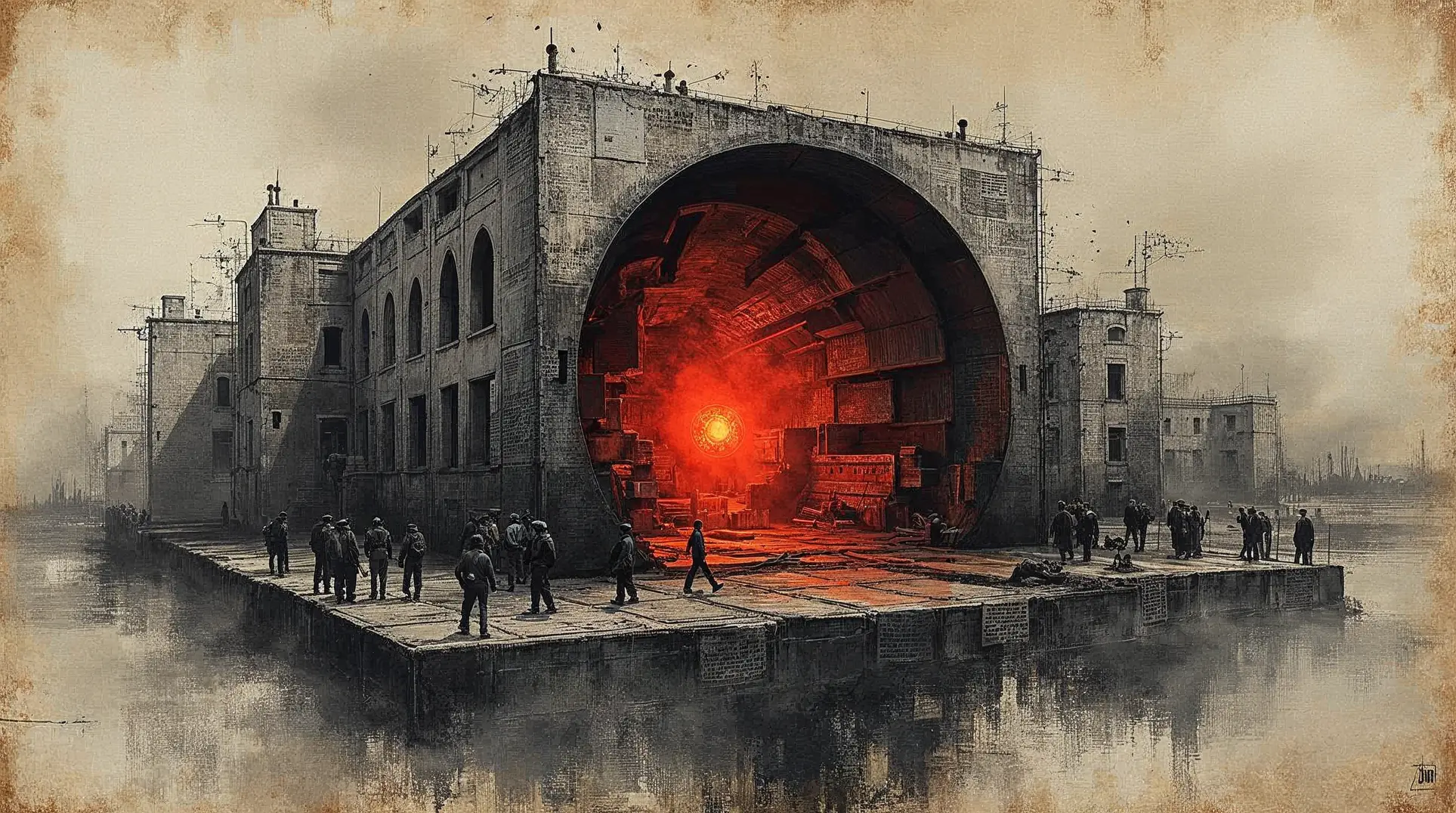
The legal labyrinth keeping €210B locked: How Belgium's veto power, ECB warnings, and Hungary's spoiler role create a perfect storm of institutional paralysis—while Ukraine's army runs dry.
The Budapest collapse: Putin's strategy of delay and denial
The failure of the Trump-Putin summit was entirely predictable to anyone who has followed Moscow's negotiating strategy over the past three years. Putin has consistently used the prospect of talks to achieve tactical objectives—buying time for Russian forces to consolidate territorial gains, sowing discord among Ukraine's supporters, and testing the resolve of Western leaders—while offering nothing of substance in return.
The pattern was established in the war's opening weeks, when Russian and Ukrainian delegations met in Belarus and then in Istanbul in March and April 2022. The Istanbul talks produced a framework document that appeared to offer a path to peace, with discussions around Ukraine potentially accepting neutrality rather than NATO membership in exchange for security guarantees. However, Ukrainian officials have consistently maintained that such neutrality would require robust, NATO-level security guarantees that Russia has shown no willingness to provide credibly. As Ukrainian forces pushed Russian troops back from Kyiv and evidence of atrocities in Bucha emerged, the talks collapsed. Moscow has since insisted that Ukraine's refusal to accept the Istanbul terms—which would have required constitutional changes, military limitations, and territorial concessions—proves that Kyiv is the obstacle to peace.
Putin's latest gambit followed the same script. After Trump set an August 8 deadline for Russia to accept a ceasefire or face "severe consequences," Putin agreed to meet with U.S. Special Envoy Steve Witkoff in Moscow on August 6. The meeting, by Witkoff's account, was productive enough to convince Trump to push for a full presidential summit. But when the details emerged, it became clear that Russia had offered nothing new. Moscow's position remained unchanged: Ukraine must cede the four regions Russia claims to have annexed (Donetsk, Luhansk, Zaporizhzhia, and Kherson)—a demand that goes beyond Russia's actual military control and would require Ukraine to surrender territory it currently holds. Ukraine must abandon NATO membership permanently. And Ukraine must accept "demilitarization"—code for reducing its armed forces to a level that would leave it defenseless against future Russian aggression.
These terms are non-starters for Kyiv, and Putin knows it. Ukrainian President Volodymyr Zelenskyy has made clear that any territorial concessions must be Ukraine's decision, not imposed by external powers, and must come with binding security guarantees that include the United States. The Ukrainian constitution enshrines the goal of NATO membership. And after three years of war that have cost tens of thousands of Ukrainian lives, the idea that Kyiv would disarm while Russia maintains the world's largest nuclear arsenal and a conventional military that, despite heavy losses, continues to grind forward in Donbas, is fantasy.
So why did Putin agree to talks at all? The answer lies in the strategic benefits of appearing to negotiate while continuing to fight. First, it buys time. Every week that passes without a ceasefire is a week in which Russian forces can advance, however incrementally, in eastern Ukraine. Russia is currently making progress at multiple points along the front line—Kupyansk, Pokrovsk, Chasiv Yar, Lyman, Sumy, Toretsk—and has gained approximately 6,000 square kilometers since late 2023, an area equivalent to the size of Delaware. These gains come at enormous cost—Russia has suffered over one million casualties—but Putin has shown no sign that he considers the price too high.
Second, the spectacle of Trump pursuing talks with Putin, while excluding Zelenskyy from the Budapest summit, sows doubt about American commitment to Ukraine and strains the transatlantic alliance. European leaders, particularly in France, Germany, and the UK, have watched with alarm as Trump has oscillated between threatening Putin with sanctions and praising him as a potential partner. The fear in European capitals is that Trump will strike a deal with Putin that sacrifices Ukrainian territory and sovereignty in exchange for a ceasefire that allows the U.S. president to claim a foreign policy victory. This fear was heightened when Trump suggested that any peace agreement would likely involve "some swapping of territories"—a comment that Ukrainian officials immediately rejected.
Third, Putin's willingness to engage in talks—however disingenuous—provides cover for countries like Hungary and Slovakia to resist further EU sanctions and military aid to Ukraine. Orbán has consistently argued that Europe should be pursuing diplomacy rather than escalation, and Putin's apparent openness to negotiations gives this position a veneer of reasonableness. The result is that Europe's response to the war remains divided, with the most Russia-skeptical states (Poland, the Baltics, Sweden, the Czech Republic) pushing for maximum support to Ukraine, while others (Hungary, Slovakia) act as spoilers.
The collapse of the Budapest summit, then, is not a setback for Putin. It is the outcome he likely intended all along. By agreeing to talks and then maintaining his maximalist demands, he has demonstrated that Russia will not be pressured into concessions by American deadlines or European sanctions. He has exposed the limits of Trump's leverage over Moscow. And he has bought more time for Russian forces to advance on the battlefield, where Putin believes—probably correctly—that time is on his side.
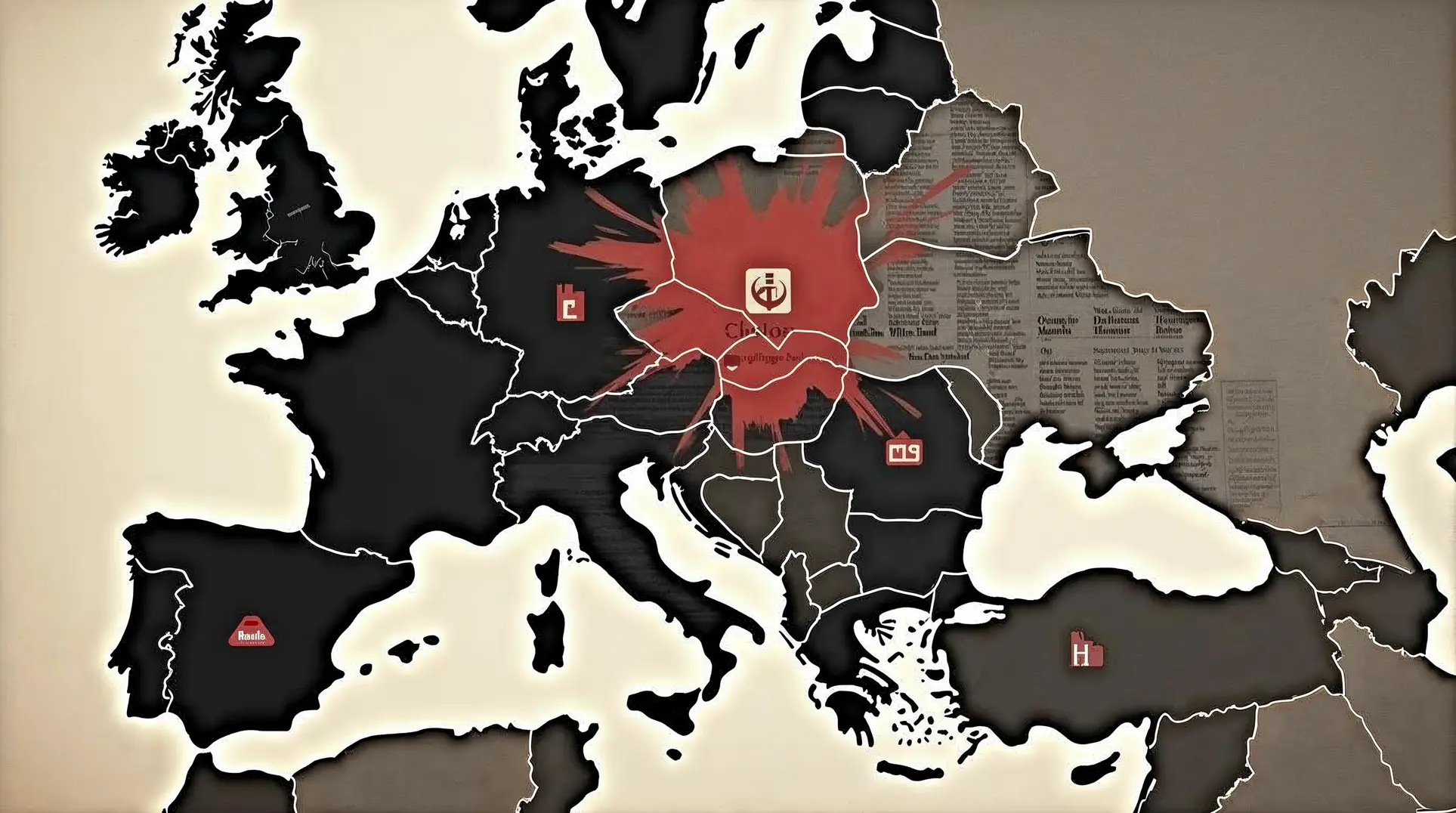
The €140B gambit that could save Ukraine—or prove Europe's final institutional failure: How the reparations loan scheme navigates sovereign immunity while Belgium holds all 27 member states hostage.
The leverage trap: Can frozen assets force Putin to negotiate?
The conventional wisdom in Brussels and other European capitals is that frozen Russian assets should be preserved as leverage for eventual peace negotiations. The theory is straightforward: Putin wants his money back, and the prospect of unfreezing €210 billion gives the West a powerful bargaining chip to extract concessions on Ukraine's territorial integrity, security guarantees, and reparations.
This logic is not entirely wrong, but it is incomplete in ways that reveal a fundamental misunderstanding of how Putin approaches negotiations and what he values. For frozen assets to function as effective leverage, three conditions must be met: the target must care deeply about regaining the assets; the target must believe that compliance with demands will actually result in the assets being unfrozen; and the target must lack alternative means of achieving its objectives.
None of these conditions clearly holds in Putin's case. While Russia would certainly prefer to have access to its frozen reserves, the loss of approximately half of Russia's $612 billion in pre-invasion reserves—with Europe holding the majority at €210 billion of roughly $300 billion frozen globally—has not crippled the Russian economy or forced Moscow to curtail its war effort. Russia has adapted to sanctions by reorienting trade toward China, India, and other non-Western partners, by evading export controls through third countries, and by restructuring its financial system to reduce dependence on Western institutions. Russia has managed to sustain its war effort and avoid economic collapse despite losing access to these substantial funds.
More fundamentally, Putin has little reason to believe that compliance with Western demands would result in the assets being unfrozen. The EU's position, repeatedly affirmed by the G7, is that Russian assets will remain frozen "until Russia pays for the damage it has caused to Ukraine." But Russia's invasion has caused an estimated $524 billion to $800 billion in damage, far exceeding the value of the frozen assets. Even if Putin were to agree to a peace deal that included reparations—a scenario that seems vanishingly unlikely—the frozen assets would presumably be applied to those reparations rather than returned to Moscow. From Putin's perspective, the assets are already lost. Negotiating for their return is pointless.
This creates what might be called the leverage trap: the more Europe insists that frozen assets will only be released as part of a comprehensive peace settlement that includes reparations, the less incentive Putin has to negotiate for their release. If the price of unfreezing the assets is accepting full liability for Ukraine's reconstruction and paying hundreds of billions in reparations, then the assets have no value as leverage. Putin might as well write them off and focus on achieving his war aims through military means.
There is, however, a more sophisticated way to use frozen assets in negotiations, one that European officials are beginning to explore in private even as they maintain a hardline public position. This approach would involve phased unfreezing of assets tied to specific, verifiable Russian concessions—not a grand bargain, but a series of incremental trades that build trust and create momentum toward a broader settlement.
For example, some portion of the frozen assets could be unfrozen in exchange for Russia agreeing to allow deployment of a foreign stabilization force in Ukraine, or a UN mission with a strong mandate to monitor a ceasefire. Another tranche could be released if Russia agrees to halt attacks on Ukrainian energy infrastructure for a sustained period. A third portion could be tied to progress on prisoner exchanges and the return of Ukrainian children deported to Russia. The final and largest share would be unfrozen only as part of a comprehensive peace agreement that includes security guarantees for Ukraine and a mechanism for addressing reparations.
This incremental approach has several advantages over the current all-or-nothing stance. It creates opportunities for de-escalation without requiring either side to make politically impossible concessions upfront. It allows both Putin and Ukraine's supporters to claim progress and build domestic support for further negotiations. And it preserves the bulk of the frozen assets as leverage for the most difficult issues, while using smaller amounts to unlock movement on less contentious questions.
The challenge, of course, is that any such approach requires a level of trust and diplomatic sophistication that has been entirely absent from the Russia-Ukraine conflict. Putin has repeatedly violated ceasefires and used humanitarian pauses to reposition forces for new offensives. Ukraine's deep strike campaign has demonstrated Kyiv's determination to take the fight to Russian territory, making it harder for Moscow to claim that it faces an existential threat requiring maximum escalation. And the Trump administration's erratic approach to the conflict—oscillating between threats of abandonment and promises of support—has made it nearly impossible for any party to confidently commit to a multi-stage negotiating process.
The Budapest summit's collapse has, if anything, made incremental negotiations less likely in the near term. Trump's public humiliation—flying to Alaska for a meeting that Putin effectively torpedoed by maintaining his maximalist demands—has hardened the U.S. president's rhetoric, at least temporarily. Trump told reporters that there would be "severe consequences" if Putin did not agree to stop the war, though he has made similar threats before without following through. European leaders, meanwhile, are using the summit's failure to argue for sustained support to Ukraine and resistance to any deal that would reward Russian aggression with territorial gains.
But the underlying dynamic has not changed. Russia continues to advance, slowly and at great cost, in eastern Ukraine. Ukraine continues to inflict heavy casualties on Russian forces while struggling with manpower shortages and resource constraints. Neither side has a clear path to military victory. And the West remains divided between those who believe Ukraine must be supported "as long as it takes" and those who believe that some form of negotiated settlement, however imperfect, is preferable to indefinite war.
In this context, frozen Russian assets are neither the decisive leverage that optimists imagine nor the irrelevant sideshow that pessimists dismiss. They are a potential tool—one of many—that could be used to facilitate negotiations if and when the conditions for serious talks emerge. But those conditions do not exist today, and the Budapest summit's failure suggests they will not exist anytime soon.
The transatlantic fracture: What happens when America walks away?
The most consequential aspect of the Budapest summit's collapse is not what it reveals about Putin's intentions—those have been clear for years—but what it exposes about the transatlantic alliance's capacity to respond to Russian aggression.
Trump's decision to pursue a bilateral meeting with Putin, excluding both Zelenskyy and European leaders, was a deliberate signal that the United States views the Ukraine conflict as a problem to be managed rather than a cause to be championed. The administration's subsequent backtracking—insisting that the summit was merely a "listening exercise" and that Zelenskyy might still be involved "in some way"—did little to reassure European capitals that Washington is committed to a just and durable peace rather than a face-saving exit.
This is the nightmare scenario that European security planners have war-gamed since Trump's return to office: an America that is present in Europe but not reliable, that maintains formal alliance commitments but treats them as transactional bargaining chips, that seeks accommodation with Moscow at the expense of European security interests. The nightmare is not that America will abandon NATO—Trump's threats to do so have subsided as he has been convinced of the alliance's value in confronting China—but that it will remain in NATO while pursuing a parallel relationship with Russia that undermines European cohesion and emboldens Putin.
The frozen assets debate is a microcosm of this larger fracture. The United States has passed legislation authorizing confiscation of Russian assets and has urged European partners to do the same. But Washington holds only $5 billion in Russian funds, while Europe holds €210 billion. The Biden administration could afford to be bold in its rhetoric about seizing Russian money because it faced minimal economic risk. European governments, which hold the vast majority of frozen assets and would bear the consequences of any Russian retaliation or legal challenges, have been far more cautious.
Now, with Trump in office and American financial support for Ukraine drying up, Europe faces a choice: either find a way to mobilize the frozen Russian assets to support Ukraine, accepting the legal and economic risks that entails, or watch as Ukraine's military position deteriorates and Putin gains the upper hand in any eventual negotiations. The reparations loan is Europe's attempt to split the difference—to use Russian money without technically seizing it, to support Ukraine without shouldering the full burden alone.
But even if the reparations loan succeeds, it is a stopgap, not a solution. €140 billion will fund Ukraine's war effort for two to three years, assuming no major escalation and no collapse in Ukrainian morale or military effectiveness. After that, Europe will face the same question it faces today: how to sustain support for Ukraine in the absence of reliable American backing, and how to deter Russian aggression without the military and economic heft that only the United States can provide.
The institutional architecture that has defined European security since 1945—NATO as the military guarantor, the EU as the economic integrator, the United States as the indispensable leader—is not broken, but it is under strain in ways that were unimaginable a decade ago. Europe is learning, painfully and belatedly, that it cannot rely on America to defend European interests if those interests conflict with American priorities. And America, under Trump, has made clear that its priorities lie elsewhere: in confronting China, in extracting economic concessions from allies, in avoiding the open-ended commitments that defined the post-Cold War era.
The frozen assets debate will not resolve this transatlantic fracture. But it will determine whether Europe has the institutional capacity and political will to act decisively in defense of its own security, even when America is an unreliable partner. The answer, so far, is ambiguous at best.
Conclusion: The price of paralysis
The collapse of the Trump-Putin summit in Budapest is not an aberration. It is the logical outcome of a negotiating dynamic in which one side—Russia—has no incentive to compromise, and the other side—the West—is divided, distracted, and increasingly exhausted by the costs of supporting Ukraine.
Europe's frozen Russian assets represent the single largest pool of resources that could be mobilized to change this dynamic. At €210 billion, they dwarf the annual contributions that European governments have been willing to make from their own budgets. They are, quite literally, Russian money that could be used to undo Russian aggression. And yet they sit, immobilized by legal opinions and institutional caution, generating a few billion euros a year in interest while Ukraine burns through aid at ten times that rate.
The tragedy is not that Europe lacks the resources to support Ukraine. The tragedy is that Europe lacks the institutional mechanisms to deploy those resources decisively. The EU's unanimity requirement gives veto power to the governments most sympathetic to Moscow. The European Central Bank's mandate prioritizes financial stability over strategic necessity. National governments, fearful of setting precedents or provoking retaliation, defer to legal advisors who counsel caution.
This is the price of paralysis: not a single catastrophic failure, but a slow erosion of options and leverage, until the only choices left are between bad outcomes and worse ones. If Europe cannot find a way to use frozen Russian assets to support Ukraine—whether through the reparations loan, outright confiscation, or some other mechanism—then it will have demonstrated that its institutional architecture is fundamentally unsuited to the security challenges of the 21st century.
Putin understands this. He is betting that Europe's divisions and legal scruples will outlast Ukraine's ability to resist. The Budapest summit's collapse suggests that he may be right.
Subscribe to our free newsletter to unlock direct links to all sources used in this article.
We believe you deserve to verify everything we write. That's why we meticulously document every source.


