


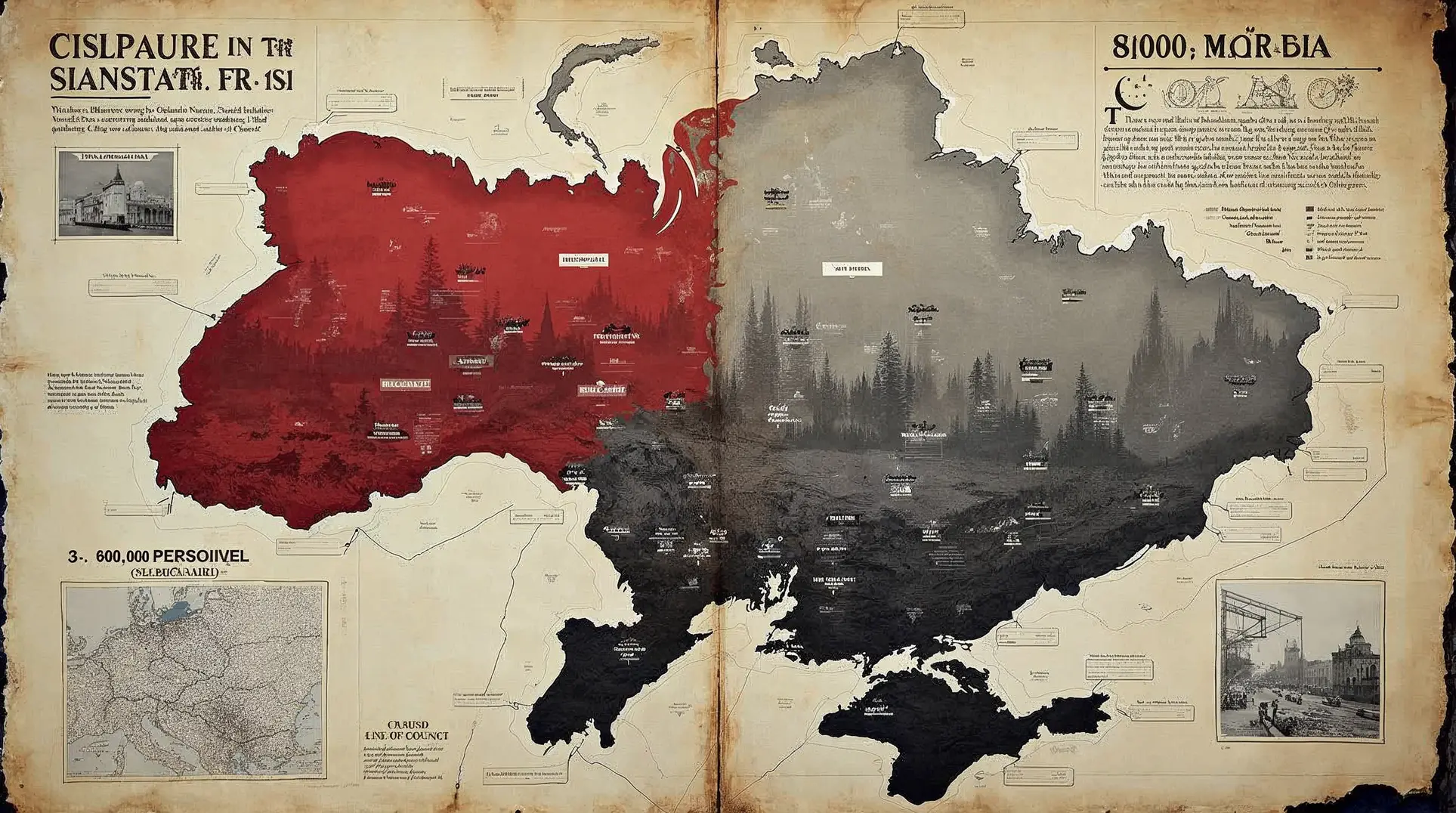
Europe has filed its objections. A counter-proposal drafted by Britain, France, and Germany takes the United States' 28-point Ukraine peace framework as its basis—then rewrites key provisions point by point, according to documents seen by Reuters on Sunday. The European text, circulated to Washington and Kyiv ahead of talks in Geneva, raises Ukraine's peacetime troop cap to 800,000 personnel, rejecting the U.S. draft's blanket ceiling of 600,000, and deletes language that would pre-recognize certain territories as "de facto Russian." In its place, the E3 draft stipulates that "negotiations on territorial swaps will start from the Line of Contact," preserving Ukraine's legal claim to occupied land.
The edits are consequential. They reframe the military, territorial, and financial architecture of any settlement, signaling a sharper European line on deterrence credibility and sovereignty norms as the reported U.S. deadline—November 27 for Kyiv to respond—looms. The counter-proposal also rewrites provisions on frozen Russian central bank assets, insisting they remain frozen until Russia compensates Ukraine for war damage, rather than being channeled into U.S.-led investment vehicles as envisaged in the original draft. Together, the changes amount to a structured European pushback on transatlantic divergence over risk tolerance and enforcement design.
What the E3 changed
The European draft preserves the U.S. document's overall structure but targets three core areas. First, force posture: the 800,000-personnel ceiling compares to Ukraine's current wartime mobilization and reflects European concern that a 600,000 cap would leave Kyiv unable to deter future Russian pressure along a frozen line. The E3 text also proposes that Ukraine receive a U.S. security guarantee "similar to NATO's Article 5," though it acknowledges that full NATO membership requires alliance consensus—which does not currently exist—and stipulates that NATO would not permanently station alliance-commanded troops in Ukraine during peacetime. Fighter jets would be stationed in Poland for air-policing duties, according to Reuters' extracts from the document.
Second, territorial baseline: by anchoring talks at the Line of Contact rather than accepting occupied zones as de facto Russian, the E3 draft preserves the legal fiction that any territorial swap remains a negotiated outcome, not a fait accompli. This distinction matters for European states wary of legitimizing borders changed by force. Third, financial reconstruction: the European text emphasizes that Ukraine should be "fully reconstructed and compensated financially, including through Russian sovereign assets that will remain frozen until Russia compensates damage to Ukraine." That language rejects the U.S. draft's reported proposal to channel $100 billion in frozen Russian funds into a U.S.-led reconstruction vehicle with a 50 percent U.S. profit share, and to route remaining assets into a separate U.S.-Russia investment vehicle.
Other provisions seen by Reuters include a comprehensive non-aggression agreement among Russia, Ukraine, and Europe; a post-settlement Russia–NATO dialogue to address mutual security concerns; all-for-all exchanges of prisoners and detainees, including children; and the document also envisages an IAEA-supervised restart of the Zaporizhzhia nuclear power plant with output shared equally, extension of U.S.–Russia arms control agreements, and a "Board of Peace" to monitor implementation, chaired by U.S. President Donald J. Trump. Notably, the Reuters-seen text includes language committing Ukraine not to recover occupied sovereign territory by military means, with a proviso that security guarantees would not apply if that obligation is breached.
Members are reading: Why Europe's insistence on 800,000 troops and locked Russian assets reflects a fundamentally different theory of deterrence and enforcement than Washington's.
Process and next steps
The E3 counter-proposal has been transmitted to both Kyiv and Washington, making it a formal input into talks that are testing Europe's ability to shape the settlement process. U.S. officials have described their 28-point framework as a working draft and set November 27 as a target date for Ukraine to respond. The European text operates as a structured amendment list, preserving the U.S. outline while rewriting provisions Europe judges unsustainable. Whether the revisions land before the deadline—and whether Washington proves receptive to higher troop caps, a tougher territorial baseline, and frozen-asset conditionality—will reveal how much agency Europe retains in a process driven by American diplomatic initiative and Trump's stated desire for a rapid deal.
Kyiv's response will be equally telling. If Ukraine endorses the E3 edits, the counter-proposal becomes a joint European-Ukrainian position, complicating any U.S. effort to impose lower ceilings or looser sovereignty language. If Kyiv objects to the prohibition on military recovery of occupied territory or seeks stronger NATO commitments, the European draft may prove a floor rather than a ceiling for Ukrainian demands. Either way, the document confirms that Europe intends to co-author any settlement, not simply ratify American terms. The question now is whether Washington views that as partnership or obstruction.
Subscribe to our free newsletter to unlock direct links to all sources used in this article.
We believe you deserve to verify everything we write. That's why we meticulously document every source.


