


Irish naval observers detected sophisticated aircraft near flight path, exposing counter-UAS gaps in neutral state's VIP security architecture
The Irish Naval Service vessel LÉ William Butler Yeats, stationed in Dublin Bay on 2 December 2025, reported up to five unidentified drones operating near the anticipated flight path of Ukrainian President Volodymyr Zelensky's aircraft as he arrived for a state visit. The encounter, first disclosed by The Irish Times and The Journal, occurred despite a temporary no-drone exclusion zone over the capital. Unnamed security sources told Irish media the presidential aircraft was not in imminent danger—it arrived slightly ahead of schedule—but the incident triggered a major alert within the Garda Síochána-led security operation and prompted ministerial briefings. Officials have not publicly confirmed the sighting, citing operational security.
The episode marks a rare intersection of Europe's escalating drone-incursion pattern with high-profile VIP air movement, and it exposes a pointed institutional dilemma: how militarily neutral states with limited counter-unmanned-aircraft-system (C-UAS) capabilities enforce airspace restrictions over dense urban areas when sophisticated actors probe defenses without crossing kinetic thresholds. Ireland's Defence Forces supported the operation successfully, but the Yeats lacked jamming equipment, and the use of shipboard weapons was ruled out due to the risk of rounds falling on populated neighborhoods—constraints that underscore the legal and technical limits facing European capitals as hybrid tactics normalize below alliance red lines.
A choreographed encounter with institutional limits
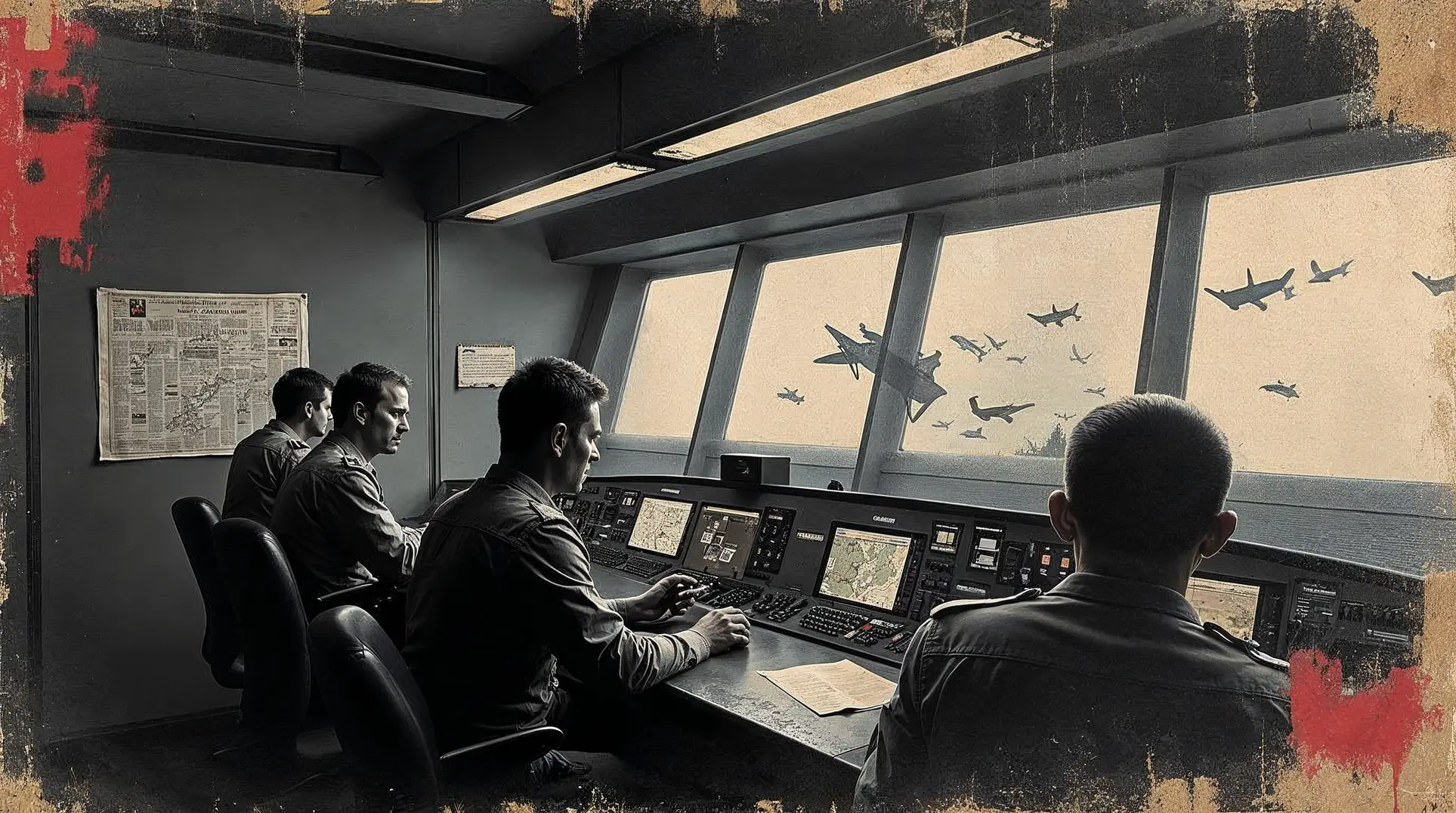
Crew aboard the Yeats first observed the drones northeast of Dublin, near Howth, equipped with navigation lights—red on the left, green on the right, and white orientation lights in compliance with aviation conventions. Security sources told Irish outlets the aircraft remained airborne for approximately two hours, their endurance and flight characteristics suggesting a sophisticated class flown by experienced operators. One source remarked they appeared to "want to be seen," a detail consistent with signaling or psychological operations rather than covert reconnaissance. An Irish Air Corps C295 maritime patrol aircraft was airborne off south Dublin during the landing window and flew again the following morning; it remains unclear whether it also tracked the drones.
The naval vessel reported positions but possessed no organic C-UAS suite. Shipboard weapons remained secured; the Garda's rules of engagement for proportional force in urban airspace left few options. The Defence Forces declined detailed comment but confirmed that "all support to the Garda-led security operation was successfully deployed and the event passed off safely." BBC and RTÉ report senior ministers were briefed; Irish police have opened no formal investigation, a posture that reflects both the absence of imminent harm and the evidentiary difficulty of attributing small-drone operations in real time.
Members are reading: Why Ireland's hybrid-threat response reveals the legal and capability gap that makes neutral EU states ideal testbeds for sub-threshold probing.
Implications for European VIP security and the hybrid playbook
The Dublin encounter joins a constellation of incidents—airport closures, airbase overflights, energy-infrastructure reconnaissance—that EU officials increasingly frame as coordinated hybrid campaigns. The European Commission has not, however, issued binding guidance on temporary airspace enforcement or C-UAS procurement standards for member states, leaving national capitals to navigate jurisdictional friction between aviation regulators, police, and military commands. For Ireland, the visit concluded safely, but the institutional seams were visible: no jamming, no kinetic options in urban zones, and no public attribution that might invite escalatory rhetoric or diplomatic friction.
The broader lesson is strategic patience. Hybrid actors do not need to down an aircraft or trigger a shootout; they need only demonstrate that exclusion zones are advisory, that detection does not guarantee interdiction, and that democracies will self-limit even when red lines are crossed by millimeters. As European leaders travel more frequently to confer on Ukraine, defense spending, and collective resilience, the airspace above their capitals has become both stage and sensor array—a domain where sovereignty is tested one drone at a time, and where the cost of inaction compounds invisibly until a more consequential breach occurs.
Subscribe to our free newsletter to unlock direct links to all sources used in this article.
We believe you deserve to verify everything we write. That's why we meticulously document every source.


