


Key takeaways
- Bukele rejected a New York Times report that four bodies handed over in Port-au-Prince were the missing Salvadoran technicians.
- Four Salvadoran aviation technicians have been missing since an October 18 ambush in Croix-des-Bouquets, and autopsies on the bodies are pending.
- El Salvador has deployed roughly 450 troops to a Gang Suppression Force that fields about 2,000 personnel against 5,550 authorized.
Salvadoran President Nayib Bukele said late on Saturday, October 24, 2026, that four burned bodies handed over in Haiti are not the four Salvadoran soldiers missing since an ambush a week earlier. On X, he wrote "No son nuestros hombres" ("They are not our men"). He was rejecting a New York Times report that the remains were believed to be the missing Salvadorans. The Times noted that autopsies would be needed to confirm the identities of the badly burned remains, according to Reuters.
Earlier that day, Hero Client Rescue delivered the remains to a Salvadoran military delegation at Toussaint Louverture International Airport in Port-au-Prince. It is a U.S.-funded medical evacuation group directed by Scott Reece, a former U.S. State Department security official. Bukele said a preliminary inspection found that one body belonged to a child. He said another belonged to an adult man substantially taller than any of the four technicians, and a third wore part of a uniform from another country's army. He published photographs of identification that he said belonged to a soldier from Chad. A Salvadoran government official, speaking to the Associated Press (AP) on condition of anonymity, said the bodies were not those of the missing men.
From the ambush to the surge
The four men are Salvadoran Air Force aviation technicians attached to the Gang Suppression Force (GSF), the mission authorized by the UN Security Council. On Sunday, October 18, they were returning from a local market to their base in an armored vehicle. In Santo, in the Croix-des-Bouquets commune northeast of Port-au-Prince, gunmen hit the vehicle with high-caliber gunfire and explosives and set it ablaze.
El Salvador's armed forces (FAES) said the four jumped from the burning vehicle and then disappeared. Haitian authorities treated the case as an active kidnapping.
Armed coalitions control the area, mainly 400 Mawozo and Chèn Mechan, which belongs to the Viv Ansanm alliance. The 400 Mawozo leader, Wilson Joseph, who goes by "Lanmo San Jou", later published a video in which he waved heavy ammunition and vowed not to retreat from Salvadoran forces. The commune has seen heavy fighting before. The UN reported 78 dead in clashes in Croix-des-Bouquets and Cité Soleil in May.
Bukele announced a rescue operation and said the gangs would be destroyed if the technicians were harmed. A first contingent of 100 special forces arrived on Thursday, October 22. About 350 more followed on Friday, October 23, bringing the deployment to roughly 450 troops. At least one of Friday's flights was a U.S. military aircraft, the Miami Herald reported. Dominican Republic President Luis Abinader said on X that he discussed intelligence cooperation with Bukele and that border security had been reinforced.
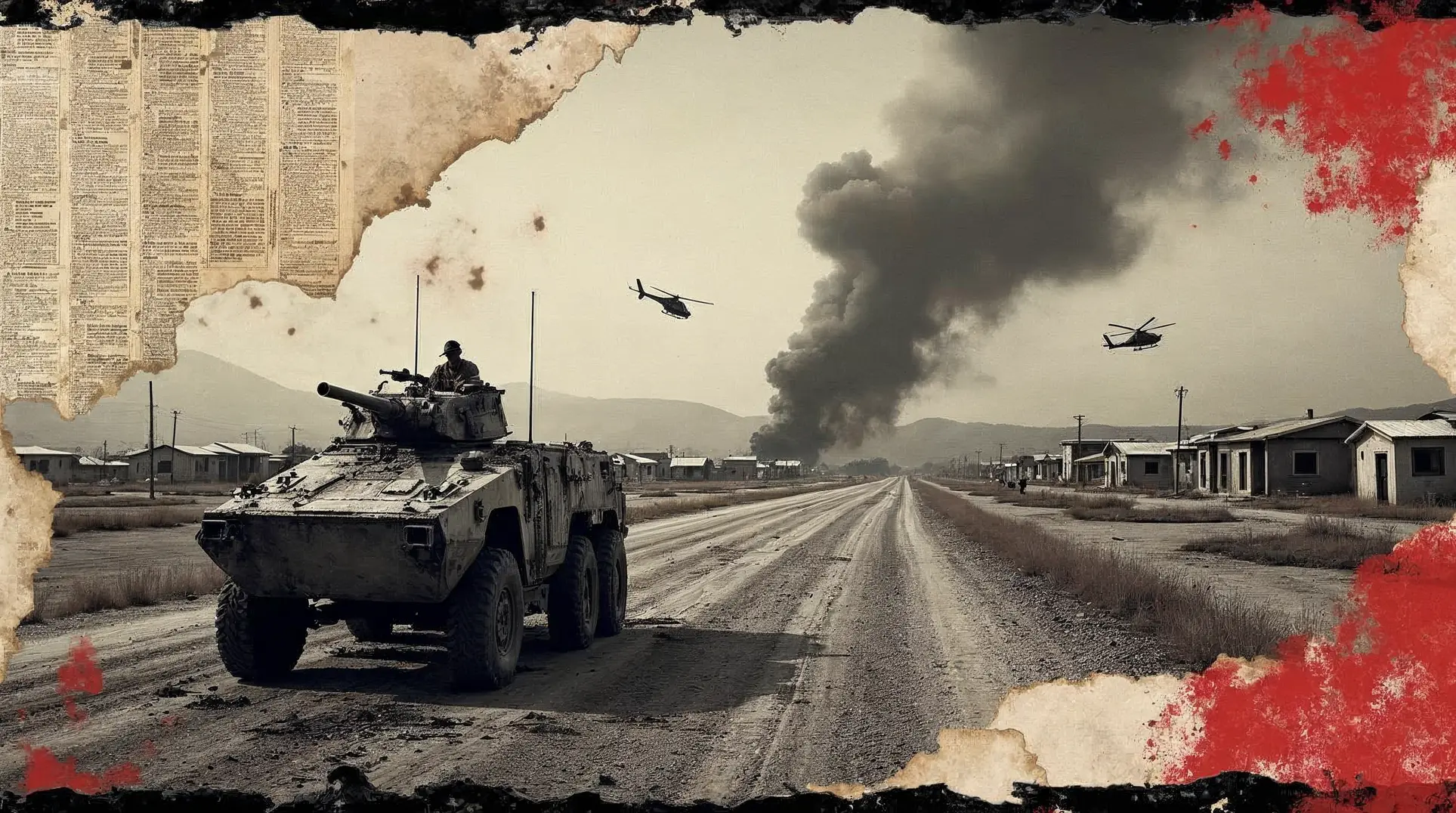
Observers are reading: How a thinly staffed UN force and Bukele's domestic security model collide in Croix-des-Bouquets, and what the disputed handover exposes.
Become an Observer, it's free. Get full access to all Crisis.Zone analysis, briefings and breaking coverage.
What remains unresolved
The fate and location of the four technicians remain unresolved. Haitian authorities continue to treat the case as a kidnapping. An official with knowledge of the investigation told AP that four bodies were recovered but not confirmed as the technicians. Until the autopsies are done, the identity of the dead stays open, and so does the question of who they were.
The risks are concrete. Roughly 450 Salvadoran special forces now operate on the Plaine du Cul-de-Sac, in territory held by gangs whose leader has publicly vowed to resist them. Urban operations in Croix-des-Bouquets have repeatedly displaced residents and halted medical services. Any rescue attempt there is likely to carry costs for civilians as well as for soldiers.
Become an Observer (it's free) to unlock direct links to all sources used in this article.
We believe you deserve to verify everything we write. That's why we meticulously document every source.


