


Key takeaways
- Thousands marched in Caracas, Valencia, Maracay, San Cristóbal and Maracaibo on 22 October, the first nationwide opposition mobilization in nearly two years.
- State security forces were scarce during the day, but police detained seven sound-truck workers afterwards, according to Vente Venezuela.
- Machado's movement wants an election on 24 July 2027, while a US-backed opposition team has floated late 2027 or 2028.
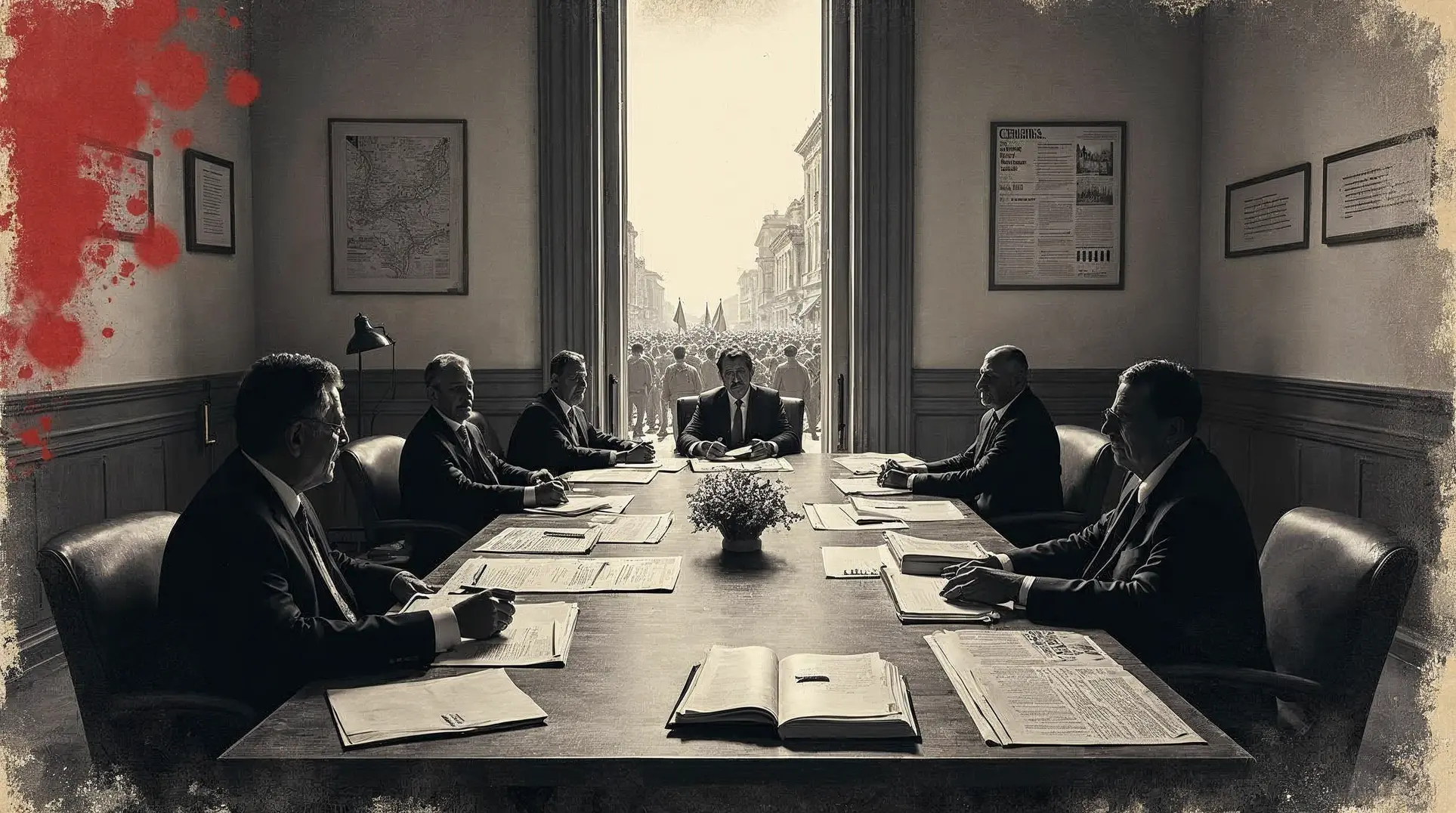
Thousands of Venezuelans marched through Caracas on Thursday, 22 October 2026. It was the first nationwide opposition street mobilization in nearly two years. Crowds also gathered in Valencia, Maracay, San Cristóbal and Maracaibo. Their slogan, set by opposition leader María Corina Machado's movement Vente Venezuela, was "La fecha de la elección es la fecha de la liberación" (an election date is a date of liberation).
The date was chosen with care. It was the third anniversary of the 2023 opposition primary, which Machado won before authorities barred her from office for 15 years.
Witnesses and reporters recorded a notably thin presence of state security forces. At earlier opposition rallies, including in 2024, tear gas, armed pro-government groups known as colectivos and riot police routinely broke up crowds. This time, crowds in provincial cities dispersed peacefully before nightfall.
Leosmary Hernández, an 18-year-old cosmetology student in Maracay, said: "Seeing this makes me happy because I know change is possible. I went out to protest before, when things were much tougher, and I'm even less afraid today because I want my voice to be heard."
A contested plaza and a night of detentions
Vente Venezuela first called supporters to Plaza Venezuela, in front of Torre Polar, for 4:00 p.m. Interior Minister Diosdado Cabello, a senior figure in the ruling PSUV party (United Socialist Party of Venezuela), then announced a counter-march from the same plaza at 2:00 p.m. He described it as a Breast Cancer Awareness rally. Opposition leaders redirected their crowds to a nearby location to avoid direct clashes.
The restraint during the day did not last into the night. Vente Venezuela's Human Rights Committee said the Bolivarian National Police (PNB) intercepted and detained seven sound-truck workers after the rally. It named Rony Suárez, Yanail Castro, Daniel Colmenares, Andruws Pineda, Ramón Brizuela and Ronaike Suárez. The committee said police also confiscated three sound vehicles, one of them in Antímano, in western Caracas. By late evening, the committee said, the whereabouts of the detained workers remained unknown.
Observers are reading: how the Machado and Figuera tracks diverge, and what Washington's oil interests mean for any election date.
Become an Observer, it's free. Get full access to all Crisis.Zone analysis, briefings and breaking coverage.
What the turnout can and cannot change
The march shows that public appetite for a vote has survived two years of fear and economic strain. The Venezuelan Observatory of Social Conflict (OVCS), an NGO, said it documented 1,101 protests in September, up 489% on the same month last year, with 531 of them over power cuts and electricity service problems.
Street pressure has limits, though. On Polymarket, a prediction market, the chance of a presidential election being scheduled by the end of 2026 traded at 8.5%. A Trump endorsement of Machado traded at 4.5%. These are traders' bets, not forecasts from any government.
The thin police presence may reflect calculation as much as tolerance, since the night detentions suggest pressure on organisers continued out of public view. The election date will probably depend on whether Washington asks its new partner in Caracas to move faster. It had not said so publicly by 23 October.
Become an Observer (it's free) to unlock direct links to all sources used in this article.
We believe you deserve to verify everything we write. That's why we meticulously document every source.


