

Key Points
- Rubio urged all Venezuelan opposition factions to join U.S.-backed talks with Delcy Rodríguez before the third round on October 14.
- As of October 13, neither Washington nor Rodríguez had committed to a presidential election calendar.
- Rodríguez says Venezuela signed 61 oil and gas contracts, while ICIS estimates reviving petrochemical plants needs five to 10 years.
U.S. Secretary of State Marco Rubio met Dinorah Figuera, president of the 2015 National Assembly, in Washington. He publicly urged all Venezuelan opposition factions and civil society sectors to join U.S.-backed transition talks with interim President Delcy Rodríguez. This is according to State Department readouts and coverage by the Miami Herald and Anadolu. The third negotiating round is scheduled for October 14, 2026.
As of October 13, neither Washington nor Rodríguez had committed to a presidential election calendar. On October 8, Rodríguez told the annual assembly of the Venezuelan business federation Fedecámaras in Caracas that state oil company PDVSA had signed 61 agreements on oil, gas and petrochemicals, with 44 more under negotiation, according to EFE and Infobae. She did not identify the counterparties. This article addresses one question: is the U.S.-backed track advancing energy access faster than an election timetable?
What the October 14 round is set to cover
The agenda items reported so far are institutional. The third round is to focus on finalizing the Supreme Court selection and on "participation guarantees necessary for credible elections," according to a statement. Rubio has claimed that earlier talks produced the release of people allegedly detained for political reasons, the unblocking of several news websites and progress toward amending the 2017 Law Against Hatred. A presidential election date is not among them. Figuera leads the opposition delegation, which includes parties such as Primero Justicia and Voluntad Popular.
Washington's choice of Figuera sidelined María Corina Machado, the primary winner whom the Democratic Unitary Platform (PUD) had designated in May to lead any talks, as Crisis.Zone reported in July. The PUD calls for an expedited election timetable, arguing it would give investors confidence. Rubio has framed the U.S. goal differently. He has described it as more than an immediate vote: "a democracy that can govern" after two decades of institutional decay and the January 3 capture of Nicolás Maduro, referred to as Operation Absolute Resolve.
In Rome, Rodríguez said dialogue with the United States and the opposition was providing "necessary political stability." Her September trip to the UN General Assembly in New York ended without an election date, as Crisis.Zone reported.
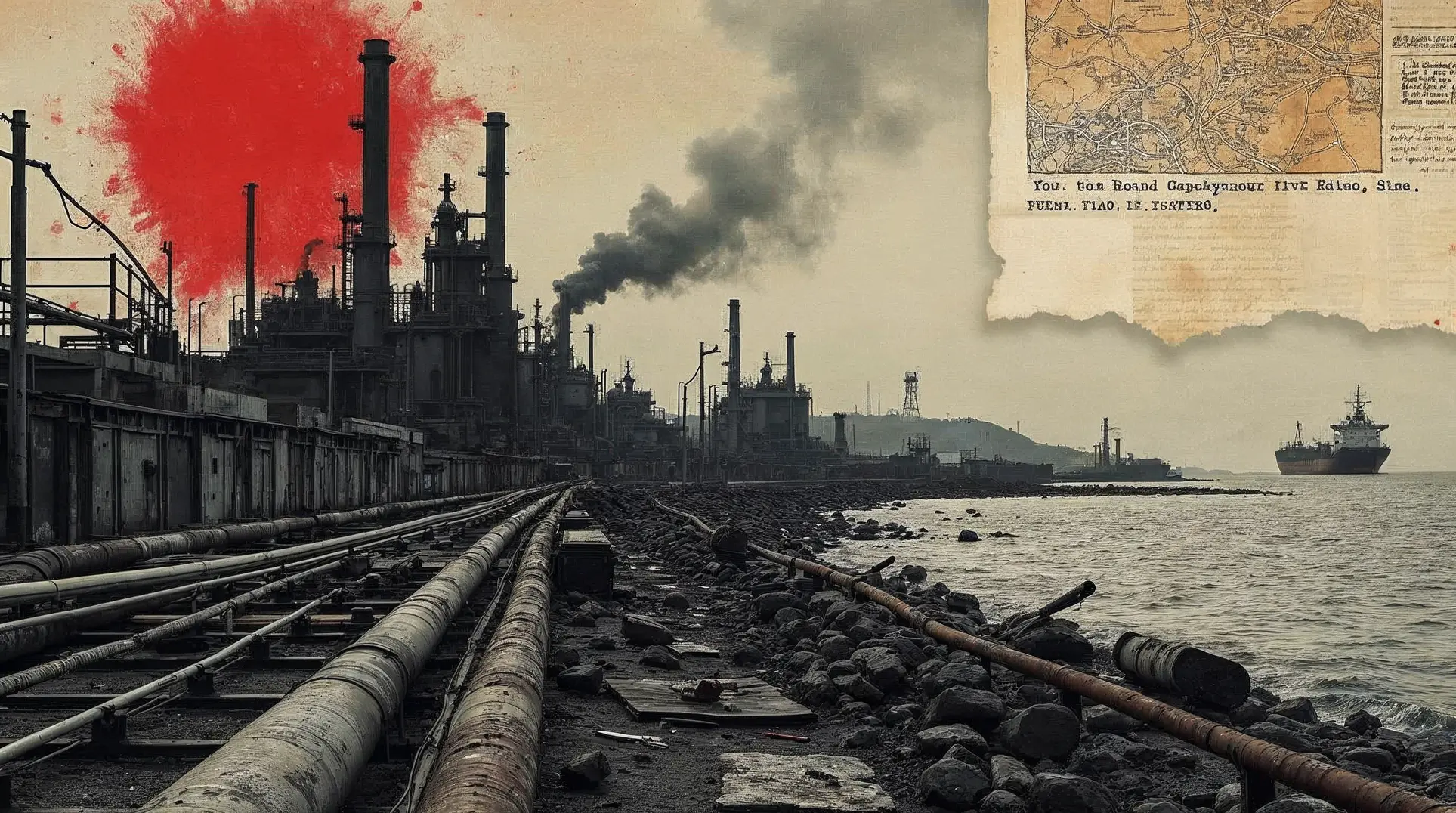
Observers are reading: How the 61 announced contracts, ICIS capacity estimates and undisclosed crude terms fit a stabilization-first model.
Become an Observer, it's free. Get full access to all Crisis.Zone analysis, briefings and breaking coverage.
What to watch after October 14
As of October 13, the answer to the question is provisional. Energy has produced announcements, contracts and reported ownership changes; politics has produced a negotiating format and an agenda without an election date. Whether the third round changes that is the first test.
Two indicators will help. One is whether the PUD's call for a timetable gains traction at the table. The other is whether the terms of the undisclosed crude agreements become public.
The longer-term question is whether economic stabilization can sustain social calm while the institutional structure remains rooted in chavismo, the movement founded by Hugo Chávez, and untested at the ballot box. That depends on factors this article cannot establish. Those include whether output recovers over years rather than months, and whether Washington and Caracas commit to a date.
Become an Observer (it's free) to unlock direct links to all sources used in this article.
We believe you deserve to verify everything we write. That's why we meticulously document every source.


