


Key takeaways
- Reuters, citing one unnamed Haitian official, reported that about 1,000 Salvadoran troops have been sent to Haiti; neither government has confirmed the figure.
- The command arrangement for the Salvadoran contingent, inside the Gang Suppression Force or alongside it, has not been announced.
- The troops arrived after four Salvadoran Air Force technicians disappeared in Croix-des-Bouquets on October 18; their fate remains unresolved.
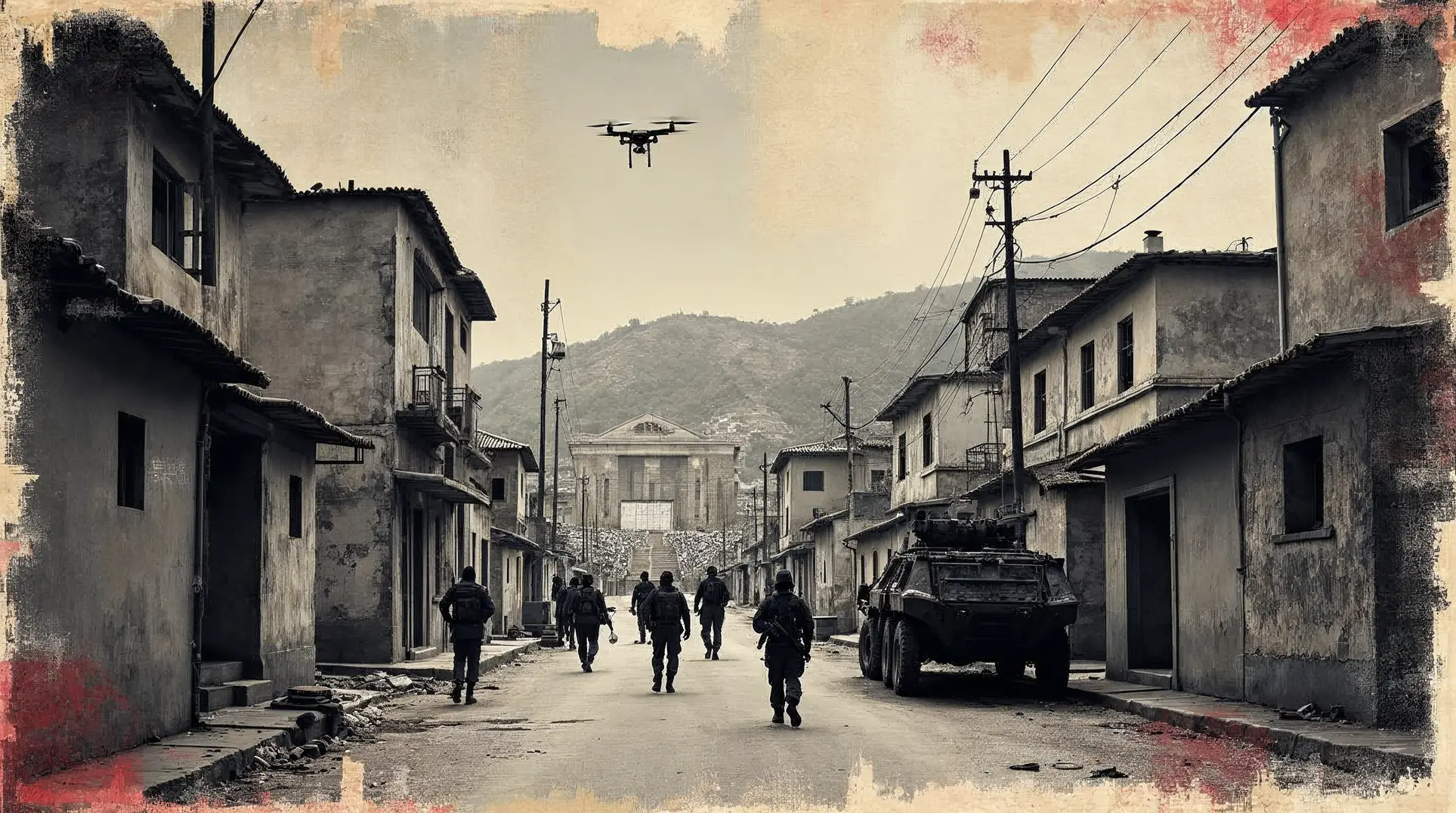
About 1,000 Salvadoran troops have been sent to Haiti in a series of deployments, Reuters reported on Tuesday, October 27. It cited one Haitian security official who spoke anonymously because of security sensitivities. The soldiers came after four Salvadoran Air Force technicians disappeared on October 18 in Croix-des-Bouquets, northeast of the capital. Neither the Haitian nor the Salvadoran government has confirmed the figure. President Nayib Bukele has confirmed a military rescue mission but has not said how many soldiers he has sent.
The four men were attached to the Gang Suppression Force (GSF), the United Nations-backed mission fighting gangs in Haiti. On Sunday, October 18, they were driving back to base from a supermarket in an armored Toyota. In Santo, gunmen hit the vehicle with heavy-caliber fire and explosives and set it ablaze. The Armed Forces of El Salvador (FAES) said the four jumped out and vanished. The Miami Herald, citing several sources, reported that the Chèn Mechan gang carried out the attack, with backup from the allied 400 Mawozo gang. No gang has publicly claimed responsibility, Reuters reported.
Four estimates and an airbridge
The numbers depend on who is counting. The Associated Press reported that more than 100 Salvadoran special forces deployed on October 22. The Haitian daily Le Nouvelliste, citing anonymous government sources, reported on October 24 that up to 450 had arrived. Bloomberg reported that the Salvadoran troop presence had reached at least 600, citing an unnamed researcher. Haiti expert Jake Johnston told Bloomberg there had been a steady flow of flights carrying Salvadoran soldiers and equipment. Flight-tracking sites showed three Boeing 747-400s arriving from San Salvador on October 27, with a fourth expected, Bloomberg reported.
An unnamed U.S. military official told Reuters that U.S. Southern Command supplied C-130 transport aircraft to help move the troops. The GSF said on X that a new Salvadoran contingent had arrived to support search and security operations in the Plaine du Cul-de-Sac. It gave no numbers.
Bukele says the four men are hostages. He warned the gangs that this "is nothing compared to what is coming" if they are not returned alive. On October 24, Hero Client Rescue, a U.S.-funded medical evacuation group, handed four charred bodies to a Salvadoran delegation at the airport. Bukele rejected a New York Times report that they were the technicians, as Crisis.Zone reported at the time. The GSF said it could not yet confirm the identities of the remains. Wilson Joseph, the 400 Mawozo leader, denied in video messages that his group holds the men. In a video addressed to Bukele, he claimed the four were dead and called their deaths "an error," saying they had entered territory held by a neighboring gang, the Miami Herald reported. The claim could not be independently verified.
Observers are reading: Why the unanswered command question matters more than the troop count, and how Haiti's lack of courts and prisons shapes any rescue operation.
Become an Observer, it's free. Get full access to all Crisis.Zone analysis, briefings and breaking coverage.
Civilians in the Plaine du Cul-de-Sac
Civilians carry much of the risk. Croix-des-Bouquets has seen heavy fighting before: the UN reported at least 78 dead there and in Cité Soleil in May. Pierre Espérance, head of Haiti's National Human Rights Defense Network, told Reuters that "Not everybody living in gang-controlled areas are gangsters." Hundreds of foreign troops operating in dense neighborhoods on an unclear mandate raise the risk of civilian harm, in Crisis.Zone's assessment.
The region is hedging. Dominican Republic President Luis Abinader has offered logistical support. Foreign Minister Víctor Bisonó said that shared history could undermine the neutrality of an intervention, so no Dominican troops would take part.
Three things remain unresolved: the fate of the four technicians, the forensic identification of the remains handed over on October 24, and an official troop count. Until San Salvador or Port-au-Prince publishes a figure and a command arrangement, the size of this deployment rests on an anonymous official, a researcher tracking flights and press reports.
Become an Observer (it's free) to unlock direct links to all sources used in this article.
We believe you deserve to verify everything we write. That's why we meticulously document every source.


