


The ceasefire announced Tuesday between Syria's new government and the Kurdish-led Syrian Democratic Forces was not a negotiation. It was a capitulation, forced by Damascus's offensive and enabled by Washington's calculated withdrawal of support. When US Envoy Tom Barrack declared that the SDF's purpose has "largely expired," he articulated the brutal logic driving American strategy in Syria: the emergence of a viable state partner in Damascus has rendered the Kurdish alliance obsolete. This is not betrayal in the emotional sense—it is the ruthless application of realpolitik, where alliances dissolve the moment they cease serving strategic interests.
The implications extend far beyond northeastern Syria. This pivot represents the definitive end of the Rojava autonomous project, the consolidation of Ahmed al-Sharaa's government as Washington's preferred partner, and a fundamental restructuring of regional power dynamics that prioritizes Turkish interests and state authority over revolutionary experimentation. The swiftness of the shift—the most significant territorial change since Assad's fall—should surprise no one familiar with the structural forces governing Middle East politics. What matters now is understanding why this was inevitable and what comes next.
The architecture of abandonment
The four-day ultimatum for integration into the Syrian state was diplomatic theater masking a fait accompli. The SDF, stripped of American air cover and facing Turkish-backed pressure from the north and Syrian government advances from the west, had no leverage. The framework agreement mandates full integration of SDF forces into Syria's Ministry of Defense, dismantling the separate security architecture that underpinned Kurdish autonomy since 2012. This is not reform—it is absorption.
Washington's role in supporting this outcome cannot be overstated. The withdrawal of political and military support preceded the Syrian offensive, signaling to Damascus and Ankara that the SDF was no longer under American protection. As detailed in earlier reporting on the US pivot, American officials had been laying groundwork for this transition for months, gradually shifting engagement from SDF leadership to the new government in Damascus. The ceasefire merely formalizes what the battlefield had already decided.
The security consequences materialized immediately. Despite the announced ceasefire, clashes continued in multiple locations. More critically, the chaotic handover of detention facilities has already enabled ISIS prisoner escapes. The prison break in Shaddadi confirmed what regional analysts predicted: rapid security transitions create exploitable vacuums. The SDF's forced withdrawal from the al-Hol camp, home to thousands of ISIS-affiliated families, compounds the risk. These facilities were the concrete justification for US presence—their destabilization exposes the gap between strategic planning in Washington and operational reality in Syria.
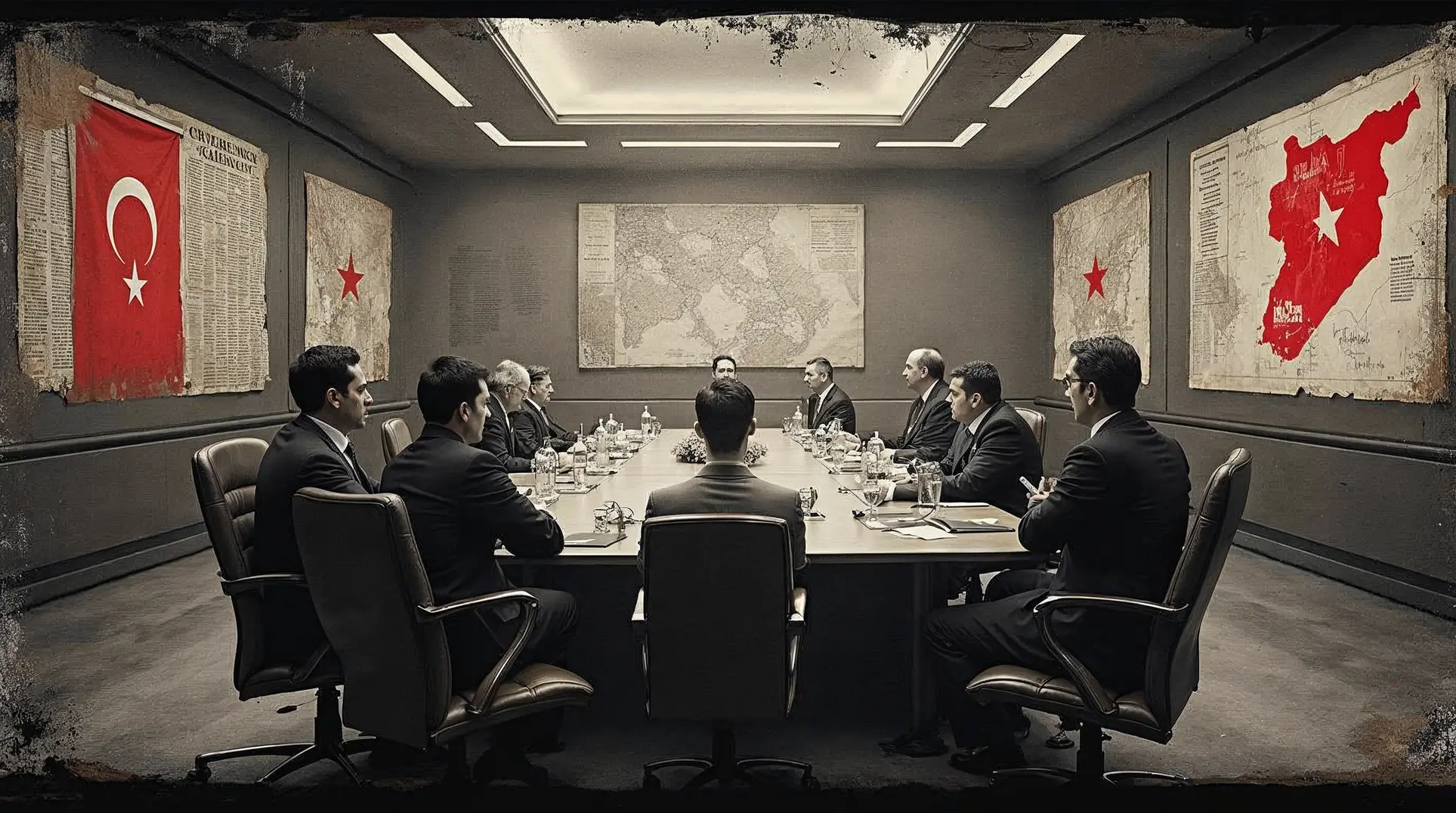
Members are reading: The structural forces driving Washington's choice—NATO cohesion, state partner preference, and the SDF's strategic miscalculation explained.
The cost of transition: Security vacuums and ISIS opportunism
The human and security costs of this pivot are already materializing in ways that may ultimately undermine its strategic logic. The detention infrastructure that the US built and the SDF managed contained approximately 8,950 ISIS fighters and 43,250 non-combatants, including around 25,000 children under twelve, across multiple facilities with al-Hol holding over 8,000 fighters in nearby prisons and tens of thousands of their relatives in the camp. This system required constant resources, coordination, and security presence. Its hasty transfer to a government still consolidating control creates precisely the conditions ISIS exploits—chaos, weak authority, and distracted security forces.
The clashes over Kurdish integration reveal a deeper problem: the new Syrian government lacks the capacity to immediately absorb and control former SDF territories. Local resistance, administrative gaps, and the logistical challenge of integrating former autonomous zones into centralized governance will create prolonged instability. ISIS has historically thrived in exactly these transitional periods, exploiting weak state authority and communal tensions.
The negotiations over al-Hol's handover underscore this vulnerability. US-led coalition discussions with the new government about transferring control reveal that no clear plan exists for managing the camp's volatile population. The rushed timeline—driven by political imperatives in Washington and Damascus—prioritizes symbolic transition over operational security. This is how strategic decisions made in capitals translate into tactical disasters in the field.
Realpolitik's aftermath
Washington's Syria pivot represents the triumph of conventional statecraft over revolutionary experimentation. The Rojava project, which offered an alternative model of governance in the Middle East, has been subordinated to the region's traditional power structures: centralized states, NATO alliance management, and great power competition. This outcome was structurally overdetermined—the question was never whether it would happen, but when.
For the new Syrian government, American endorsement provides crucial international legitimacy and military partnership, but it comes with the burden of managing security challenges that may exceed its current capacity. For Turkey, the pivot represents a significant strategic victory, eliminating a major source of friction with Washington while expanding Ankara's influence over northern Syria. For the Kurds, it confirms a historical pattern: geopolitical alignments shift, and non-state actors without sovereign protection remain perpetually vulnerable.
The ultimate test will be whether this calculated gamble on state stability proves more effective than the partnership it replaced. If the transition triggers ISIS resurgence or prolonged instability in the northeast, the strategic logic that justified abandoning the SDF will face serious scrutiny. But by then, the decision will be irreversible, and the consequences will belong to Syria alone.
Subscribe to our free newsletter to unlock direct links to all sources used in this article.
We believe you deserve to verify everything we write. That's why we meticulously document every source.


