


On January 20, 2026, US Special Envoy to the Middle East Tom Barrack announced that the primary purpose of America's partnership with the Syrian Democratic Forces has "largely expired." The statement, delivered as Syria's new government under Ahmed al-Sharaa joined the Global Coalition to Defeat ISIS as its 90th member, marked the formal end of a tactical alliance that began when the SDF first engaged alongside US forces in the counter-ISIS campaign. What emerged from Barrack's remarks was not a sudden policy shift, but the articulation of a realignment that became inevitable the moment Damascus offered Washington a state-level alternative to its awkward partnership with a Kurdish-led militia.
This is a structural pivot, not a betrayal. The United States has long preferred stable state partners over non-state actors in managing long-term security problems. The SDF served as an effective, necessary proxy when no viable Syrian government existed. Now one does—or at least, one that Washington can work with—and the calculus has changed entirely.
The state returns as security partner
The transformation of Syria's political landscape created the conditions for this realignment. When the SDF first partnered with US forces in 2014, the Assad regime was weakened, contested, and allied with Iran and Russia—entirely unsuitable as a counter-ISIS partner. The Kurdish-led forces proved exceptionally effective, leading the ground campaign that achieved the territorial defeat of ISIS's caliphate by 2019, with decisive support from US and coalition airpower and intelligence, and assuming responsibility for thousands of detained fighters and their families in facilities like al-Hol and al-Shaddadi.
But that arrangement was always provisional. The SDF lacked international recognition, struggled with detention facility security, and existed in a legal grey zone that complicated America's long-term presence in northeastern Syria. The emergence of al-Sharaa's government—positioned between the collapsed Assad regime and full Islamist governance—provided Washington with something it desperately needed: a recognized state authority willing to join the Global Coalition and assume direct security responsibilities.
Barrack framed Damascus's coalition membership as the game-changer. "Syria now has an acknowledged central government," he stated, one that is "both willing and positioned to take over security responsibilities, including control of ISIS detention facilities and camps." This is the language of policy realism. The United States no longer needs a surrogate when it can partner directly with the recognized sovereign authority.
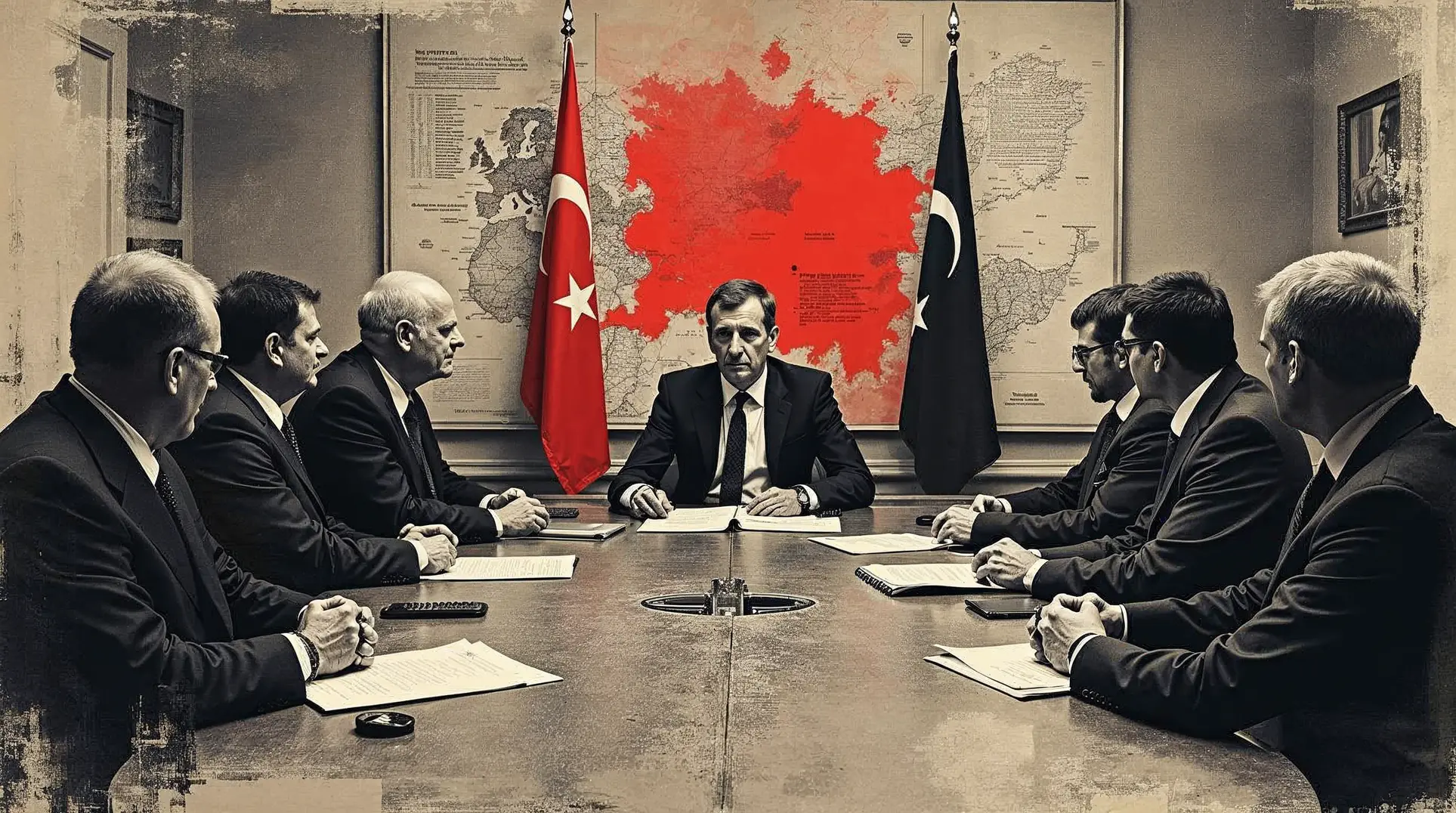
Members are reading: The hidden NATO and legal imperatives driving Washington's abrupt realignment toward Damascus and away from its Kurdish allies.
Integration or surrender
The policy shift collided with reality on the ground almost immediately. The January 18 SDF-Damascus integration agreement, which Washington encouraged as the vehicle for this transition, is collapsing in real time. Despite a declared ceasefire, clashes continue between SDF remnants and Syrian government forces advancing into formerly Kurdish-held territory. The SDF is losing ground, withdrawing from key towns, and facing the stark choice between full integration into Syrian military structures or irrelevance.
The January al-Shaddadi prison break—where ISIS detainees escaped amid the chaos of this transition—illustrates the immediate security cost of the power vacuum. The SDF, aware that its primary function has been declared obsolete, is simultaneously negotiating its dissolution and trying to maintain security operations. This dual mandate is untenable.
Barrack's characterization of the integration agreement as the "greatest opportunity" for Syria's Kurdish population reframes what is, in effect, a managed defeat. The SDF is being offered cultural and citizenship rights within a Syrian state framework in exchange for dismantling its autonomous governance structures and military command. This is not a partnership of equals; it is the absorption of a non-state actor into a state apparatus now backed by the United States.
The logic of impermanence
The US-SDF partnership was always transactional and temporary. Non-state proxies serve specific tactical purposes; they are rarely elevated to permanent strategic allies. The moment a state-level alternative emerged, the SDF's utility diminished. What Barrack articulated on January 20 was not new policy, but the formal acknowledgment of a shift already underway.
For Washington, this is a return to familiar ground: working with recognized governments, operating within coalition frameworks, and managing security challenges through state partners. For the SDF, it is the realization that tactical effectiveness does not guarantee political permanence. The counter-ISIS campaign required their capabilities; the post-conflict stabilization favors Damascus's sovereignty. The partnership has expired because its original purpose—defeating ISIS's caliphate in the absence of a viable state partner—has been fulfilled. What remains is the transfer of long-term security responsibilities to the actor best positioned, legally and strategically, to assume them.
Subscribe to our free newsletter to unlock direct links to all sources used in this article.
We believe you deserve to verify everything we write. That's why we meticulously document every source.


