


On October 11, 2024, Presidents Recep Tayyip Erdoğan and Aleksandar Vučić signed eleven agreements in Belgrade covering trade, energy, defence cooperation, and emergency management. Among the most notable elements of the visit was both leaders' public discussion of joint defence-industry work, including potential drone development and production. For observers of Balkan security dynamics, the warm tone and institutional ambition marked a sharp departure from the confrontational rhetoric Vučić had deployed against Ankara barely a year earlier.
The shift is significant because it reveals the material constraints that force Serbia to accommodate Turkish policies Belgrade publicly opposes. Despite nationalist posturing over Turkish military support to Kosovo—whose independence Serbia rejects—Vučić has discovered that economic interdependence and defence-industrial asymmetry leave him with limited leverage. The pivot from principle to pragmatism offers a case study in how mid-sized states navigate conflicts with more powerful regional actors embedded in their economies and security architectures.
From principle to pragmatism
In 2023, Serbia cancelled a planned purchase of Turkish Bayraktar TB2 drones after Ankara supplied the same platform to Kosovo. Vučić framed the decision "as a matter of principle," accusing Turkey of violating the U.N. Charter and U.N. Security Council Resolution 1244, and claiming that Turkey does not want stability in the Western Balkans and is dreaming of restoring the Ottoman Empire—language reflecting unusually harsh criticism of Ankara's ambitions in the region. He portrayed Serbia as the victim of external powers arming Pristina, tapping into domestic nationalist sentiment and Orthodox Christian narratives of Turkish overreach.
Yet within months, the rhetoric shifted. By the October 2024 Belgrade visit, Vučić praised Erdoğan as "a great leader," stressed friendship and mutual respect, and later thanked the Turkish president for signalling he would accept any solution Belgrade and Pristina reached through EU-facilitated dialogue. Most tellingly, Vučić acknowledged that Serbia is "too small to threaten Turkey," a remarkable admission from a leader who cultivates an image of defiant sovereignty. On defence cooperation specifically, he emphasized that both countries possess relevant defence capacities and expressed "great confidence" in Erdoğan's commitment to regional peace.
The constraints that compel cooperation
The rhetorical pivot reflects hard economic and strategic realities. Bilateral trade between Serbia and Turkey runs at approximately $2 billion annually, and Turkish foreign direct investment in Serbia exceeds $400 million—figures both presidents cited during the visit. Turkish firms employ thousands of Serbians, particularly in manufacturing and infrastructure. Belgrade cannot afford a rupture with the region's second-largest NATO military and a key investor without inflicting measurable domestic economic pain.
Defence-industrial asymmetry compounds the problem. Turkey's drone industry has reshaped regional security calculations, supplying platforms to actors from Ukraine to Libya to Kosovo. Serbia's indigenous defence sector, while capable in niche areas such as artillery and armoured vehicles, lacks the technological base or export networks to compete in unmanned systems. The legal foundation for cooperation already exists: a 2019 defence-cooperation framework, ratified by Serbia in 2020 and Turkey in 2022, provides for joint training, exercises, and defence-industry projects. The October 2024 agreements operationalize that institutional architecture, giving both capitals a lawful avenue to pursue drone development while sidestepping the politically toxic issue of outright Serbian purchases.
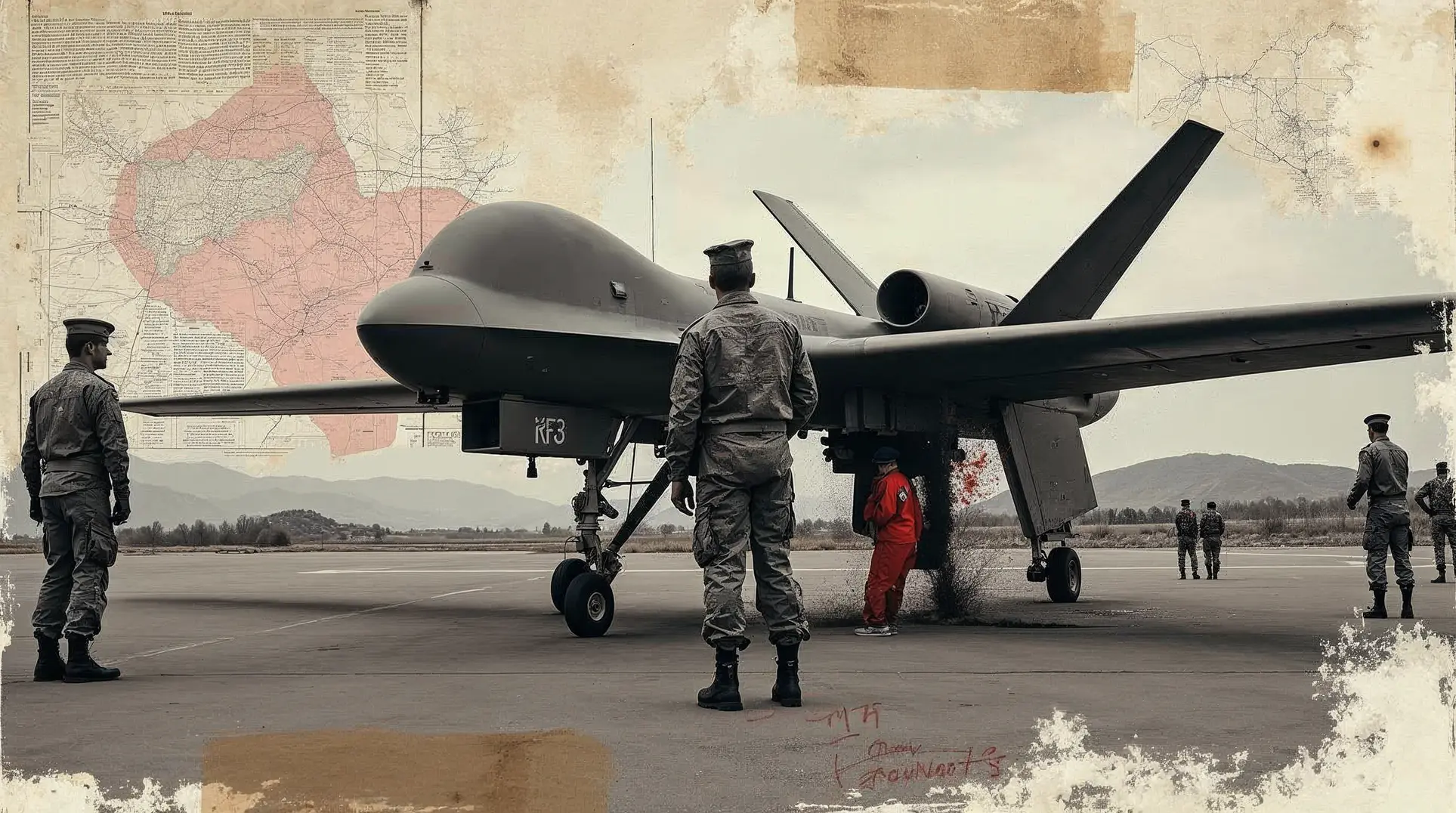
Members are reading: Why Vučić's drone cooperation serves as strategic hedging with structural limits, not genuine alignment with Ankara.
Rhetoric meets resources
The October 2024 agreements crystallize a broader lesson about the gap between nationalist rhetoric and material constraints. Vučić's harsh language in 2023—invoking historical grievances and civilizational threats—resonated domestically but did nothing to prevent Turkish drone deliveries to Kosovo or diminish Ankara's regional influence. Faced with a stronger defence-industrial partner that also supplies critical investment and employment, Belgrade's leverage proved negligible.
What remains to be seen is whether joint defence-industry work translates into tangible projects or remains declaratory. The 2019 framework has enabled joint exercises and training, but no major co-production ventures have materialized. Drone development is technologically complex and capital-intensive; without sustained political will and budgetary commitment from both sides, the October pledges may yield little beyond photo opportunities. For now, Vučić's pivot reveals not strategic reorientation but the narrow bandwidth available to mid-sized states navigating conflicts with more powerful neighbors. Rhetoric adapts when resources run out.
Subscribe to our free newsletter to unlock direct links to all sources used in this article.
We believe you deserve to verify everything we write. That's why we meticulously document every source.


